

How We Treat Chronic Hip Pain: NYC's Advanced Physical Therapy Guide
Table of Contents
Why Chronic Hip Pain Stops Active New Yorkers in Their Tracks
Common Causes of Persistent Hip Pain in Athletes and Urban Professionals
How Traditional Treatments Fall Short for Long-Term Hip Pain Relief
Our Personalized One-on-One Physical Therapy Approach for Hip Recovery
Advanced Manual Therapy Techniques We Use to Restore Hip Mobility
How Anti-Gravity Treadmill Training Accelerates Your Hip Healing
Integrating Shockwave and Class IV Laser Therapy Into Your Treatment Plan
Rebuilding Strength: Our Return-to-Action Conditioning Program for Hip Stability
Post-Surgical Hip Rehabilitation: Getting You Back to Peak Performance
Your Path to Pain-Free Movement: What to Expect at NYPT Health and Rehab
Why Chronic Hip Pain Stops Active New Yorkers in Their Tracks
Chronic hip pain affects far more active New Yorkers than most realize. Whether you're a runner training for a marathon, a professional navigating a demanding office schedule, or a competitive athlete pushing performance limits, persistent hip discomfort can derail your routine and steal your confidence. The frustration deepens when standard treatments provide only temporary relief, leaving you searching for real solutions.
At NYPT Health and Rehab, we've spent years treating athletes and urban professionals whose hip pain has resisted conventional approaches. We understand that each person's pain tells a different story, shaped by their activity level, movement patterns, and past injuries. Our goal is to uncover the root cause of your hip pain and design a personalized recovery path that gets you back to what matters most.
The hip joint is the body's powerhouse for movement. It stabilizes your stance, propels you forward when you run, absorbs shock when you land, and enables rotation during daily activities. When hip pain persists, even simple movements become complicated. Walking up stairs, sitting at your desk, or accelerating during a workout suddenly demand conscious effort and planning.
For urban athletes, the stakes feel especially high. Your lifestyle depends on mobility. Missing training sessions disrupts your season. Scaling back intensity affects your performance goals. The longer pain lingers, the more you lose confidence in your body's reliability. Many people respond by reducing activity further, which paradoxically weakens the muscles that stabilize the hip, prolonging pain and creating a frustrating cycle.
Chronic hip pain also creates ripple effects throughout your body. To avoid discomfort, you may shift weight, alter your gait, or change how you train. These compensations overload your lower back, knees, and opposite hip. What started as one problem becomes multiple problem areas, multiplying frustration and recovery time.
Common Causes of Persistent Hip Pain in Athletes and Urban Professionals
Hip pain rarely has a single cause. Different activities create different injury patterns, and understanding yours is essential to recovery.
Athletes frequently experience femoroacetabular impingement (FAI), where the ball and socket of the hip joint don't move freely, causing pinching sensations and sharp pain with certain movements. Runners often develop hip flexor tightness and glute weakness, which destabilizes the joint and creates compensatory pain patterns. Soccer players, dancers, and other rotational athletes commonly struggle with labral strain from repetitive twisting and pivoting.
Urban professionals face their own challenges. Prolonged sitting tightens hip flexors, weakens gluteal muscles, and creates muscular imbalances. Desk-bound work combined with commuting—standing on the subway, sitting in cars—compounds the problem. Herniated discs in the lower back can refer pain to the hip, making the true source difficult to identify without skilled assessment.
Other contributors include IT band tightness, piriformis syndrome, bursitis, osteoarthritis, and post-surgical adhesions. Many patients have multiple overlapping issues. We've found that accurate diagnosis requires hands-on evaluation combined with movement testing and sometimes imaging correlation. A tight psoas muscle might feel like hip pain but actually limit your ability to extend your leg. Weak hip abductors might cause pain in a completely different spot than the muscle creating instability.
How Traditional Treatments Fall Short for Long-Term Hip Pain Relief
Most people start with rest, anti-inflammatory medication, and generic stretching. These approaches address symptoms temporarily but rarely resolve the underlying mechanical problems driving pain.
Rest alone often backfires with chronic hip pain. When you stop moving, muscles atrophy, joints stiffen, and stabilizers weaken. Returning to activity after rest typically re-inflames the problem. Anti-inflammatory medication masks pain, allowing people to push through tissue damage rather than addressing it. Over-the-counter stretching routines ignore individual movement patterns and biomechanical faults. Two runners with identical pain may need completely different exercises based on their unique mobility and strength imbalances.
Cortisone injections can provide temporary relief by reducing inflammation, but they don't restore function or prevent recurrence. Some patients receive multiple injections over months or years, never addressing why pain keeps returning. Others are told they need hip replacement surgery when conservative options haven't been thoroughly explored with skilled manual therapy and targeted strengthening.
Generic group classes or standard physical therapy protocols apply the same exercises to everyone. But your hip pain requires personalized solutions. What works for one athlete may be ineffective or even counterproductive for another, depending on their specific mobility restrictions, strength imbalances, and movement patterns.
Our Personalized One-on-One Physical Therapy Approach for Hip Recovery
We begin with a thorough assessment. During your first session, we conduct detailed movement testing, palpate tissues around your hip, review your injury history, and understand your activity goals. We ask about what makes pain worse or better, your training intensity and frequency, previous treatments, and what recovery success looks like for you.
This information informs your customized treatment plan. Rather than applying a template protocol, we design sessions specifically for your body and your goals. If you're a runner aiming to return to a half-marathon, your plan differs from a competitive cyclist or someone managing desk-job hip tightness.
Our one-on-one sessions ensure you receive undivided attention. Your physical therapist adjusts techniques in real time based on how your body responds. If a certain mobility exercise causes pain, we modify immediately. If you're gaining strength faster than expected, we progress your conditioning. You're never rushed through exercises or left to figure out proper form alone.
Consistency matters profoundly in hip recovery. We typically recommend two sessions weekly initially, scaling back to weekly or maintenance sessions as function improves. This frequency allows your therapist to monitor progress, refine your home exercise program, and keep you accountable to your rehabilitation goals. Most patients see measurable improvement in pain and mobility within four to six weeks of consistent treatment.
Advanced Manual Therapy Techniques We Use to Restore Hip Mobility
Manual therapy is a cornerstone of our hip pain approach. Our hands-on techniques address tissue restrictions, joint capsule tightness, and neuromuscular imbalances that exercises alone cannot resolve.
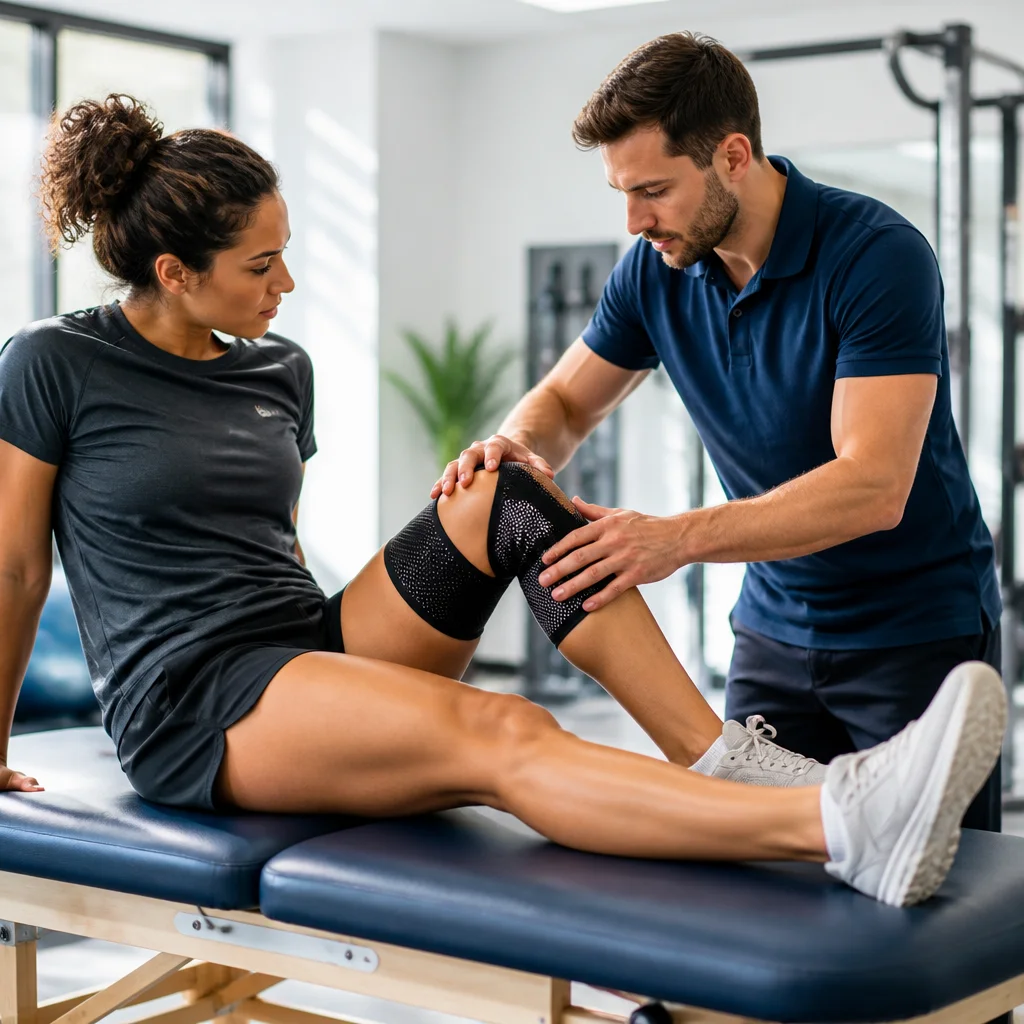
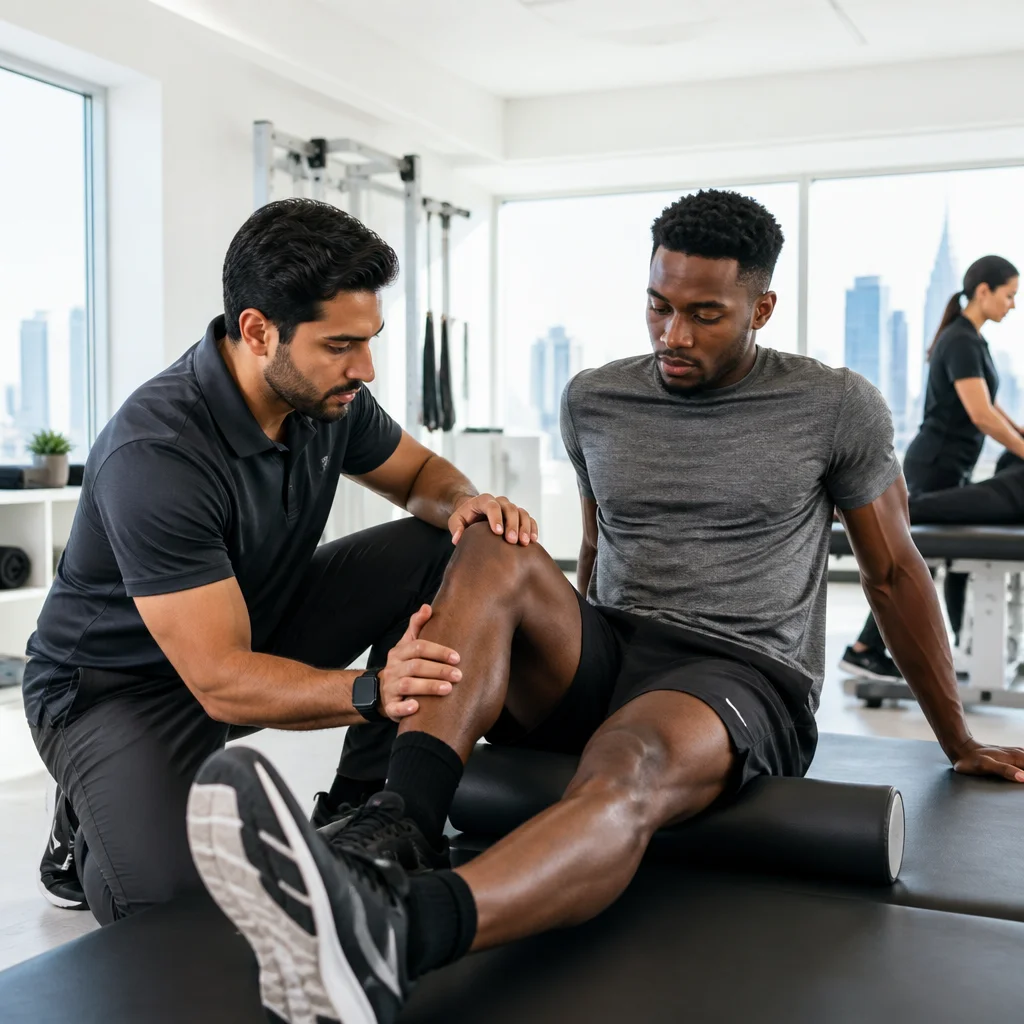
Joint mobilization restores normal movement between hip bones and the pelvis. Some patients have hip capsules that restrict motion in specific directions, preventing full hip extension or external rotation. We apply controlled movements to gradually increase range and reduce pain with movement. Soft tissue mobilization targets muscles and fascia around the hip. Using sustained pressure, cross-friction techniques, and myofascial release, we release trigger points and adhesions that restrict movement and generate referred pain.
Muscle energy techniques help rebalance the hip. These involve gentle muscle contractions followed by stretching to restore normal length and function. They're particularly effective for tight hip flexors or weak abductors that create imbalance. Our therapists also use trigger point dry needling, which involves inserting thin needles into muscular knots to release tension and restore normal tissue function.
Neural mobilization techniques address nerve tension around the hip, which can cause radiating pain or sensations down the leg. Sciatic nerve, femoral nerve, or pudendal nerve irritation often accompanies hip pain. Specific movements help these nerves glide normally through surrounding tissues, reducing irritation.
Manual therapy combined with targeted strengthening accelerates recovery. Rather than treating soft tissue work and exercise separately, we integrate them strategically within your sessions.
How Anti-Gravity Treadmill Training Accelerates Your Hip Healing
Traditional treadmill running and walking place full body weight through injured hips, which can aggravate pain and delay recovery. Our anti-gravity treadmill technology reduces impact by up to 80 percent, allowing you to maintain cardiovascular fitness and running mechanics while your hip heals.
This equipment uses pressurized air chambers to unload body weight gradually. Early in recovery, we might reduce your weight load to 40 percent, letting you run or walk with minimal hip stress. As pain decreases and strength improves, we increase body weight incrementally. By the time you return to ground-level running, your hip has already adapted to movement patterns and built necessary strength without pain.
Athletes find this tool invaluable. Runners can maintain aerobic conditioning without re-aggravating injury. Clients maintain psychological momentum, feeling like they're still training rather than sitting idle. The treadmill's monitored environment also helps us observe your gait, catching compensatory movement patterns before they cause secondary injuries in your knees or back.
Most patients begin anti-gravity treadmill training in week two or three of therapy, depending on pain levels and movement capacity. Initial sessions focus on comfortable walking or easy running, gradually progressing duration and intensity. We combine treadmill training with manual therapy and strengthening exercises for comprehensive recovery.
Integrating Shockwave and Class IV Laser Therapy Into Your Treatment Plan
Beyond manual therapy and exercise, we employ advanced modalities that stimulate tissue healing at a cellular level.
Shockwave therapy uses acoustic waves to trigger the body's natural healing response. These waves penetrate deep into tissues, increasing blood flow and stimulating growth factors that promote tissue repair. For chronic hip pain, shockwave is particularly effective for tendon issues, calcifications, and areas of chronic inflammation that haven't responded well to conservative therapy. Sessions are brief and typically require four to six treatments spaced one week apart.
Class IV laser therapy uses therapeutic light energy to reduce inflammation and accelerate cellular repair. The laser penetrates several centimeters into tissue, stimulating mitochondria to produce more ATP (energy). This enhanced energy accelerates healing in muscles, tendons, and ligaments. Patients often experience reduced pain and improved mobility after just a few laser sessions. Unlike cortisone injections, these modalities promote actual tissue healing rather than masking symptoms.
We integrate these modalities strategically within your overall plan, never as standalone solutions. A patient with chronic hip bursitis might receive three weeks of manual therapy and strengthening, then add shockwave to accelerate tendon healing. Someone with post-surgical hip pain might combine laser therapy with progressive exercise to rebuild strength more aggressively.
Rebuilding Strength: Our Return-to-Action Conditioning Program for Hip Stability
Strength deficits perpetuate hip pain. Even after mobility improves and manual therapy addresses tissue restrictions, weak hip muscles cannot stabilize your joint during demanding activities. We systematically rebuild strength in phases.
Early-stage strengthening focuses on muscle activation and control. You might perform small-range glute bridges, side-lying hip abduction, or quadruped hip extension, teaching muscles to fire properly without pain. These foundational exercises establish neuromuscular patterns that prepare you for higher demands.
Intermediate strengthening increases range, resistance, and complexity. Exercises progress to full-range glute bridges with resistance bands, lunges, and single-leg stance activities that challenge balance and stability. We introduce functional movements that mimic your activity demands, such as lateral step-ups for climbers or rotational exercises for golfers.
Advanced conditioning replicates sport-specific demands. Runners progress to single-leg exercises, plyometric drills, and running-specific patterns. Cyclists focus on hip extension and power endurance. Team sport athletes incorporate lateral movements, acceleration, and deceleration patterns. This progressive approach ensures your hip adapts to actual demands before you return to full training.
We also address contributing weakness throughout your kinetic chain. Weak core muscles, tight hip flexors, or poor glute activation in your opposite leg often play roles in unilateral hip pain. Comprehensive strengthening corrects these imbalances, reducing risk of recurrence.
Post-Surgical Hip Rehabilitation: Getting You Back to Peak Performance
Hip surgery, whether arthroscopic, labral repair, or hip replacement, requires specific rehabilitation protocols. Your post-surgical recovery depends on respecting tissue healing timelines while systematically restoring function.
Early phase recovery focuses on protecting the surgical site, reducing swelling, and restoring basic mobility. We emphasize range of motion within precautions your surgeon established, gentle strengthening to prevent muscle atrophy, and pain management through positioning and modalities. Most post-surgical patients benefit from two sessions weekly during this phase.
Middle-phase rehabilitation (typically weeks four through eight) increases strengthening intensity and complexity as tissues continue healing. You progress beyond protected range to fuller movement, advance to resistance exercises, and begin weight-bearing activities. Your therapist monitors healing carefully, never pushing beyond tissue tolerance.
Late-phase conditioning (weeks eight and beyond) builds strength and power, reintegrating you into sport or high-level activity. Whether you're a runner building back to training volume or an athlete returning to competition, we structure progressive programs that challenge your hip systematically without setbacks.
Throughout post-surgical recovery, communication with your surgeon ensures alignment on protocols and progression timelines. We respect tissue healing biology while optimizing outcomes through consistent, evidence-based rehabilitation.
Why Our Sports-Specific Hip Recovery Protocol Sets Us Apart
We don't treat all athletes' hip pain identically. A runner's recovery program differs fundamentally from a dancer's, which differs from a soccer player's.
For runners, we address running-specific mechanics, cadence, and stride patterns that may contribute to hip stress. We often incorporate gait training on the anti-gravity treadmill, systematically working toward ground-level running with optimized form. We emphasize hip strength in transverse and frontal planes, since running demands hip stability in these directions.
Dancers require exceptional hip mobility alongside strength. We focus on external rotation, flexion range, and the nuanced control needed for their art. Conditioning emphasizes turnout stability and rapid weight transfer between legs.
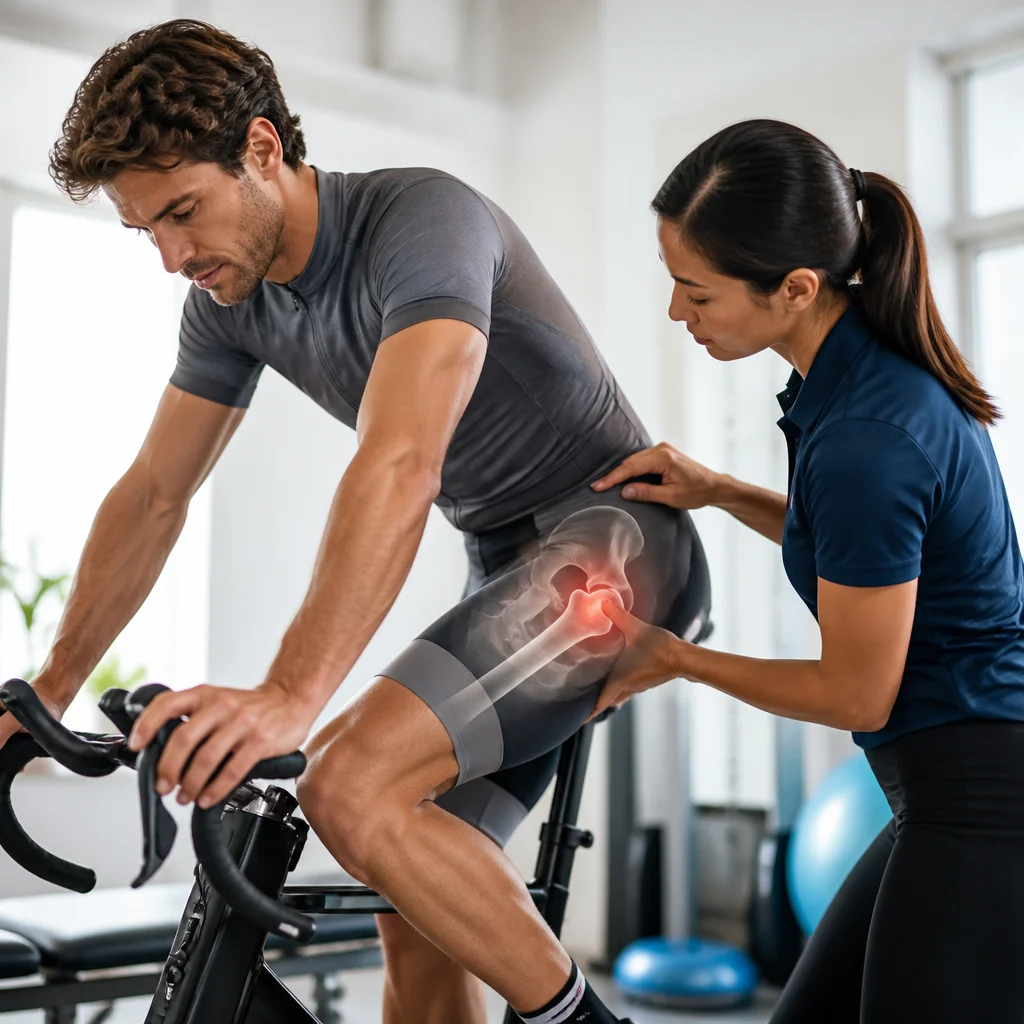
Cyclists need hip endurance and power in a specific range. We program strength in the hip's dominant cycling pattern, often emphasizing hip extension and external rotators that cycling alone doesn't challenge sufficiently.
Our sports-specific approach accelerates return to activity because we train movement patterns that matter for your sport. Rather than general hip strengthening, you build capacity in positions and planes your activity demands.
Your Path to Pain-Free Movement: What to Expect at NYPT Health and Rehab
Starting your recovery journey at our clinic means personalized attention from your first appointment. We schedule comprehensive initial evaluations that give us time to thoroughly understand your pain, goals, and lifestyle constraints.
Your first session typically includes a detailed health history, movement assessment, tissue palpation, and imaging review if available. Your therapist explains findings in clear language, showing you exactly what's restricting your movement or causing pain. Together, you establish realistic recovery goals and timelines.
Subsequent sessions combine manual therapy, targeted exercise, and education. Your therapist teaches you proper form, explains why specific exercises matter for your recovery, and progressively advances your program as capacity improves. You'll receive a home exercise program tailored to your phase of recovery, typically requiring 10-15 minutes daily. These exercises support in-session work and accelerate overall progress.
Most hip pain recovery requires four to eight weeks of consistent two-per-week therapy, followed by weekly maintenance sessions as you transition back to full activity. Your therapist adjusts this timeline based on your progress and how you respond.
Throughout recovery, we remain your educators and advocates. We explain what's happening in your body, why we're doing specific interventions, and how to prevent recurrence. By the time you discharge from therapy, you'll understand your body's strengths and vulnerabilities, possess exercises to maintain your gains, and know what warning signs warrant attention.
Chronic hip pain doesn't have to be permanent. With personalized one-on-one physical therapy, advanced techniques, and a sports-specific approach, we've helped hundreds of New Yorkers return to pain-free movement and peak performance. When you're ready to stop managing pain and start resolving it, we're here to guide your recovery.
Frequently Asked Questions (FAQ)
How long does it typically take to recover from chronic hip pain with your treatment approach?
Recovery timelines vary based on your specific condition, injury history, and how consistently you engage with our program. Most of our patients begin noticing meaningful improvements within 3 to 4 weeks of one-on-one sessions, though more complex cases may require 8 to 12 weeks for substantial functional gains. We structure each treatment plan individually, so we'll provide you with a realistic timeline during your initial evaluation.
What makes your hip rehabilitation different from standard physical therapy?
We combine personalized one-on-one care with technologies like our anti-gravity treadmill and Class IV laser therapy that you won't find at every clinic. Rather than generic exercise protocols, we integrate advanced manual therapy, sports-specific conditioning, and integrated wellness services like yoga and massage to address your hip pain from multiple angles. Our approach focuses on getting you back to the activities you love, not just reducing pain temporarily.
Do you work with post-surgical hip patients, and how does that treatment differ?
Yes, we specialize in post-surgical orthopedic rehabilitation and have successfully guided many patients through hip surgery recovery. Our post-surgical protocols are carefully phased to respect healing timelines while progressively rebuilding stability and strength, and we coordinate with your surgeon's guidelines every step of the way. We'll customize your plan based on your specific procedure and recovery stage when you come in.
Comments