

Shockwave Therapy for Athletic Tendinopathy: Our Guide to Fast Recovery
Table of Contents
Why Athletes Develop Tendon Injuries and Experience Prolonged Pain
Tendon injuries have ended promising athletic careers and sidelined weekend warriors for months. The frustration is real: you feel strong everywhere except in that one spot that won't heal. Traditional rest alone often leaves athletes in limbo, watching their fitness slip away while pain lingers. We've found that many athletes don't realize tendinopathy responds remarkably well to the right combination of advanced treatment and targeted rehabilitation. Shockwave therapy, paired with intelligent strength work and manual therapy, offers a pathway to genuine recovery that goes beyond pain management.
Tendons connect muscle to bone and withstand enormous loads during sport. Running, jumping, cutting, and throwing place repetitive stress on the same tissues over months or years. When training volume increases too quickly or movement patterns become inefficient, tendons absorb cumulative microtrauma that exceeds their capacity to repair.
The challenge is that tendons have limited blood supply compared to muscle. This slow blood flow means nutrients and repair compounds reach injured tissue gradually. An acute muscle strain might show improvement in weeks because muscles have rich vascular networks. Tendons, by contrast, can feel stuck in a cycle of inflammation and incomplete healing for months or even years.
Many athletes rest, take anti-inflammatories, and expect improvement. But prolonged immobility actually weakens tendon tissue further, creating a downward spiral. The tendon becomes stiffer, less capable of handling load, and more vulnerable to re-injury. This explains why some athletes experience recurrent pain even after apparent recovery. The root problem was never fully addressed at the cellular level.
What to do next: If tendon pain has persisted beyond a few weeks despite rest, avoid assuming it will resolve on its own. Early assessment and active treatment often prevent years of chronic dysfunction.
Understanding Tendinopathy: The Root Cause of Your Performance Setback
Tendinopathy is fundamentally different from an acute tendon tear. It's a degenerative process where tendon structure breaks down over time due to insufficient healing and repeated microinjury. You'll notice pain with specific movements or loads, stiffness that worsens with inactivity, and a sensation that the area lacks its normal strength or resilience.
The tissue doesn't always show inflammation on imaging. Instead, microscopic examination reveals disorganized fiber arrangement, reduced collagen quality, and areas of cell death within the tendon matrix. This explains why traditional anti-inflammatory treatments alone fall short. The problem isn't just inflammation; it's tissue quality and structural integrity.
Location matters significantly. Achilles tendinopathy affects runners and athletes in cutting sports. Patellar tendinopathy troubles basketball players and jumpers. Rotator cuff tendinopathy impacts throwing athletes and overhead sports participants. Elbow tendinopathy (tennis or golfer's elbow) affects racquet sports players and overhead throwers. Each location demands sport-specific rehabilitation alongside targeted therapy.
The good news: tendinopathy responds to treatments that stimulate tissue healing and reorganization. This is where shockwave therapy changes the equation.
Actionable insight: Confirm you have tendinopathy rather than another condition by working with a clinician who performs movement assessment and appropriate imaging when needed. Treatment strategy depends on accurate diagnosis.
How Shockwave Therapy Works at the Cellular Level
Extracorporeal shock wave therapy (ESWT) delivers high-energy acoustic waves directly to injured tendon tissue. These waves create controlled micro-injury that triggers the body's natural healing cascade. Within hours of treatment, the tissue responds by increasing blood flow and activating cellular repair mechanisms.
At the cellular level, shockwave therapy stimulates several crucial processes:
Neovascularization: new blood vessel formation that restores nutrient delivery to the tendon
Stem cell activation: bone marrow-derived cells migrate to the injury site and differentiate into specialized repair cells
Collagen reorganization: the acoustic waves help align and strengthen collagen fibers, improving tissue architecture
Growth factor release: immune and tissue cells produce healing factors like TGF-beta and VEGF that coordinate repair
The mechanism isn't simply "breaking things down to build them back up." Instead, shockwave activates dormant healing potential. Many tendons exist in a chronic, low-grade inflammatory state where normal repair has stalled. Shockwave therapy wakes up that repair process and gives the tissue a genuine opportunity to strengthen.
Research shows that tendons treated with shockwave demonstrate measurable structural improvements on ultrasound within weeks. The tissue becomes denser, more organized, and more resistant to further injury. Athletes report improved pain levels and function, not just short-term relief.
Our Shockwave Therapy Approach for Athletic Recovery
We don't use shockwave as a standalone fix. The therapy works best within a comprehensive rehabilitation program designed specifically for athletic return.
Our initial assessment focuses on understanding your injury history, current pain patterns, movement limitations, and athletic goals. We perform detailed movement analysis to identify mechanical contributors to your tendinopathy. Often, poor movement patterns, muscle imbalances, or insufficient stability put excessive stress on the injured tendon. Addressing these patterns is essential for lasting recovery.
We typically recommend a series of shockwave treatments spaced 3-7 days apart, with most athletes benefiting from 3-6 sessions. This spacing allows tissue response between sessions while building cumulative therapeutic effect. We adjust intensity and frequency based on your tissue response and pain tolerance. Our goal is therapeutic stress, not harmful overload.
Between sessions, we guide your activity levels carefully. Complete rest isn't optimal; instead, we prescribe specific movements and loads that challenge the tendon without overwhelming it. This active rehabilitation accelerates healing far more effectively than passive approaches.
Treatment location matters as well. Some athletes need shockwave therapy for Achilles tendinopathy while others require treatment at the patellar tendon, rotator cuff, or elbow. We customize beam positioning and intensity to target your specific injury site with precision.
Next step: Schedule a consultation where we can assess whether shockwave therapy is appropriate for your particular tendon injury and design your personalized treatment sequence.
Advanced Manual Therapy Integration in Your Treatment Plan
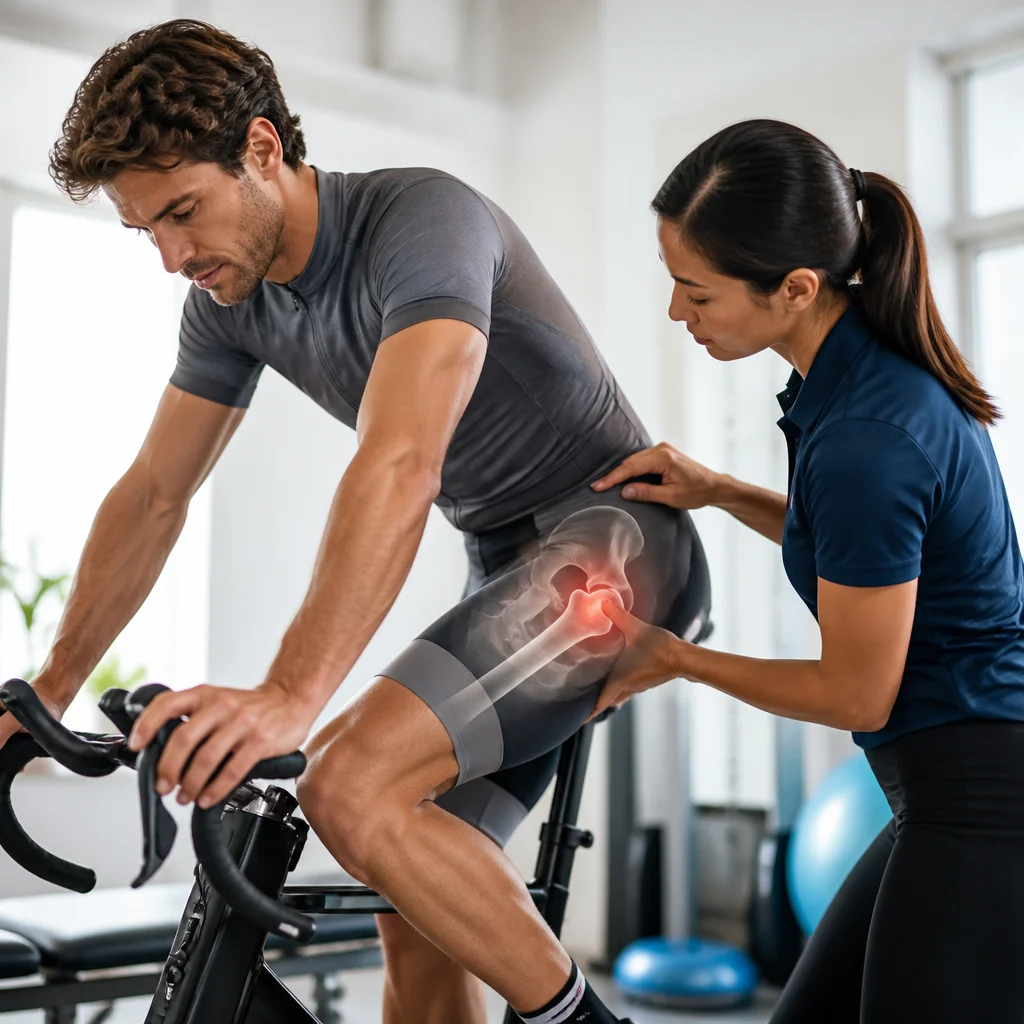
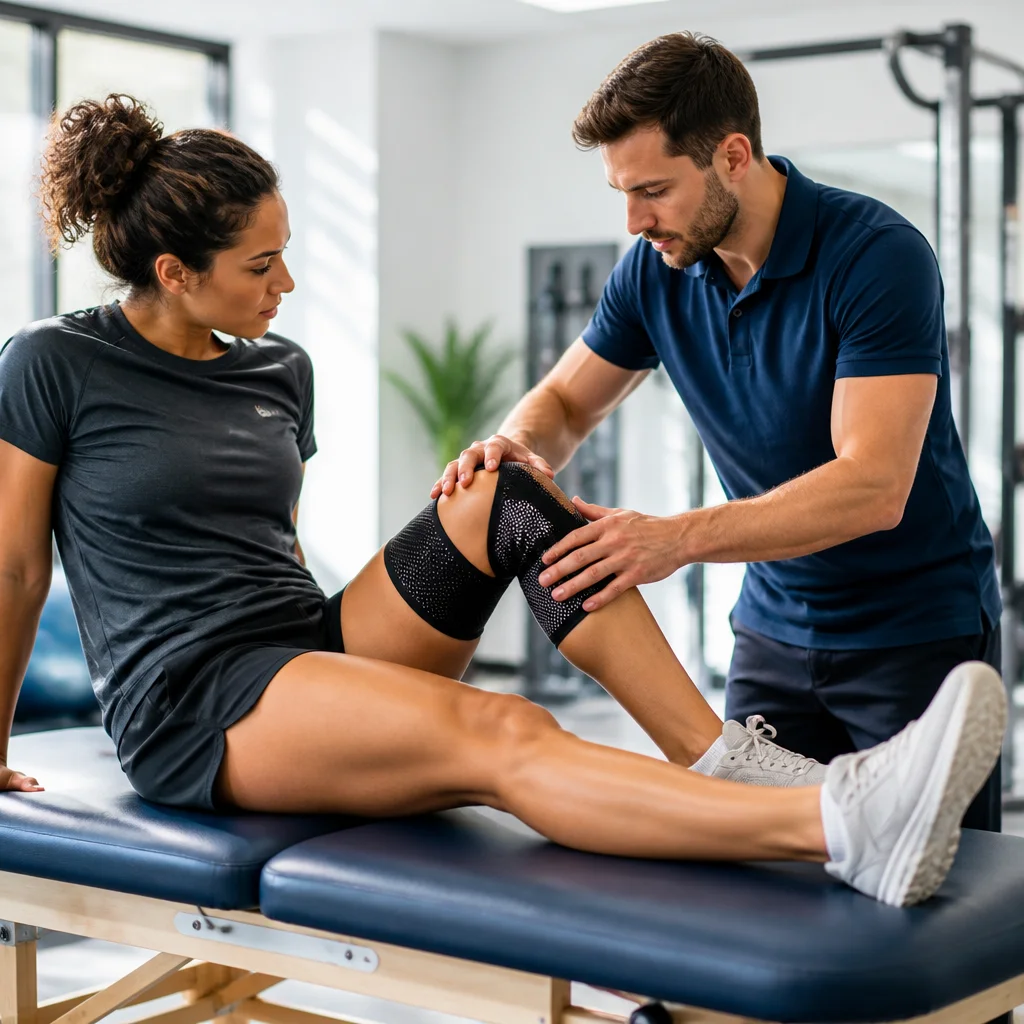
Shockwave therapy creates the environment for healing, but manual therapy accelerates functional recovery. We use advanced soft tissue mobilization, joint mobilization, and targeted stretching to restore normal tissue mobility and reduce protective muscle guarding around your injured tendon.
Tendinopathy often causes surrounding muscles to tighten as a protective response. Your body essentially "guards" the painful area, limiting movement and reducing load. While protective initially, prolonged guarding creates stiffness, reduces athletic performance, and can perpetuate pain. Manual therapy breaks this cycle by releasing muscle tension and restoring movement freedom.
We also address movement patterns that contributed to your injury. A runner with Achilles tendinopathy might have poor ankle mobility, weak hip stabilizers, or inefficient running mechanics. A tennis player with elbow tendinopathy might have limited shoulder mobility or weak rotator cuff muscles. Manual therapy combined with movement coaching corrects these factors during your recovery.
Soft tissue mobilization also enhances blood flow to the injured tendon. Gentle manual work increases local circulation, helping healing compounds reach damaged tissue more effectively. This synergy between manual therapy and shockwave treatment accelerates tissue reorganization.
What to Expect During Your Shockwave Therapy Sessions
Your first session begins with position optimization. We'll position you comfortably to expose the injured tendon clearly. We apply ultrasound gel to improve acoustic wave transmission, much like an imaging ultrasound. The treatment takes approximately 10-15 minutes.
During therapy, you'll feel acoustic pulses at the treatment site. Intensity varies; some athletes describe light tapping sensations while others feel more pronounced pressure. We control intensity carefully to maximize therapeutic benefit while keeping discomfort within tolerable range. Communication during treatment helps us adjust if needed.
Many athletes notice immediate mild swelling or redness at the treatment site, which typically resolves within hours. Some experience mild soreness similar to delayed-onset muscle soreness for 24-48 hours following treatment. This isn't a complication; it's evidence that the tissue is responding to therapy.
Between sessions, follow our prescribed activity guidelines closely. We'll typically clear you for gentle movement and controlled loads while restricting high-intensity sport temporarily. Adherence to these guidelines dramatically improves outcomes. Patients who ignore restrictions and return to full activity prematurely often experience setbacks that delay their overall recovery.
Practical tip: Plan your treatment sessions when you can reasonably rest the area for 24 hours afterward. Schedule treatments mid-week if possible, allowing you to ease back into activity by the weekend.
How We Combine Shockwave with Strength and Conditioning
Healing tissue needs progressive loading to develop strength and resilience. We structure your strength work in phases, carefully advancing exercise challenge as your tendon capacity improves.
In early phases, you'll perform isometric exercises where muscles contract without moving the joint. These create muscle activation and tendon loading without the repetitive stress of dynamic movement. We might have you hold positions for specific durations, gradually increasing time as tolerated. Isometric work builds foundational strength while being gentle on healing tissue.
As your tendon improves, we progress to isotonic exercises with controlled ranges of motion and modest resistance. You'll perform movements slowly and deliberately, focusing on tissue quality rather than speed or heavy load. We track your performance carefully, advancing only when you demonstrate consistent, pain-free execution.
Later phases emphasize power and sport-specific movements. For runners, this includes controlled running progressions. For throwing athletes, we build rotator cuff power and kinetic chain control. For cutting sports, we develop deceleration strength and agility within your recovered range. All progression happens at a pace your tendon can tolerate.
We combine strength work with flexibility and stability development. Balanced development across all physical qualities reduces injury recurrence risk significantly. Many athletes who return to sport after tendon injury re-injure because they regained strength but skipped mobility and stability work. Our comprehensive approach prevents this common pitfall.
Return to Action: Our Progressive Recovery Timeline
Most athletes achieve meaningful return to activity within 6-8 weeks of starting treatment, though individual timelines vary based on injury severity and adherence. Early improvement in pain and function typically appears within 2-3 weeks as shockwave therapy stimulates healing and manual therapy improves mobility.
Weeks 1-3 focus on pain reduction, mobility restoration, and basic strength foundation. You'll begin gentle movement patterns and controlled exercises while continuing shockwave treatments. Many athletes notice they can move more freely and experience fewer painful moments in daily activity.
Weeks 4-6 emphasize functional strength development and sport-specific movement patterns. Intensity increases progressively. You'll begin more dynamic exercises and return to gentler versions of your sport. A runner might start short, walk-run intervals. A tennis player might practice groundstrokes at half-speed without competing.
Weeks 7-8 continue advancing intensity and complexity. Full return to sport typically follows if you demonstrate consistent, pain-free performance through earlier phases. We assess your progress regularly and adjust your program based on actual tissue response rather than arbitrary timelines.
This progression isn't rigid. Some athletes progress faster, others more slowly, depending on tissue healing speed, training history, and how diligently they follow our guidance. Regular reassessment ensures we keep you advancing optimally.
Key consideration: Resisting the temptation to accelerate your return timeline protects your long-term outcomes. Athletes who progress conservatively often enjoy more durable, sustained recovery.
Why Our One-on-One Treatment Model Accelerates Your Results
Generic programs treat tendinopathy as if every athlete and every injury presents identically. We know from experience that this approach misses crucial individual factors that determine whether treatment succeeds.
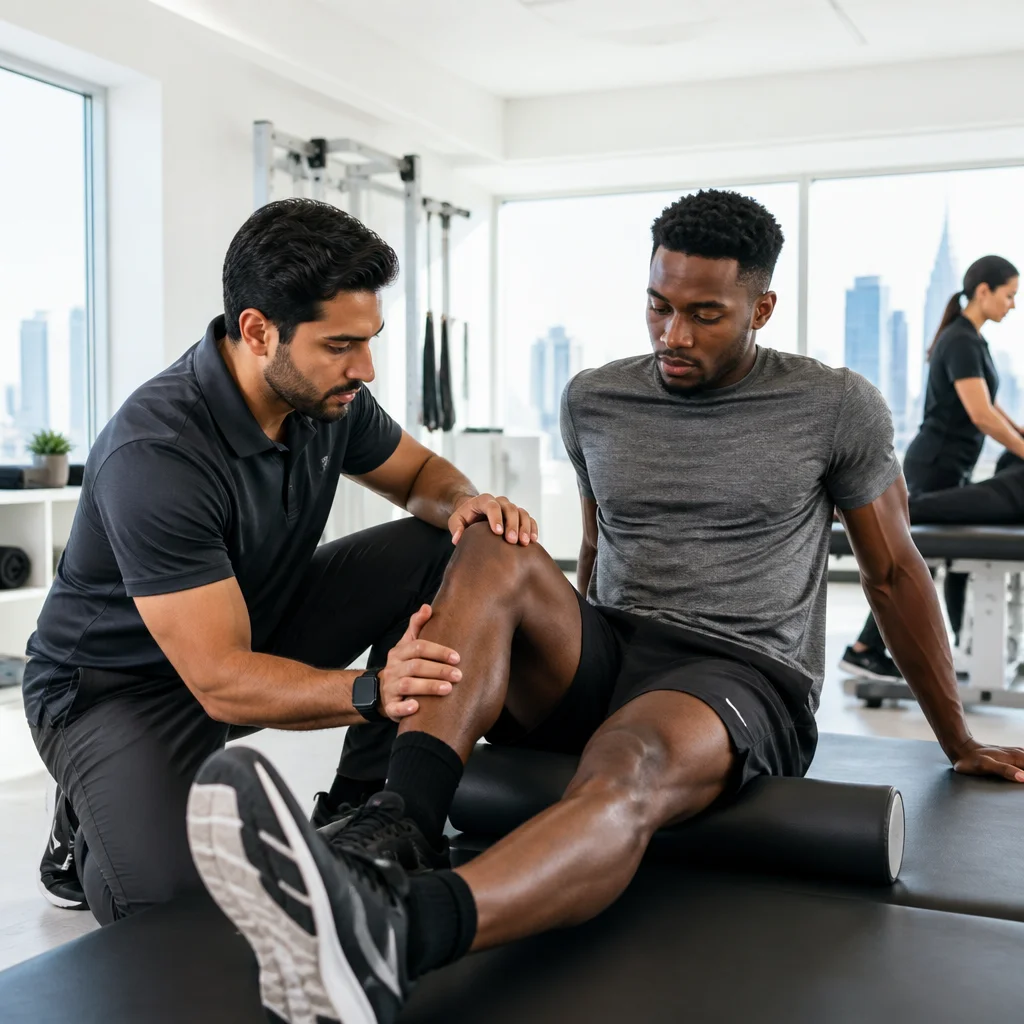
One-on-one care allows us to tailor shockwave intensity, manual therapy approach, and exercise prescription to your specific tissue response and recovery pattern. We assess you at each visit and make real-time adjustments. If you're progressing faster than expected, we advance your program. If you're struggling with an exercise, we modify approach immediately.
This personalization extends to understanding your athletic demands. A recreational runner's return to activity looks different from an elite distance runner's. A weekend basketball player has different requirements than a professional athlete. We build your program around your genuine goals and lifestyle rather than applying templates.
Our clinicians also develop detailed understanding of your movement patterns, strength profile, and compensation strategies over multiple sessions. This familiarity allows us to catch early signs of problems and adjust before they undermine your recovery. We're invested in your specific success, not just checking boxes in a standardized protocol.
Real Outcomes: Athletes Getting Back to Peak Performance
We've guided countless athletes through successful tendinopathy recovery. Runners return to half marathons and marathons they thought they'd miss. Tennis players resume competitive play. Basketball players regain lateral quickness and jumping ability. Crossfit athletes rebuild capacity for Olympic lifting and gymnastics movements.
What distinguishes successful outcomes isn't luck. It's consistent adherence to a thoughtfully designed program that combines shockwave therapy, manual therapy, and progressive strength and conditioning. Athletes who commit to this comprehensive approach recover reliably and return to genuine peak performance rather than diminished versions of their previous abilities.
Perhaps most importantly, athletes who train with us during recovery build stronger, more resilient bodies than before their injury. By addressing movement patterns, building balanced strength, and developing comprehensive fitness, you often emerge from recovery better prepared to handle the demands of your sport.
We invite you to schedule a consultation where we can assess your tendinopathy, explain whether shockwave therapy is appropriate for your situation, and design a personalized recovery program that gets you back to the performance and lifestyle you've worked hard to build.
Frequently Asked Questions (FAQ)
How quickly can I return to my sport after shockwave therapy?
We typically see athletes returning to sport-specific activities within 4-8 weeks, though timelines vary based on the severity of your tendinopathy and your sport's demands. Our progressive recovery approach means we'll start you with controlled strengthening exercises immediately after your first sessions, then systematically advance your conditioning as your tendon heals. We combine shockwave therapy with manual therapy and personalized training to maximize your recovery speed while protecting your healing tissue.
What makes shockwave therapy different from other tendon treatments we might try?
We use shockwave therapy because it stimulates your body's natural healing response at the cellular level, promoting new blood vessel formation and tissue regeneration rather than just managing pain symptoms. Unlike rest-based approaches, our treatment actively addresses the root cause of tendinopathy while you continue modified training with our guidance. We've found this non-invasive method particularly effective for athletes who can't afford prolonged downtime and want to stay engaged in their recovery process.
Do I need surgery if I try shockwave therapy, or is this my only option?
We recommend scheduling a consultation so we can assess your specific condition and discuss whether shockwave therapy is the right fit for you. Many of our patients achieve excellent results without surgery, though we're honest about cases where surgical evaluation becomes necessary. Our role is to give you the most effective non-invasive treatment options first, then guide you toward orthopedic specialists if your condition warrants surgical consideration.
Comments