

8 Best Knee Surgery Scar Tissue Therapy Techniques to Restore Mobility
Table of Contents
1. Manual Therapy and Scar Tissue Mobilization: Breaking Down Adhesions
2. Anti-Gravity Treadmill Training: Unloading Your Knee for Optimal Healing
3. Advanced Laser Therapy: Accelerating Tissue Repair at the Cellular Level
4. Shockwave Therapy: Stimulating Regeneration and Restoring Function
5. Customized Range of Motion Exercises: Preventing Stiffness and Regaining Flexibility
6. Integrated Yoga and Stretching: Functional Mobility for Active Recovery
7. Sports-Specific Strength Conditioning: Building Resilience for Your Return
8. One-on-One Physical Therapy Supervision: Personalized Guidance Throughout Your Journey
1. Manual Therapy and Scar Tissue Mobilization: Breaking Down Adhesions
Knee surgery often brings relief from the underlying injury, but it introduces a new challenge: scar tissue. As your body heals the surgical wound, fibrous adhesions can tighten around the joint, restrict movement, and leave you feeling stiff and limited. This is where strategic post-operative knee scar tissue treatment becomes essential. We've worked with countless patients who thought their recovery was stalled when, in reality, they just needed the right approach to manage tissue formation and restore full function.
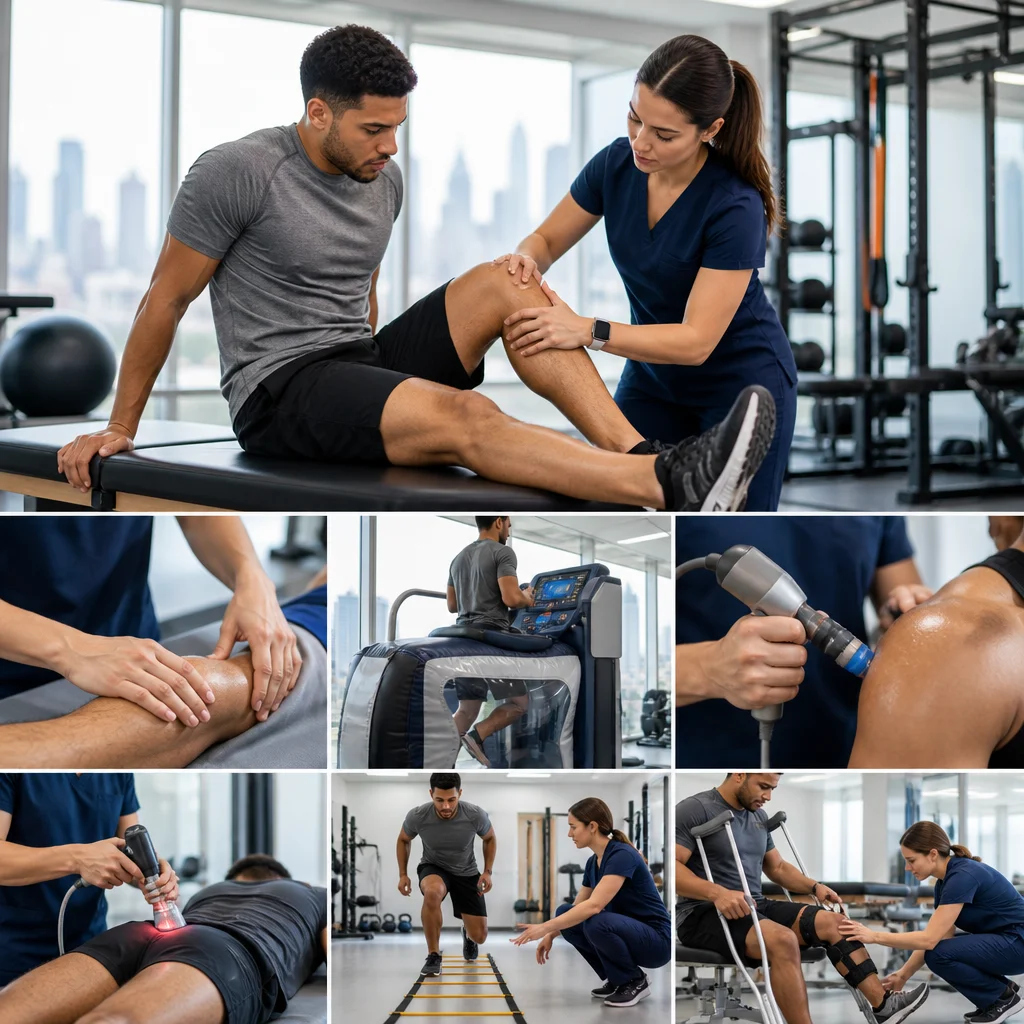
At NYPT Health & Rehab, we've developed a comprehensive framework for post-surgical knee rehabilitation that combines manual therapy, cutting-edge technology, and personalized strength work. The goal isn't just to reduce scar tissue. It's to help you regain the mobility, strength, and confidence to return to the activities you love. Here are eight proven techniques we use to accelerate your recovery and prevent long-term stiffness.
Scar tissue doesn't disappear on its own. During the early healing phases, your body deposits collagen fibers somewhat haphazardly, creating dense adhesions that can bind to surrounding structures. Manual therapy targets this directly by applying precise pressure and movement to break down these restrictions.
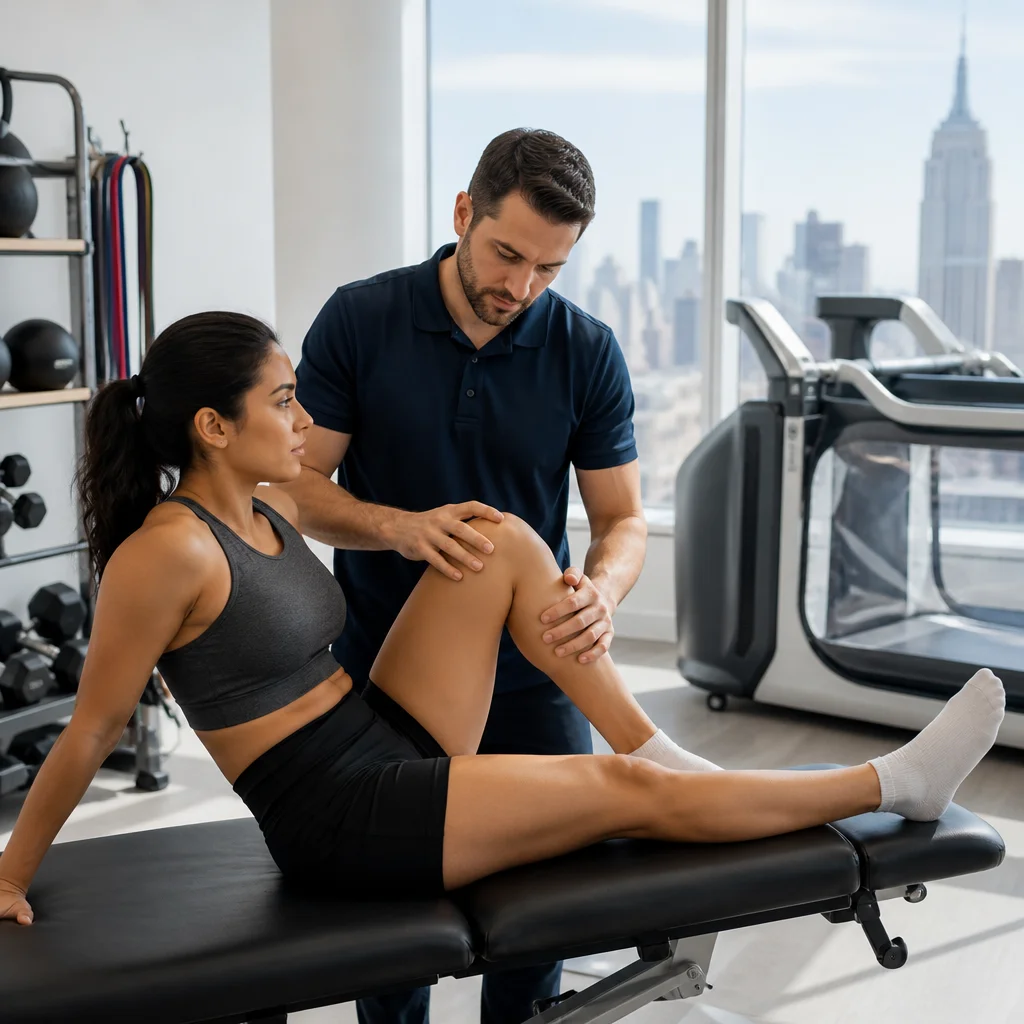
Our therapists use specialized techniques such as soft tissue mobilization, cross-friction massage, and myofascial release to gently but effectively loosen adhesions around your surgical site. We work within your pain tolerance, gradually encouraging the tissue to reorganize in a more functional pattern. This isn't aggressive or painful. It's strategic and progressive.
The key advantage of hands-on scar tissue management is that we can feel exactly where restrictions live and adjust our pressure in real time. We'll work around your incision, monitoring your response and ensuring we're not causing inflammation. Many patients report immediate improvements in range of motion after just a few sessions.
Your action: Request an initial evaluation focused on scar tissue mobility assessment. Let us know if you experience tightness or catching sensations in specific knee positions.
2. Anti-Gravity Treadmill Training: Unloading Your Knee for Optimal Healing
One of the biggest obstacles after knee surgery is the fear of loading your joint too early. Traditional walking and running can feel risky when you're unsure whether your healing tissues can handle impact. This is where our anti-gravity treadmill becomes transformative.
Using patented technology, the AlterG anti-gravity treadmill allows us to reduce your body weight from 100% down to as little as 20%. This means you can walk, jog, or even run without putting excessive stress on your recovering knee. As your strength and confidence improve, we gradually increase the loading percentage, always staying ahead of your tissue's healing timeline.
This approach accomplishes several critical goals simultaneously. You maintain cardiovascular fitness, practice normal movement patterns, reduce stiffness through gentle motion, and build confidence in your knee's stability. We've found that patients who incorporate anti-gravity training recover faster and experience fewer setbacks than those who rely solely on physical therapy exercises.
The beauty of this tool is that it allows us to progressively overload your knee without triggering inflammation or re-injury. You feel supported while your tissues adapt, making it an ideal bridge between early healing and full weight-bearing activities.
Your action: Ask about anti-gravity treadmill protocols during your first week of therapy. This is especially valuable if you're a runner or athlete eager to return to impact activities.
3. Advanced Laser Therapy: Accelerating Tissue Repair at the Cellular Level
Class IV laser therapy represents a significant leap forward in wound healing and tissue regeneration. Our advanced laser system penetrates deep into the surgical site, increasing cellular energy production and stimulating blood flow to promote faster, more organized tissue repair.
Unlike surface-level treatments, Class IV lasers reach deeper layers where scar tissue develops. The photons stimulate mitochondrial activity in your cells, encouraging them to repair and remodel tissue more efficiently. This means less chronic inflammation, better collagen organization, and ultimately, less restrictive scarring.
We apply laser therapy in targeted sessions, typically two to three times per week during the early post-surgical phase. Patients often report reduced swelling, less pain with movement, and noticeably faster improvements in flexibility. The treatment is non-invasive, painless, and has no downtime. You can resume your therapy exercises immediately afterward.
Laser therapy works best when combined with manual therapy and movement. The increased cellular activity primes your tissues to respond better to the mobilization and exercise work we're doing simultaneously, creating a synergistic effect that speeds recovery.
Your action: Discuss laser therapy timing with your physical therapist. Starting within the first few weeks after surgery optimizes the healing environment.
4. Shockwave Therapy: Stimulating Regeneration and Restoring Function
Shockwave therapy (extracorporeal shock wave therapy, or ESWT) delivers focused acoustic pulses to affected tissue, triggering a cascade of biological responses that promote healing and reduce chronic inflammation. After knee surgery, shockwave therapy can be particularly effective for addressing stubborn scar tissue and improving circulation to the surgical site.
The treatment works by creating micro-trauma at the cellular level, which signals your body's natural repair mechanisms to increase blood flow and growth factor production. This jumpstarts the healing process and helps reorganize scar tissue into more flexible, functional patterns. It's especially useful in the later phases of recovery when some patients plateau and experience persistent stiffness.
Shockwave therapy typically involves 3 to 5 treatment sessions spaced one week apart. Sessions last 15 to 20 minutes and require no anesthesia. Most patients tolerate it well, with minimal discomfort. Many report noticeable improvements in mobility and pain within two to three weeks after completing a series.
This modality is distinct from laser therapy. While laser promotes cellular energy and repair, shockwave stimulates biological regeneration through mechanical stress. Using both in a coordinated sequence often yields superior outcomes compared to either alone.
Your action: Consider shockwave therapy if you're 4-8 weeks post-surgery and experiencing plateau-like stiffness. It works best when integrated into a comprehensive rehabilitation program.
5. Customized Range of Motion Exercises: Preventing Stiffness and Regaining Flexibility
The window of opportunity for regaining knee range of motion closes quickly after surgery. In the first weeks, gentle but consistent motion is critical to prevent adhesions from solidifying. We design customized exercise progressions tailored to your specific surgical procedure and healing timeline.
Early exercises focus on gentle, pain-free motion: quad sets, straight leg raises, and supine knee flexion with gravity assistance. As you progress, we introduce more dynamic movements against resistance and gravity. We pay close attention to your end-range mobility, using techniques to encourage the knee to bend and straighten more fully without forcing or causing pain.
The key principle is consistency. Doing prescribed exercises for 10-15 minutes daily outperforms sporadic high-intensity sessions. We teach you exactly how to perform each movement, explain why it matters, and monitor your progress during your one-on-one sessions. This personalized approach ensures you're not just going through the motions. You're actively retraining your joint.
Stiffness often feels discouraging, but it's temporary and addressable. Patients who commit to regular range of motion work virtually always regain full or near-full flexibility within 3-6 months, depending on their surgery type.
Your action: Begin range of motion exercises within your surgeon's clearance window, ideally during your first therapy session. Establish a daily home routine and track progress weekly.
6. Integrated Yoga and Stretching: Functional Mobility for Active Recovery
Beyond clinical exercises, we incorporate yoga-based stretching and mobility work into your recovery plan. Gentle yoga addresses not just the knee but the entire kinetic chain. Your hips, ankles, and spine all influence knee mechanics and healing.
Targeted stretching reduces muscle guarding around the surgical site, improves overall body awareness, and promotes the mind-body connection that facilitates recovery. We use passive, active-assisted, and active stretching progressions based on your healing phase and tissue readiness. This integrates beautifully with your manual therapy and strength work, creating a holistic recovery environment.
Many of our patients find that yoga-based mobility work reduces their psychological stress around injury, which itself accelerates healing. Breathing-focused practices calm the nervous system, reducing protective muscle tension that can limit movement. Recovery becomes restorative, not just clinical, particularly valuable for urban athletes who carry stress in their bodies and may be anxious about re-injury.
Your action: Ask about yoga-informed mobility sequences for home practice. Even 10 minutes daily enhances tissue flexibility and mental resilience.
7. Sports-Specific Strength Conditioning: Building Resilience for Your Return
Once you've restored basic mobility and strength, the next phase focuses on sport or activity-specific training. Returning to running, cutting, or competitive play requires more than general strength. Your knee must handle the specific forces and patterns of your sport.
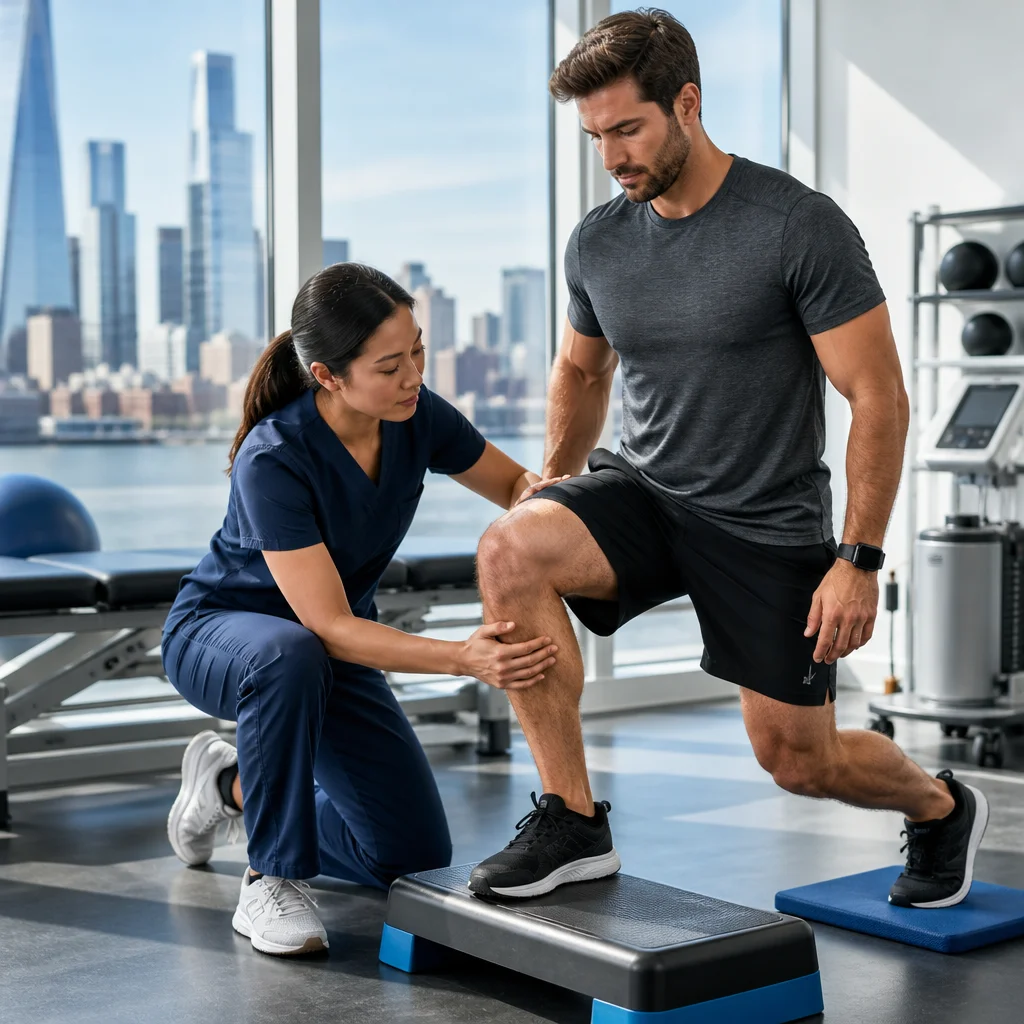
We analyze your sport or activity, identify the movement demands it places on your knee, and progressively build strength in those exact patterns. For a runner, this means eccentric quad and calf work, lateral lunges, and plyometric progressions. For a soccer player, it includes lateral agility drills, deceleration training, and multi-directional stability work. This targeted approach dramatically reduces re-injury risk and builds confidence in your knee's reliability.
The progression is gradual and evidence-based. We start with controlled, slow-speed versions of movements and systematically increase speed, complexity, and intensity. You'll perform these drills under direct supervision initially, learning proper form and self-monitoring strategies that you can apply independently later.
This phase typically begins 2-3 months post-surgery and continues for 3-6 months, depending on your sport and surgical complexity. It's the bridge between recovery and performance, ensuring you return not just healed but stronger and more resilient than before.
Your action: Identify your primary sport or activity early and communicate this during your initial consultation so we can design sport-specific conditioning from the start.
8. One-on-One Physical Therapy Supervision: Personalized Guidance Throughout Your Journey
The common thread through all these techniques is personalized, direct supervision. We don't assign generic protocols or send you off with a sheet of exercises and hope for the best. Every session is one-on-one with a skilled physical therapist who adjusts your plan based on your real-time response, healing progress, and goals.
This individualized approach means we catch problems early. If an exercise isn't serving you, we modify it. If you're progressing faster than expected, we advance your program. If you're experiencing unusual pain or swelling, we adjust intensity and address underlying causes immediately. This responsiveness prevents plateaus, reduces frustration, and keeps you moving toward your goals with confidence.
Your therapist becomes your partner in recovery, not just your exercise instructor. We educate you about your healing timeline, explain why each phase of treatment matters, and empower you with knowledge about your own body. This partnership transforms recovery from something that happens to you into something you actively direct.
Throughout your journey, you'll work in our NYC clinic with the same therapist (or a consistent team) who builds genuine understanding of your body, your injury, your goals, and your psychology. This continuity accelerates progress and ensures nothing falls through the cracks.
Your action: Schedule your initial consultation as soon as your surgeon clears you for therapy. Bring any imaging reports and surgical notes so we can understand exactly what was done and optimize your protocol accordingly.
For further reading: Integrated Rehab in NYC.
Frequently Asked Questions (FAQ)
How long does it typically take to see results from scar tissue therapy after knee surgery?
We typically see meaningful improvements in mobility and pain reduction within 2-4 weeks of consistent treatment, though the timeline depends on your surgery type, tissue quality, and how diligently you engage with our prescribed exercises. Most of our patients experience significant functional gains within 6-12 weeks when combining our advanced techniques like manual therapy, laser treatment, and anti-gravity treadmill training. We monitor your progress closely and adjust your plan as your body responds, so you're never guessing whether you're on track.
What makes one-on-one physical therapy more effective than group sessions for post-surgical knee recovery?
We design each session specifically around your unique surgical procedure, tissue healing stage, and performance goals, which simply isn't possible in a group setting where one approach must fit everyone. Our therapists can detect subtle movement compensations, apply precise manual techniques to target your specific adhesions, and progress your intensity at exactly the right pace for your body. This individualized attention means we catch issues early and optimize your recovery timeline rather than following a generic protocol.
Can we help me return to sports after knee surgery, or is physical therapy mainly for basic mobility?
We specialize in getting active New Yorkers and competitive athletes back to their sport through our sports-specific strength conditioning and return-to-action protocols that go far beyond basic walking and stairs. Our team works with you to rebuild the power, agility, and confidence you need for your particular activity, whether that's running, cutting, jumping, or sport-specific movements. We consider our job complete only when you're performing at the level you expect from yourself.
Comments