

The Advantages of One-on-One Physical Therapy in New York City
Table of Contents
The Demands of an Active New York City Lifestyle on Your Body
How Personalized One-on-One Sessions Accelerate Your Recovery
High-Tech Recovery Tools: Anti-Gravity Treadmill and Shockwave Therapy
Sports-Specific Injury Recovery and Post-Surgical Rehabilitation
Integrating Strength, Conditioning, and Wellness for Lasting Results
Returning to Peak Performance: Why Choose NYPT Health and Rehab
Why Generic Physical Therapy Falls Short for Urban Athletes
Many people assume physical therapy is a standard routine: a set of exercises, a few weeks of visits, and a discharge date. For a busy New Yorker or a competitive athlete, that approach often leaves gaps. A generic plan may treat the injury but not the demands of the sport, the job, or the commute that contributed to it in the first place.
We have seen this pattern repeatedly. A runner returns to training after a hamstring strain, only to re-injure the same muscle three weeks later because the rehab never addressed fatigue, load management, or their sprint mechanics. Generic care is built for the average patient, not for someone whose schedule is packed and whose performance goals are specific.
Consider what to look for in any clinic you evaluate:
Are you assessed by the same clinician across sessions, or rotated among staff?
Does the plan reference your sport, training schedule, or daily activity?
Is progress measured against a return-to-activity goal, not just pain scores?
If the answers are vague, ask for a written plan with measurable milestones before you commit.
The Demands of an Active New York City Lifestyle on Your Body
Life in New York places physical stress on the body in ways that are easy to overlook. Long walks between subway stops, stair-heavy apartments, hours spent hunched over a laptop in a cramped office, and rushed travel between training sessions all add up. Each factor is manageable alone, but combined they create cumulative load.
Common patterns we see in urban patients include:
Repetitive overuse: Running on pavement, cycling through traffic, or lifting in short, intense blocks.
Postural strain: Desk work and phone use that tighten the neck, upper back, and hip flexors.
Compressed recovery windows: Training or competing early, then working a full day with little time to rest.
Uneven surfaces and quick changes of direction: Dodging crowds, curbs, and cross-traffic while moving at speed.
Recognizing these patterns helps you connect an injury to its likely contributors. If your knee pain flares after a week of late-night shifts and extra gym sessions, the solution may include sleep, load planning, and footwear review alongside the exercises themselves.
Start by tracking your week for seven days. Note your training, travel, sitting time, and sleep. Bring that log to your first appointment; it gives your clinician a clearer picture than memory alone.
How Personalized One-on-One Sessions Accelerate Your Recovery
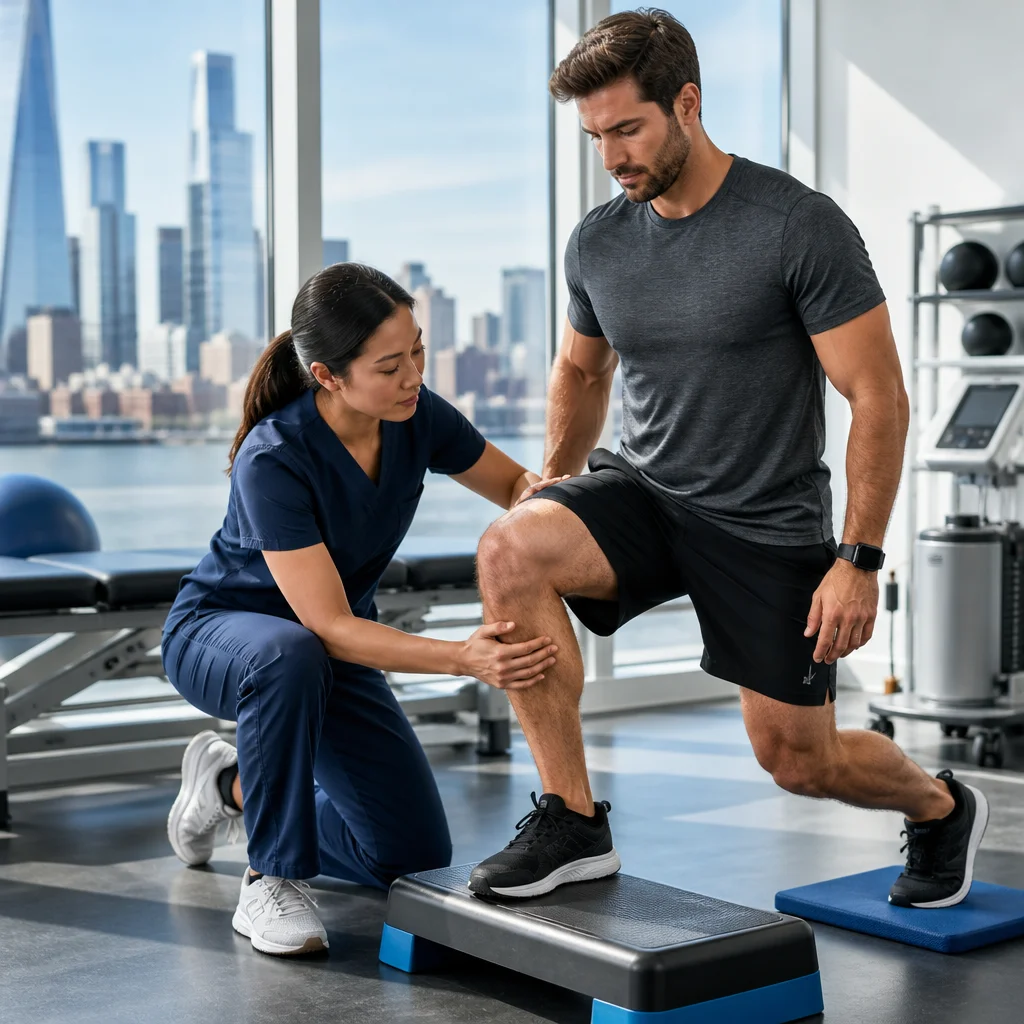
At NYPT Health and Rehab, every patient receives one-on-one physical therapy. Your session is not shared with another patient, and your clinician focuses entirely on your movement, your symptoms, and your goals. This structure matters because recovery depends on precise feedback: small adjustments in cueing, load, and progression that are difficult to deliver in a crowded room.
One-on-one care supports recovery in several concrete ways:
Real-time movement correction. Your clinician can see a knee caving during a squat and adjust the cue immediately. 2. Progression matched to your response. If you tolerate a load well, the plan advances. If symptoms rise, it steps back without waiting a week. 3. Consistent communication. You can report how a session affected you, and that information shapes the next visit. 4. Schedule flexibility. Sessions can be arranged around demanding work and training calendars.
Here is a practical example. A patient recovering from an ankle sprain may need balance work, single-leg loading, and gradual return to jumping. In a group setting, those progressions can stall because the clinician cannot monitor everyone closely. In a one-on-one session, we can test each step and move forward as soon as you are ready.
Prepare for your sessions by writing down your top three goals, such as climbing stairs without pain, running a 10K, or returning to pickup basketball. Share them at intake so every exercise links back to something meaningful.
Advanced Manual Therapy and Hands-On Care We Provide
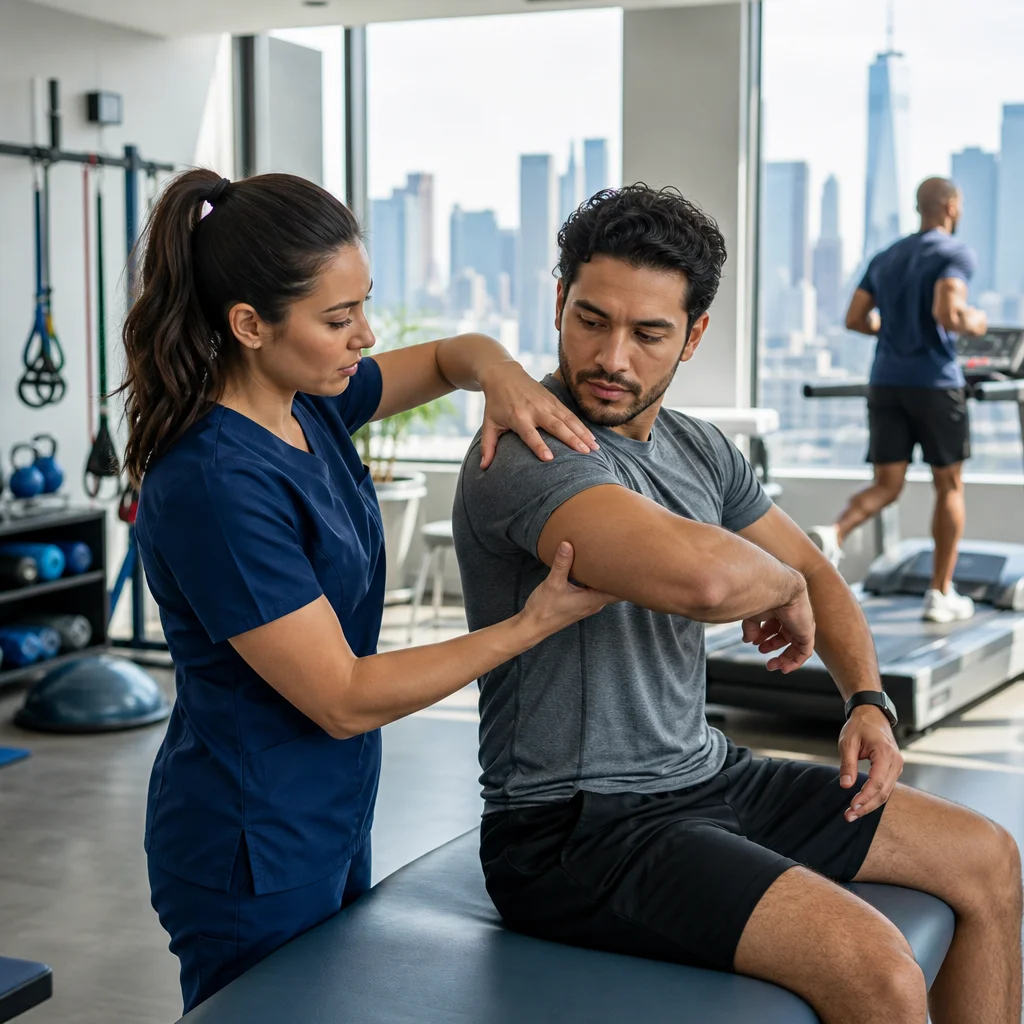
Manual therapy is the skilled, hands-on treatment of muscles, joints, and soft tissues. Our clinicians use techniques such as joint mobilization, soft tissue work, myofascial release, and targeted stretching to reduce stiffness, improve range of motion, and help you move with less guarding.
Manual therapy is most useful when it is combined with active exercise. Hands-on work can create a window where movement feels easier, and that window is then used to build strength and control. Without the active component, relief tends to fade.
What you can expect during hands-on care:
A clear explanation of what each technique is meant to achieve
Ongoing checks on how your tissues and joints respond
Exercises you can perform between visits to maintain progress
If you are curious whether hands-on care is right for your situation, ask your clinician how it fits into your overall plan and when you should expect to transition to more independent work.
High-Tech Recovery Tools: Anti-Gravity Treadmill and Shockwave Therapy
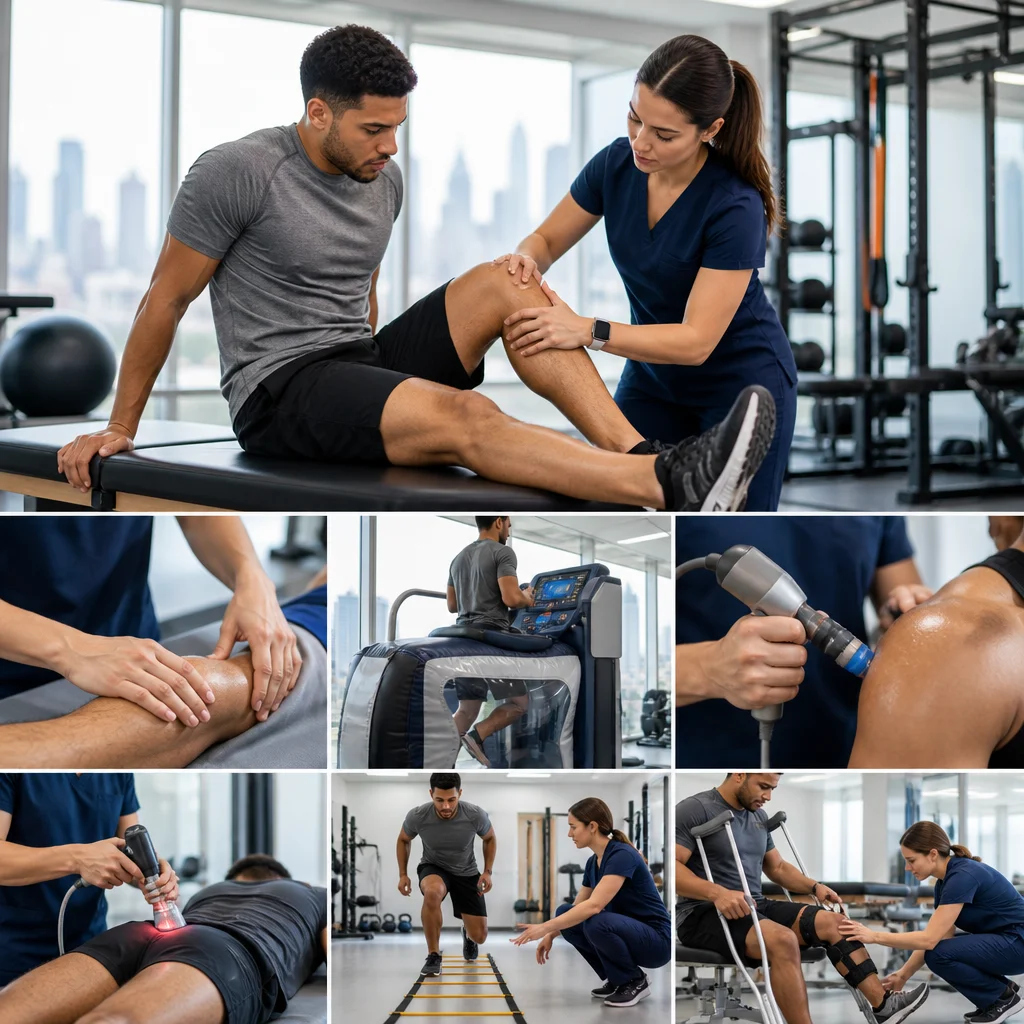
Some recovery goals benefit from technology that adds precision or allows movement earlier in the process. Two tools we use regularly are the anti-gravity treadmill and shockwave therapy.
Anti-gravity treadmill training uses air pressure to reduce the body weight you bear while you walk or run. This lets patients practice gait, running mechanics, and cardiovascular conditioning at a reduced load. It is especially useful when weight-bearing is limited or when you want to build tolerance gradually. Sessions can be adjusted by percentage of body weight, speed, and incline, so progress is measurable.
Shockwave therapy delivers acoustic pulses to targeted tissue. Clinicians commonly use it for persistent tendon and soft tissue conditions. Treatment is typically delivered over several sessions, and response varies from person to person, so your clinician will set realistic expectations based on your condition.
Both tools work best as part of a broader plan. If you are interested in how shockwave fits into athlete recovery, our page on shockwave therapy for athletes explains the approach in more detail.
Ask your clinician which tool, if any, matches your stage of recovery and why.
Sports-Specific Injury Recovery and Post-Surgical Rehabilitation
Sports injuries and surgical procedures both require careful progression, but the details differ. Sports-specific rehabilitation focuses on restoring the exact capacities your sport demands, such as acceleration, deceleration, overhead control, or endurance under fatigue. Post-surgical rehabilitation follows the surgeon's protocol and gradually rebuilds function while protecting the repaired structure.
For sports injuries, we typically work through phases:
Protection and symptom control while avoiding aggravating movements
Restoration of range of motion and basic strength
Sport-specific loading, such as change-of-direction drills or throwing progressions
Return-to-activity testing with objective measures before full participation
For post-surgical patients, communication with your surgeon is essential. We follow the timeline they provide, and we adjust exercises based on how your body responds. Early visits often focus on swelling, motion, and safe weight-bearing; later visits add strength, power, and functional tasks.
If you are preparing for surgery or have recently had one, bring your operative report and discharge instructions to your first appointment.
Integrating Strength, Conditioning, and Wellness for Lasting Results
Recovery does not end when pain resolves. Lasting results come from building the strength, conditioning, and habits that keep you resilient. Our integrated approach includes return-to-action strength and conditioning with personal training, along with yoga and massage therapy to support mobility and recovery between sessions.
A useful way to think about this stage:
Strength protects joints and gives you capacity for your sport or daily demands.
Conditioning builds the endurance needed to perform without fatigue-related breakdown.
Mobility and recovery work, such as yoga or massage, helps tissues tolerate training and reduces stiffness.
For example, a patient returning to rowing may follow a strength program twice a week, mobility work on rest days, and a gradual increase in water time. Each element supports the others.
Start with one change this week: schedule two strength sessions, add ten minutes of mobility on your off days, or set a consistent bedtime to support recovery.
Returning to Peak Performance: Why Choose NYPT Health and Rehab
Returning to your sport or your demanding schedule is the goal of every plan we build. At NYPT Health and Rehab, we combine one-on-one physical therapy, advanced manual therapy, high-tech tools, sports-specific rehabilitation, and performance-focused strength training under one roof in New York City. You work with a clinician who knows your history, your goals, and your progress.
We do not promise specific outcomes, because every injury and every body responds differently. What we do promise is a plan built around you, clear communication, and steady progression toward the activities that matter most to you.
Here are your next steps:
Write down your goals and a one-week log of your activity and symptoms. 2. Review our one-on-one sports injury rehab options to see how sessions are structured. 3. Visit https://www.nypt.nyc to request an evaluation and begin a plan tailored to your return to activity.
Frequently Asked Questions (FAQ)
Do you offer one-on-one sessions, or will I be sharing my therapist's time with other patients?
We schedule every session as one-on-one, so your therapist's full attention stays on your movement, pain patterns, and progress for the entire visit. We build each plan around your specific injury, training schedule, and goals rather than a standard protocol. This individual focus lets us adjust your treatment as soon as we see how your body responds.
What kinds of injuries and recovery needs do you treat?
We work with active New Yorkers and competitive athletes dealing with sports injuries, chronic pain, and recovery after orthopedic surgery. Our team also prepares patients for a return to training through strength and conditioning work. If you are unsure whether we are the right fit, we are happy to review your history and explain what we can offer.
How do anti-gravity treadmill and shockwave therapy fit into my treatment?
We use the anti-gravity treadmill to let you load your joints and build running or walking capacity at a reduced percentage of body weight, which is useful in the early stages of many lower-body rehabilitation programs. We apply shockwave therapy to target tendon and soft tissue conditions that have not responded well to rest or other care. Your therapist will confirm whether these tools are appropriate for your condition before including them in your plan.
Comments