

Top 7 Ways NYC Athletes Recover Faster With Expert Sports Injury Rehab
Table of Contents
1. One-on-One Physical Therapy Built Around Your Injury
Recovering from a sports injury in New York City is hard. Between training schedules, work deadlines, and the constant pace of the city, it can feel like there is never enough time to heal properly. At NYPT Health & Rehab, we see this every day with runners, cyclists, climbers, weekend league players, and competitive athletes who want to get back to their routines without re-injuring themselves. The good news is that recovery is more predictable when the plan is built around you. Here are seven ways we help urban athletes recover faster with expert sports injury rehab NYC.
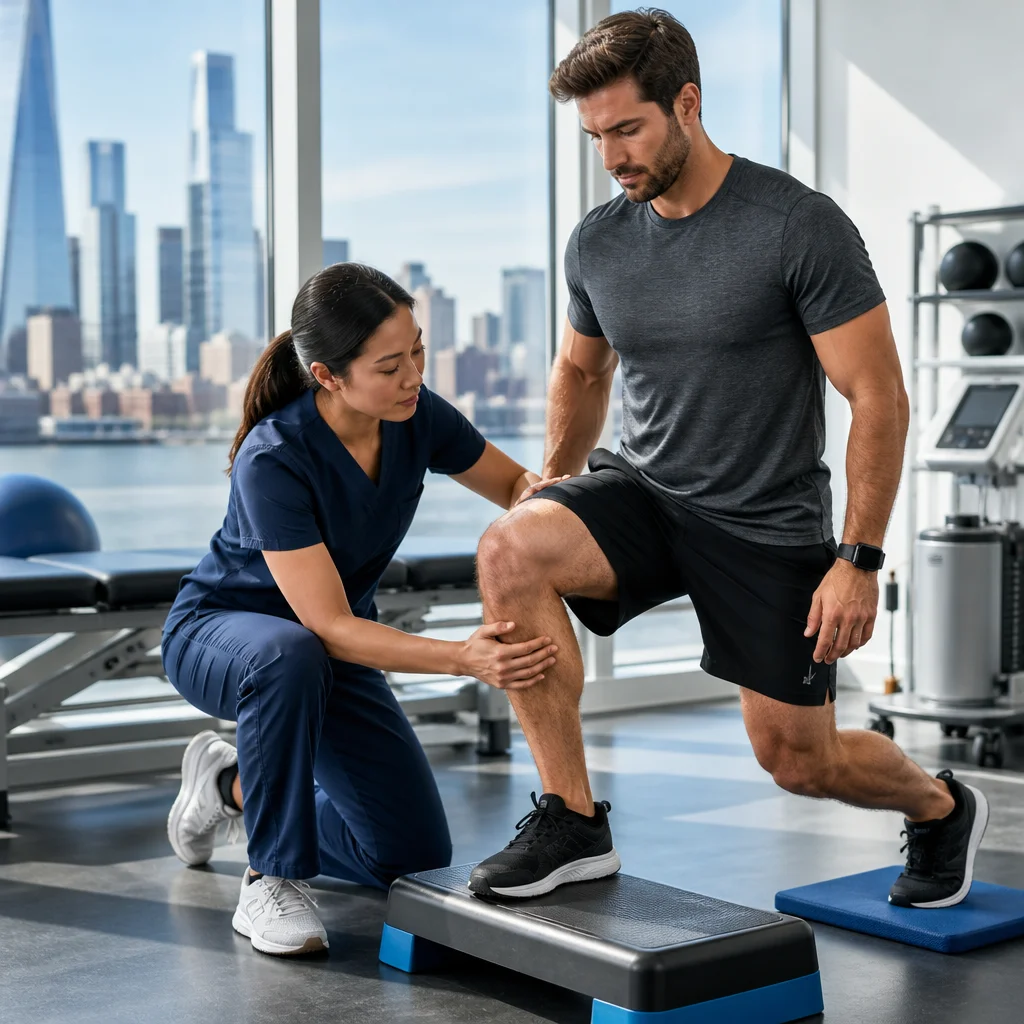
Many clinics rotate patients through shared exercise areas with generic routines. Our approach is different. Every session is one-on-one with a licensed therapist who evaluates how your body moves, where the load is going, and what your daily demands look like.
This matters because two runners with the same diagnosis can need very different plans. One may spend ten hours a day at a desk, while another trains on hills before work. We adjust exercise selection, intensity, and progression to fit that reality.
What to do next: Bring a list of your training schedule, work demands, and any activities that flare your symptoms. Sharing these details at your first visit helps us design a plan that fits your life instead of a template.
2. Advanced Manual Therapy for Faster Tissue Recovery
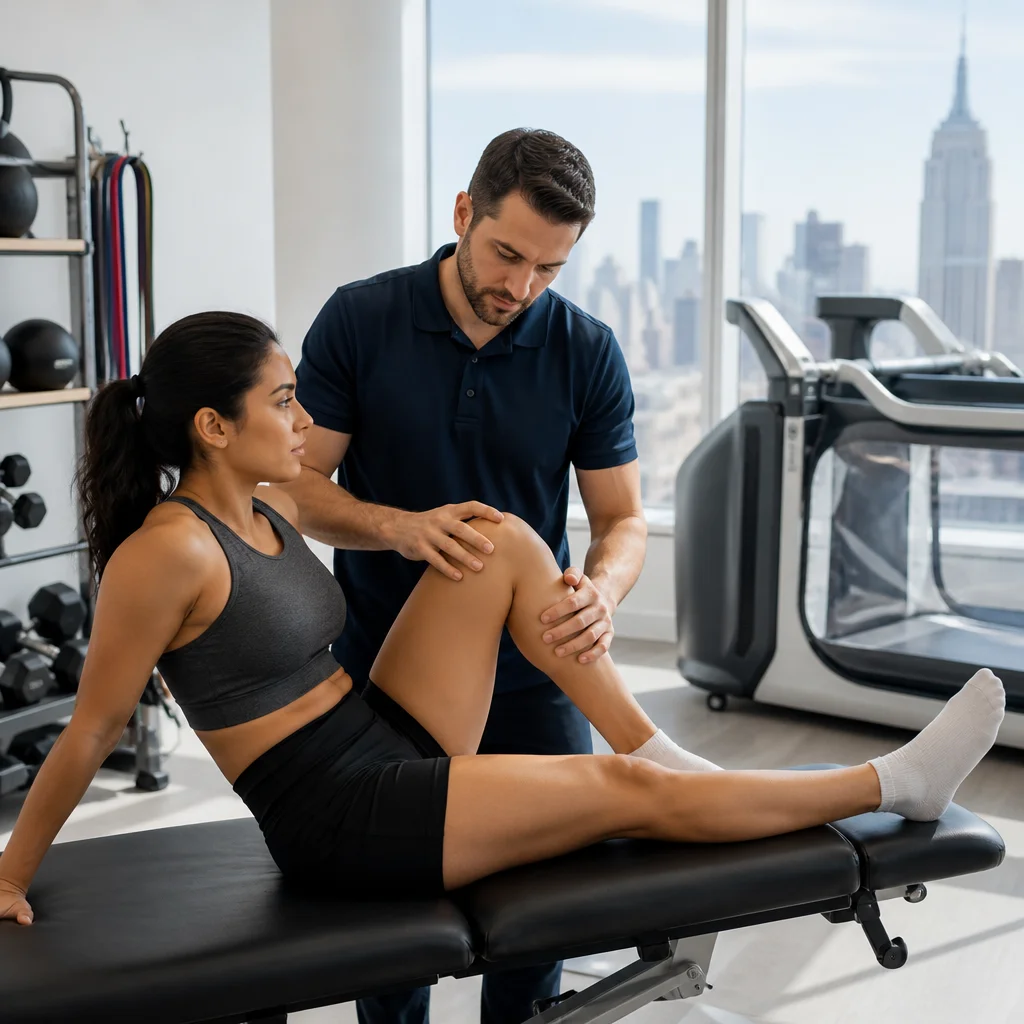
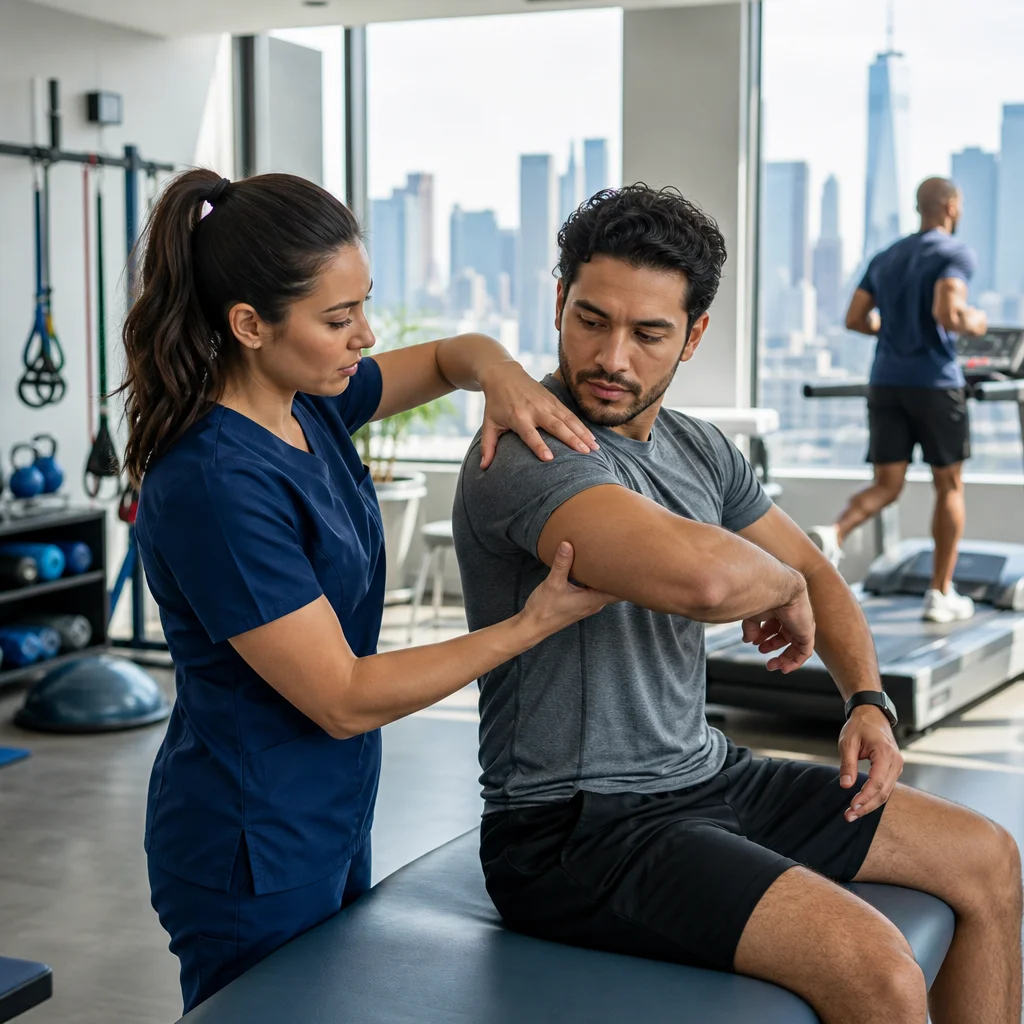
Hands-on treatment remains one of the most effective tools for restoring movement. Our therapists use advanced manual techniques to address joint mobility, soft tissue restrictions, and the guarding patterns that often develop after an injury.
Manual therapy works best when paired with active exercise. We use hands-on work to create the window where you can move more freely, then reinforce those gains with targeted strengthening so the improvement lasts beyond the treatment table.
Practical tip: Note which movements feel stiff or restricted in your warm-up. Those observations give us a clear starting point for manual work and help us measure progress from week to week.
3. Anti-Gravity Treadmill Training to Protect Healing Joints
Returning to running or jumping too soon can slow healing. Our anti-gravity treadmill lets you train at a reduced percentage of your body weight, so you can keep your cardiovascular fitness and gait mechanics while the injured tissue heals.
This is especially valuable for lower-limb injuries, post-surgical patients, and athletes who need to rebuild load tolerance gradually. Sessions can be adjusted in small increments, which makes progress measurable and controlled. You can learn more about how this works in our guide to anti-gravity treadmill therapy.
A useful example: A runner recovering from a stress reaction can maintain roughly the same running form at a lower load, then increase percentage of body weight as pain-free tolerance improves.
4. Shockwave and Class IV Laser Therapy for Pain Relief
Pain often limits how much rehab you can complete. We use shockwave and Class IV laser therapy as adjunct tools to help manage pain and support tissue healing alongside your exercise program. These modalities are part of a broader plan, not a standalone fix.
Shockwave therapy uses acoustic pressure waves that are commonly applied to tendon and soft tissue complaints. Class IV laser therapy delivers light energy intended to support circulation and comfort. Whether either is appropriate depends on your evaluation, and we will explain the reasoning before any treatment begins. For more detail, see our resource on sports-specific shockwave therapy.
What to do next: Ask your therapist how these treatments fit into your progression plan and what changes in pain or function we will track.
5. Sports-Specific Recovery Plans for Return to Competition
Getting out of pain is only the first milestone. Returning to competition requires that your body handle the specific forces of your sport: sprinting, cutting, overhead throwing, heavy lifting, or long endurance efforts.
We build sports-specific progressions that gradually reintroduce those demands. For a basketball player, that may mean moving from controlled hops to lateral bounds to reactive drills. For a cyclist, it may mean building from steady-state sessions to climbs and sprint intervals.
Helpful checklist before return to play:
Pain-free performance of sport-specific movements
Symmetrical strength compared with the uninjured side
Confidence during fatigue, not just at rest
Clear communication with your coach or team physician
6. Post-Surgical Orthopedic Rehabilitation Done Right
After surgery, the goal is to protect the repair while restoring motion, strength, and function on a timeline that respects surgical precautions. Our post-surgical orthopedic rehabilitation starts with clear communication with your surgeon and a plan that matches your procedure.
Early phases focus on swelling control, range of motion, and safe loading. Later phases emphasize strength, balance, and return to work or sport. Because every repair heals differently, we reassess regularly and advance you only when your tissue and function are ready.
Our recommendation: If you have an upcoming procedure, schedule a consultation before surgery. Pre-operative conditioning and a planned recovery timeline can make the post-operative phase smoother and more predictable.
7. Integrated Strength, Conditioning, and Wellness for Lasting Results
Recovery should not end when pain fades. Lasting results come from building the strength, mobility, and resilience that keep you healthy under the demands of city life and competition. Our return-to-action strength and conditioning personal training bridges the gap between rehab and full training.
We also integrate yoga and massage therapy to support mobility, recovery between sessions, and stress management. These services complement your plan and help you maintain the gains you worked hard to earn.
Why this matters: Athletes who continue structured strength work after rehab are better prepared for the loads they will face. This is the stage where we help you move from simply recovering to performing with confidence.
Choosing where to rehab is one of the most important decisions an injured athlete makes. At NYPT Health & Rehab, we combine one-on-one physical therapy, advanced manual therapy, anti-gravity treadmill training, shockwave and Class IV laser therapy, post-surgical rehabilitation, and performance-focused conditioning under one roof. That integration means your plan stays coordinated from first evaluation to return to competition. If you are ready to get back to the pace of your life, contact our team to schedule your evaluation and start building a recovery plan designed around you.
Frequently Asked Questions (FAQ)
What makes your one-on-one physical therapy different from a group clinic setting?
We work with each patient individually for the full length of every session, so your treatment plan is built around your specific injury, your training schedule, and your recovery goals. Your therapist monitors your movement, adjusts exercises in real time, and tracks your progress from visit to visit. This focused attention helps us catch small setbacks early and keep your rehab moving in the right direction.
How do we decide whether shockwave or Class IV laser therapy is right for my injury?
We assess your condition through a thorough evaluation before recommending any modality, since these treatments suit some tendon, muscle, and soft tissue problems better than others. We explain how each option works, what results you can reasonably expect, and how it fits alongside your hands-on and movement-based care. You are always part of that decision, and we will tell you if we believe another approach is more appropriate.
Can we train with you if we are returning to competition after surgery?
Yes. We coordinate post-surgical orthopedic rehabilitation with sports-specific recovery and return-to-action conditioning so that your progress is measured against the demands of your sport, not just general mobility. We set clear milestones with you and communicate with your surgeon when needed, so you know exactly what must be met before returning to full competition.
Comments