

Specialized Orthopedic Rehabilitation in NYC: Return to Peak Performance
Table of Contents
Why Urban Athletes Need Specialized Orthopedic Care
Life in New York City asks a lot of your body. You might run along the Hudson in the morning, commute by subway with a heavy bag, climb stairs in a walk-up, and then train hard at the gym after work. Each of those activities puts repeated stress on joints, tendons, and muscles, and many active New Yorkers don't notice the cumulative toll until something gives way.
Specialized orthopedic rehabilitation is built for this kind of demand. It looks at how your injury interacts with your sport, your work schedule, and your daily routine, rather than treating the injury in isolation. That context matters because a runner recovering from a stress fracture needs a very different plan than an office worker with the same diagnosis.
At our clinic, we start every plan by asking how you move through a typical week. Write down your training schedule, your commute, and the activities that aggravate your symptoms. Bringing this list to your first visit helps us build a plan that fits your real life.
Common Orthopedic Injuries Affecting Active New Yorkers
The injuries we see most often tend to come from overuse, sudden load, or a combination of both. Some of the most common include:
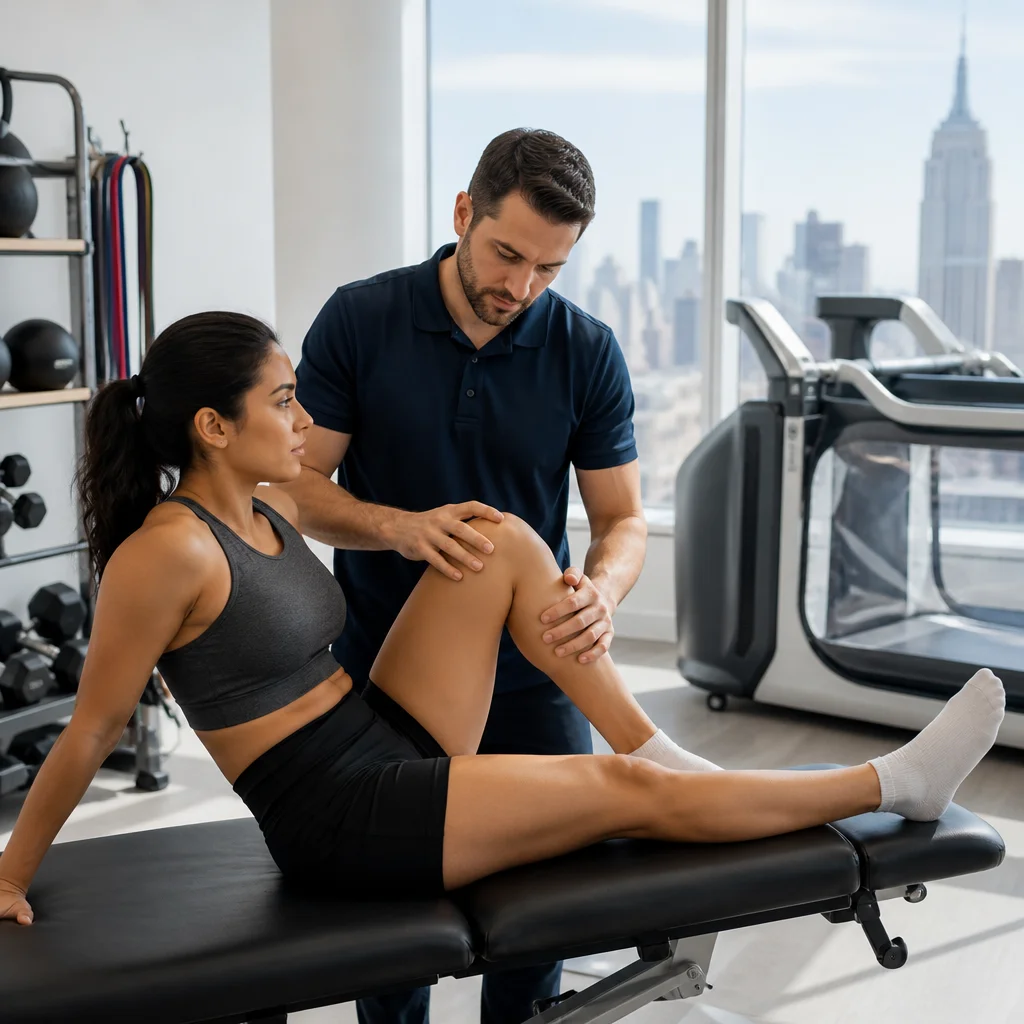
Knee pain, including patellofemoral pain and meniscus irritation, often linked to running volume or frequent stair climbing
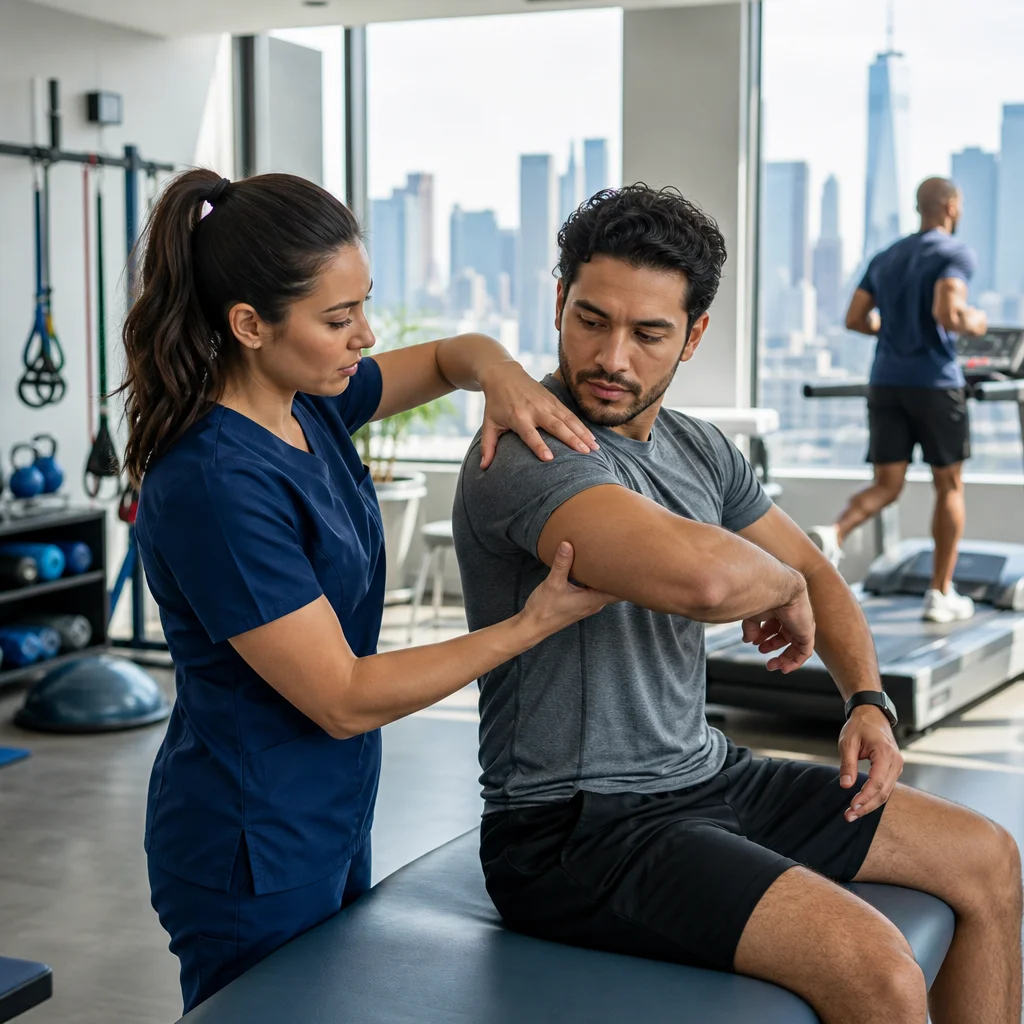
Shoulder injuries, such as rotator cuff strain or impingement, common in swimmers, climbers, and weightlifters
Ankle sprains and Achilles tendon problems, which show up in basketball, tennis, and recreational soccer players
Lower back and hip pain, frequently tied to prolonged sitting, rowing, or heavy lifting
Hamstring and calf strains, especially when training ramps up quickly
Pain that lasts more than a couple of weeks, swelling that does not settle, or pain that wakes you at night deserves a professional evaluation. A physical therapist can help determine what is happening and whether imaging or referral to a physician is needed.
How Our One-on-One Approach Differs
Many clinics schedule several patients into the same time slot, which means less direct attention for each person. We take a different approach. Every session at NYPT Health and Rehab is one-on-one, so your therapist observes your movement, adjusts your technique in real time, and modifies your program based on how you respond.
This format offers several practical advantages:
Your therapist can spot compensations, such as a knee collapsing inward during a squat, that are easy to miss in a group setting.
Exercises progress at the pace your body can handle, not the pace of a class.
You get clear, specific feedback you can apply between sessions.
If you have a demanding schedule, ask about session times early in your planning. Consistency matters more than intensity in rehabilitation, and a plan you can actually attend will serve you better than an ideal one you skip. Learn more about one-on-one sports injury rehab and how we structure sessions.
Our Advanced Hands-On Manual Therapy Techniques
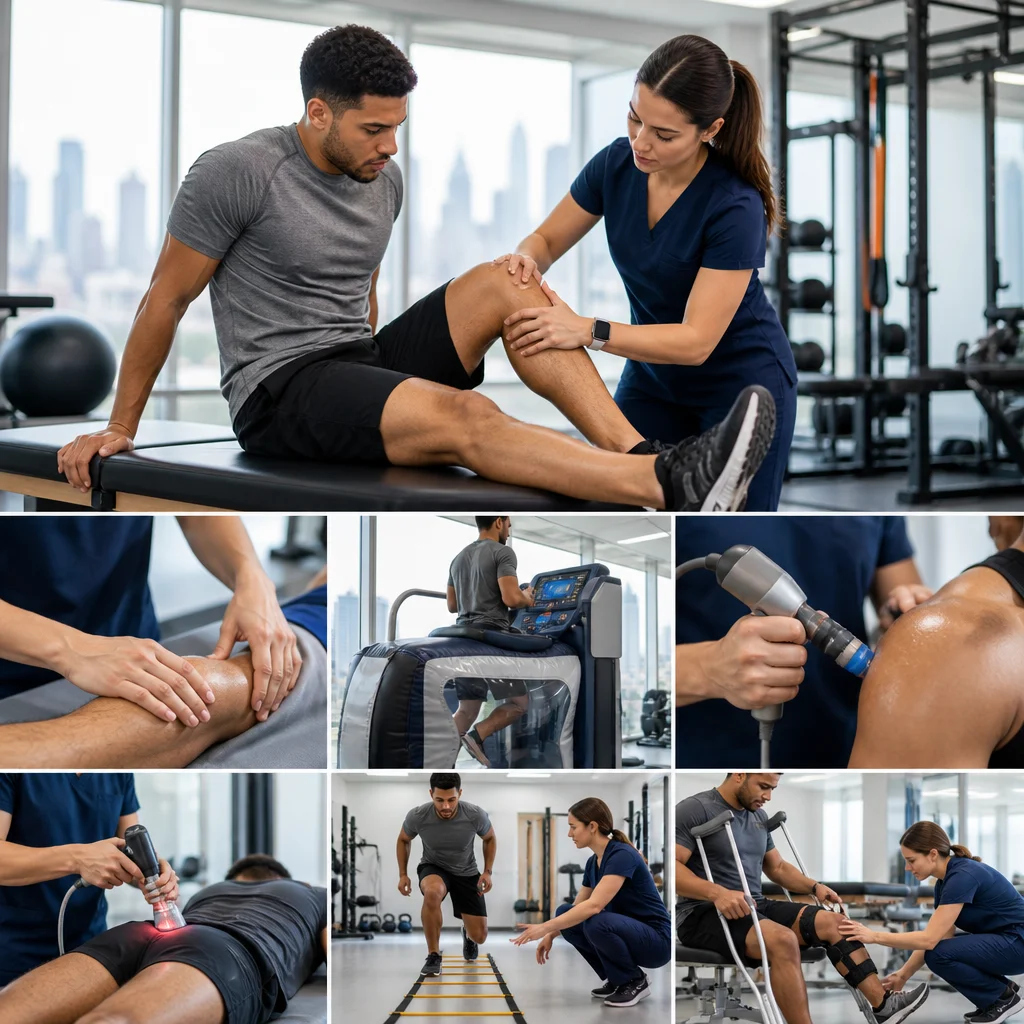
Manual therapy refers to skilled hands-on techniques such as joint mobilization, soft tissue work, and targeted stretching. Used alongside exercise, these methods can help reduce stiffness, improve joint motion, and make it easier to load the affected area with strength training.
In practice, we often combine techniques like these:
Joint mobilization to restore movement in a stiff ankle or hip
Soft tissue techniques to address tension in calves, hamstrings, or the upper back
Neural mobilization when nerve sensitivity contributes to pain or tingling
Guided stretching that targets specific restrictions identified during your evaluation
Manual therapy works best as part of a broader program. If you notice you feel looser after a session but tighter again within a day, that is useful information. Tell your therapist, because it often means the strength and control portion of your plan needs more emphasis.
High-Tech Recovery Tools We Use: Anti-Gravity Treadmills and Laser Therapy
Some phases of recovery require controlled, progressive loading. Our clinic uses several technologies to support that process.
Anti-gravity treadmill training uses air pressure to reduce the body weight you bear while you walk or run. This allows you to practice running mechanics and build tolerance well before you can handle full body weight. Athletes returning from lower-body injuries often find it valuable for regaining confidence with movement.
Shockwave therapy delivers acoustic pulses to targeted tissue. Clinicians often use it for chronic tendon problems, such as plantar fasciitis or patellar tendinopathy, where symptoms have persisted despite other care. Response varies from person to person, so your therapist will explain what to expect and monitor your progress.
Class IV laser therapy uses high-powered light to support tissue in the treatment area. It is commonly used alongside exercise to help manage pain and inflammation.
These tools complement hands-on care and exercise. They are not a replacement for a progressive strength program, and we will discuss whether each option is appropriate for your condition.
Post-Surgical Orthopedic Rehabilitation Pathway
Surgery is one step in a longer process. Post-surgical rehabilitation focuses on protecting the repair in early stages, restoring range of motion, rebuilding strength, and eventually returning to the activities you care about. The timeline depends on the procedure, your surgeon's protocol, and your overall health.
A typical pathway includes:
Early phase: Managing swelling, protecting the surgical site, and regaining basic movement within surgeon-approved limits. 2. Middle phase: Progressing range of motion and beginning strength work, including controlled loading. 3. Late phase: Building power, endurance, and sport-specific skills as your tissues allow. 4. Return phase: Gradually reintroducing full training and competition with clear criteria for readiness.
Always follow your surgeon's instructions, and share them with your therapist before your first visit. Patients recovering from procedures often benefit from a detailed look at post-surgical orthopedic rehab options in Manhattan.
Sports-Specific Recovery and Return-to-Action Conditioning
Feeling good in daily life does not mean you are ready for your sport. Return to action should be tested, not assumed. We design conditioning that mirrors the demands of your activity, whether that is sprinting, cutting, overhead throwing, or heavy lifting.
Our return-to-action process typically includes:
Measuring strength and symmetry between the injured and uninjured side
Testing single-leg balance, jumping, or throwing tasks relevant to your sport
Gradually increasing training speed, load, and complexity
Setting clear benchmarks before you resume full competition
Strength and conditioning sessions with a personal trainer can bridge the gap between rehab and performance. Ask your therapist what benchmarks you need to meet before you return, so you know exactly what you are working toward.
Integrating Yoga, Massage, and Wellness for Full Recovery
Recovery involves more than the injured joint. Sleep, stress, nutrition, and mobility in the rest of your body all influence how well you heal. Our integrated wellness services support those areas.
Yoga can improve mobility, breathing, and body awareness, and it can be adapted for many injury types.
Therapeutic massage can help ease muscle tension and support relaxation between training blocks.
Mobility work targets areas that often get overlooked, such as the hips and thoracic spine, which affect how you move everywhere else.
Start with one addition, such as a weekly yoga session or a massage every few weeks, and see how your body responds before adding more. Share your goals with your therapist so these services complement your main plan.
What to Expect During Your Recovery Journey With Us
Knowing what happens next can make the process feel less uncertain. Here is what a typical course of care looks like at NYPT Health and Rehab:
Initial evaluation: We review your history, goals, and schedule, then assess movement, strength, and function. 2. Personalized plan: You receive a plan with clear goals, session frequency, and home exercises. 3. Regular progress checks: We reassess your progress and adjust the plan as your body responds. 4. Transition to independence: Over time, we shift responsibility toward you, building a home program you can maintain.
Recovery is rarely a straight line. Some weeks will feel strong and others will feel frustrating. Track your symptoms, activity levels, and sleep so you and your therapist can spot patterns together.
Getting Started With NYPT Health and Rehab
If you are dealing with a sports injury, chronic pain, or recovery from surgery, the next step is simple. Here is how to begin:
Gather any imaging reports, surgical notes, or referrals you have.
Write down your goals, such as returning to running, lifting, or competing by a certain date.
Note your weekly schedule so we can plan sessions that fit.
Visit our website to learn more and request an appointment.
We are glad to help you understand your options and build a plan that supports your return to peak performance. Reach out to NYPT Health and Rehab, and let us help you move with confidence again.
Frequently Asked Questions (FAQ)
What types of injuries do you treat at NYPT Health and Rehab?
We treat a wide range of orthopedic and sports-related conditions, including ligament and tendon injuries, joint pain, muscle strains, and recovery after orthopedic surgery. Our team builds each plan around your specific injury, activity level, and goals, whether you are returning to competitive training or simply trying to move through a busy day without pain. We begin with a thorough assessment so we can identify the source of the problem rather than only treating the symptoms.
How is a one-on-one session different from a typical clinic visit?
We dedicate your full session to you, with one therapist focused on your movement, progress, and questions for the entire visit. This means your treatment is adjusted in real time based on how your body responds, rather than moved along a set schedule. You also get consistent care from the same clinician, which helps us track your progress accurately from week to week.
Do I need a referral to start physical therapy with you?
Please check your insurance plan and state requirements, as coverage rules vary. In many cases you can begin care without a physician referral, but we recommend bringing any imaging reports, surgical notes, or prior treatment records to your first appointment. Our team will review what you bring and help you understand your next steps before your first session.
Comments