

AlterG Anti-Gravity Treadmill: Clinical Rehabilitation vs. Commercial Gym Access
Table of Contents
Why Athletes Choose Clinical Anti-Gravity Treadmill Training Over Gym Equipment
Understanding How Anti-Gravity Technology Reduces Impact on Injured Joints
The Critical Difference Between Clinical Supervision and Unsupervised Gym Access
How Our Physical Therapists Customize AlterG Protocols for Your Specific Injury
Integration of Anti-Gravity Training With Comprehensive Rehabilitation Programs
Real Results: Return to Peak Performance Through Clinical-Grade Treatment
What to Expect During Your First AlterG Session at Our NYC Clinic
Why Serious Athletes Trust Clinical Facilities for High-Tech Recovery Solutions
Why Athletes Choose Clinical Anti-Gravity Treadmill Training Over Gym Equipment
When you're sidelined by a running injury, stress fracture, or knee pain, returning to training feels impossible. Most athletes try to "push through" or modify their routines on standard treadmills, but that approach often extends recovery and risks re-injury. That's where anti-gravity treadmill training makes the difference.
We've worked with hundreds of active New Yorkers who discovered that commercial gym equipment simply can't replicate what specialized clinical technology offers. Standard treadmills don't solve the core problem: the impact force traveling through damaged tissue. Anti-gravity training removes that impact entirely, letting you maintain your cardiovascular fitness and neuromuscular patterns while your body heals.
Athletes choose clinical anti-gravity treadmill training because it actually gets them back to their sport faster, not just faster than walking on flat ground. You can resume interval work, tempo runs, and sport-specific movements weeks earlier than traditional rehabilitation allows. The difference isn't subtle: it's the difference between frustration and genuine progress.
Your immediate next step: Schedule a consultation to discuss whether anti-gravity training fits your specific injury and timeline.
Understanding How Anti-Gravity Technology Reduces Impact on Injured Joints
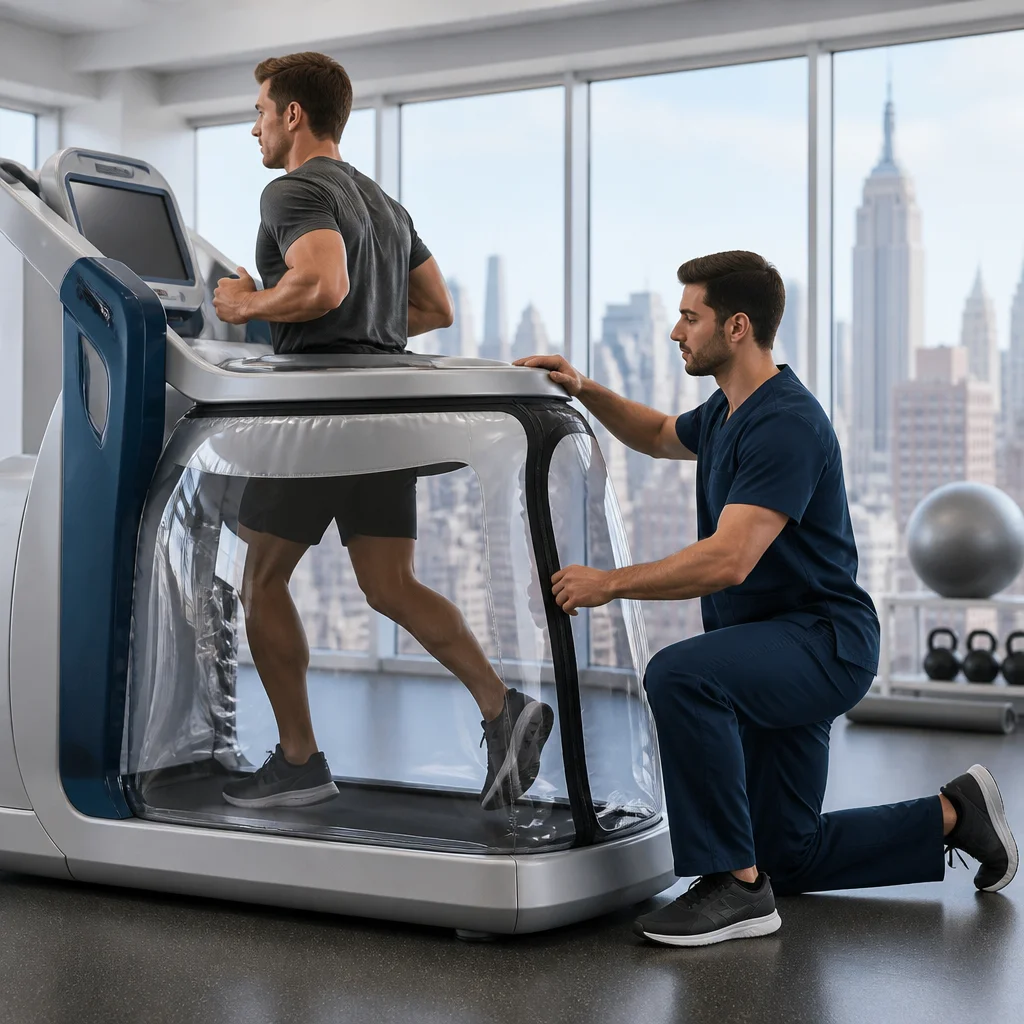
The AlterG anti-gravity treadmill uses air-pressure technology to offload your body weight with precision. Rather than eliminating gravity entirely (which would feel unnatural), it reduces loading by a percentage you control, typically between 20% and 80% of your total weight.
Here's the practical benefit: if you weigh 160 pounds and we set the machine to 50% unloading, you're effectively running at 80 pounds of impact. Your joints, ligaments, and bones experience a fraction of the stress while your muscles still work through the full running motion. The neural patterns that keep you strong and coordinated stay intact.
This matters significantly for different injuries. A runner recovering from a stress fracture needs aggressive unloading early on, gradually increasing weight bearing as bone density returns. An athlete rehabbing from ACL reconstruction needs controlled loading that protects the graft while strengthening surrounding musculature. A cyclist with chronic knee pain benefits from high-resistance, low-impact work that builds capacity without flare-ups.
The technology isn't theoretical. Orthopedic surgeons, sports medicine physicians, and research institutions recommend anti-gravity training specifically because it reduces compressive forces while maintaining running biomechanics. Your body adapts to the demands placed on it, and clinical-grade unloading allows appropriate adaptation without setback.
Take action: Discuss your specific injury pattern with our team so we can determine your starting unloading percentage and progression plan.
The Critical Difference Between Clinical Supervision and Unsupervised Gym Access
Some commercial gyms and high-end facilities have acquired AlterG machines for client use, but access to equipment and expertise are entirely different things. You need both.
Without clinical oversight, several problems emerge. First, athletes often progress too aggressively, increasing weight bearing or speed before their tissue is ready, causing re-injury. Second, poor running form on an anti-gravity treadmill doesn't get corrected, meaning you return to your sport with the same movement dysfunction that caused the initial injury. Third, there's no objective data tracking tissue readiness, pain response, or performance metrics to guide progression decisions.
Our physical therapists observe your movement patterns on the anti-gravity treadmill, assess your biomechanics, and adjust your protocol in real time. We watch for compensatory movements, asymmetries, or signs that you're pushing too hard too fast. We document your tolerance, measure your progress objectively, and coordinate anti-gravity training with the rest of your rehabilitation plan.
This supervision prevents setbacks. Athletes working with us return to their full sport confidently, knowing they've progressed safely and systematically. They're not guessing whether they're ready or whether their knee felt "pretty good today."
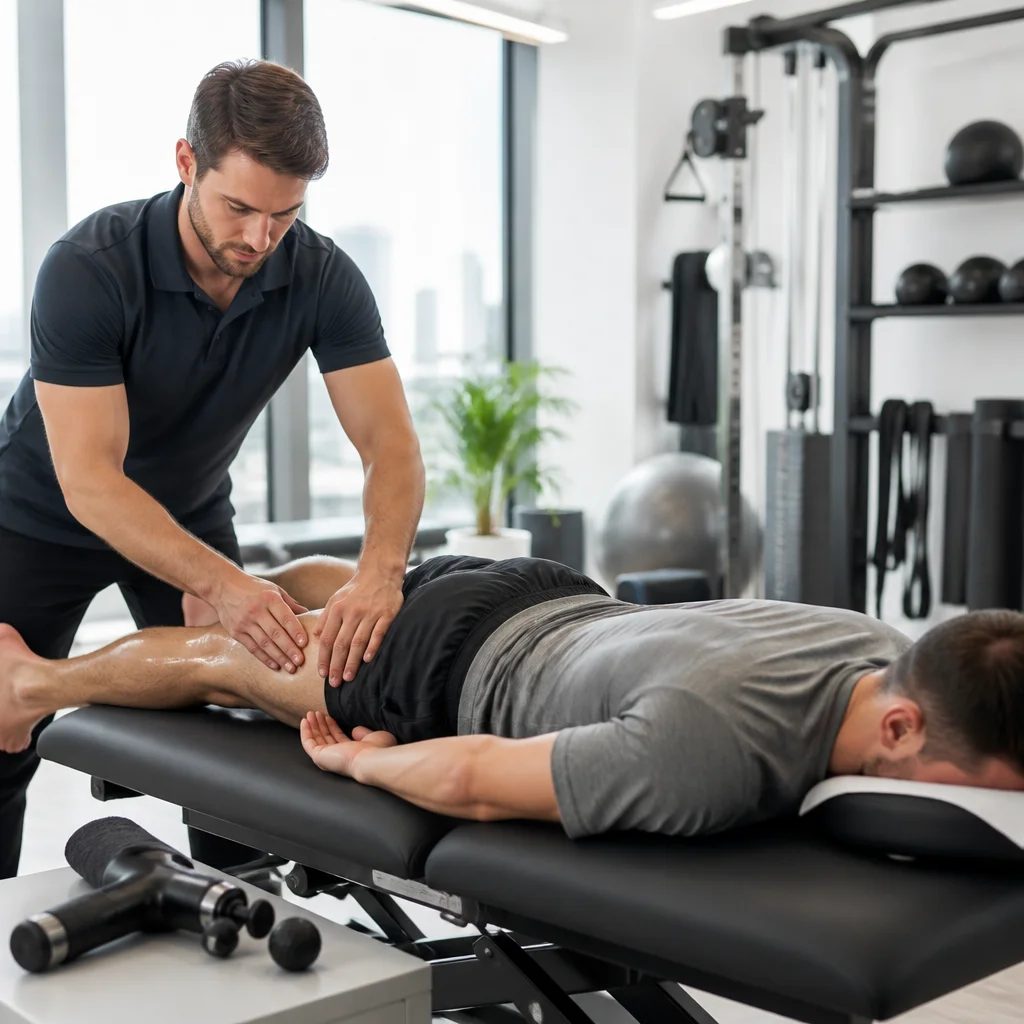
Clinical supervision also integrates anti-gravity training with manual therapy, strength training, and sport-specific conditioning, addressing the whole injury rather than just using fancy equipment.
What you should do: Ask potential providers how they supervise anti-gravity sessions and how they measure progression beyond just increasing treadmill speed.
How Our Physical Therapists Customize AlterG Protocols for Your Specific Injury
Every injury tells a different story, and cookie-cutter protocols don't work. We build anti-gravity training programs based on your diagnosis, tissue healing timeline, movement patterns, and athletic goals.
A runner with plantar fasciitis needs different progression than a soccer player recovering from an ankle sprain. A post-surgical orthopedic patient follows a more structured timeline than someone managing chronic tendinitis. We assess your baseline function, understand what triggers your pain, and design a protocol that respects your healing biology.
Your initial sessions with us start with a comprehensive evaluation. We discuss your injury history, how it happened, what makes it better or worse, and what you want to return to doing. We perform movement assessments on the anti-gravity treadmill at minimal or no loading, observing your gait pattern and any visible pain or limitation. We identify where you're compensating and where you need work.
From there, we set your starting unloading percentage conservatively, letting you experience success and confidence rather than pain. We establish realistic weekly progression targets based on your tissue timeline and response. We communicate clearly about what you should feel during sessions (working effort, not sharp pain) and what to expect afterward (mild muscle fatigue, not joint soreness).
Many athletes also benefit from our Anti-Gravity treadmill therapy integrated with our orthopedic and sports medicine services, creating a truly comprehensive approach.
Your action item: Bring any imaging, surgical reports, or medical notes from your physician to your initial evaluation so we understand your timeline completely.
Integration of Anti-Gravity Training With Comprehensive Rehabilitation Programs
Anti-gravity training is powerful but incomplete on its own. Real recovery requires addressing strength, stability, movement patterns, and sport-specific demands simultaneously.
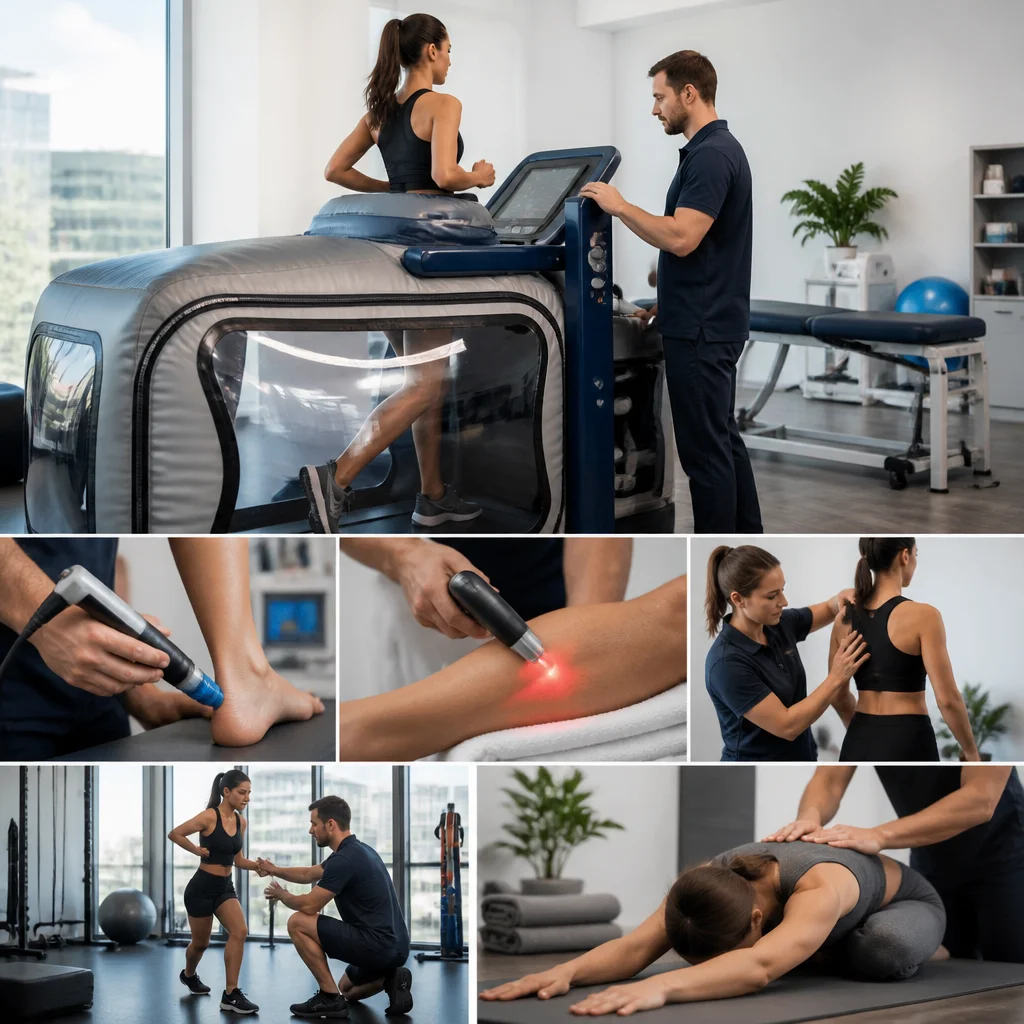
We integrate anti-gravity sessions within a broader program that includes manual therapy, targeted strength training, and functional conditioning. Early in your recovery, you might start with three anti-gravity sessions weekly alongside hands-on manual therapy to address tissue restrictions and improve mobility. As you progress, we layer in resistance training to build strength in the muscles surrounding your injury, preventing recurrence.
For example, a runner recovering from a tibialis posterior strain doesn't just get anti-gravity training. We also address any calf tightness with manual therapy, strengthen ankle stabilizers and foot intrinsics, and progressively challenge your proprioceptive system. By the time you return to full running, you're not just pain-free, you're more resilient than before.
Sport-specific conditioning enters later in your protocol. A soccer player returns to cutting drills and lateral movement on the anti-gravity treadmill before attempting these movements on regular ground. A tennis player practices quick direction changes and explosive movements at reduced impact first, building confidence and capacity.
This integration prevents the common scenario where athletes get discharged from therapy early, feel good for two weeks, then re-injure themselves because they jumped back into full training without proper progression.
Next step: Ask us how anti-gravity training fits into your full recovery timeline and what other services will complement your program.
Real Results: Return to Peak Performance Through Clinical-Grade Treatment
The outcomes speak clearly. Athletes who train with us on the anti-gravity treadmill return to their sport faster, with greater confidence, and with lower recurrence rates than those relying on time and relative rest alone.
We've worked with competitive runners who returned to marathon training within twelve weeks of stress fracture diagnosis. Division III soccer players who resumed full-contact practice eight weeks post-ACL reconstruction. CrossFit athletes who returned to barbell movements and high-intensity training without lingering knee pain. Weekend warriors who went from hobbled and frustrated to running their goal race or playing their beloved sport again.
These results aren't accidental. They come from systematic progression, clinical supervision, and comprehensive rehabilitation that addresses not just the symptoms but the underlying dysfunction.
What matters most: these athletes don't just return to their activity. They return with improved movement quality, better body awareness, and confidence that they can handle the demands of their sport. They're not living in fear of re-injury because they've been progressively loaded and tested throughout their recovery.
Consider this: Ask your potential rehabilitation provider for references from athletes similar to your situation, or inquire about typical timelines for your specific injury type.
What to Expect During Your First AlterG Session at Our NYC Clinic
Your first session starts with detailed conversation and assessment, not jumping straight on the machine. Our physical therapist will review your medical history, discuss your injury and goals, and perform movement tests to establish your baseline.
Once we understand your situation, we'll guide you onto the anti-gravity treadmill. You'll change into comfortable shorts if needed, and we'll fit you with the neoprene chamber that creates the pressurized environment around your lower body. Don't worry; it's comfortable and intuitive.
We'll start with minimal or no weight offloading, letting you experience the sensation. The machine feels different from a regular treadmill initially, but most people adapt within minutes. We'll have you walk first, then progress to very light jogging if appropriate for your recovery stage. We'll monitor your gait, your effort level, and your pain response. If something doesn't feel right, we adjust immediately.
Your first session typically lasts 30-45 minutes, including setup, assessment, and conversation about how the session felt. We'll provide clear guidance about what you should do between sessions and what to watch for. You'll leave with confidence about your next steps and realistic expectations for your recovery.
Why Serious Athletes Trust Clinical Facilities for High-Tech Recovery Solutions
Serious athletes understand that recovery quality determines return-to-sport quality. You wouldn't trust your training to random internet advice or equipment operated by someone without sports medicine expertise. Your rehabilitation deserves the same professionalism.
Clinical facilities like ours combine evidence-based rehabilitation knowledge, specialized equipment like the AlterG treadmill sessions, and experienced physical therapists who understand your goals. We're not trying to sell you as many sessions as possible. We're trying to discharge you efficiently with the skills and strength to stay healthy.
We've worked with enough injured athletes to know what actually works. Anti-gravity training works because it solves a real problem: how to maintain your fitness and movement patterns while your body heals from impact-related injury. It's not magic, but it's powerful when combined with skilled rehabilitation.
When you're ready to return to the sports you love, you deserve a recovery program built on evidence, customized to your injury, and supervised by professionals who understand both the technology and your athletic goals. That's what we offer.
Your first move: Contact us to schedule your comprehensive evaluation and discuss whether anti-gravity training fits your injury recovery plan. We'll create a realistic timeline and answer all your questions.
Frequently Asked Questions (FAQ)
What makes our AlterG anti-gravity treadmill training different from using one at a commercial gym?
We provide clinical supervision and personalized protocol design that gyms simply cannot offer. Our physical therapists analyze your specific injury mechanics, adjust offloading percentages to match your healing stage, and integrate AlterG training into a comprehensive rehabilitation program. We monitor your form in real-time and modify intensity based on your body's response, ensuring you progress safely without re-injury.
How does anti-gravity technology actually help with injury recovery?
The AlterG uses air pressure to reduce your body weight from 0 to 100 percent, which means we can decrease impact on injured joints while you continue weight-bearing movement. This allows us to maintain your cardiovascular fitness and running mechanics during recovery when traditional treadmills would cause pain or setback. We gradually increase your body weight percentage as your tissues heal, creating a structured progression that accelerates return to normal activity.
How long does it typically take to see results with AlterG training at your clinic?
Most of our patients notice improved pain levels and mobility within 2 to 3 weeks of consistent sessions, though your timeline depends on your specific injury and overall rehabilitation plan. We've worked with competitive athletes who return to sport-specific training within 6 to 8 weeks when AlterG training is combined with our manual therapy, strength work, and movement retraining. We'll establish realistic goals during your initial evaluation and track measurable progress at each visit.
Comments