

7 Best Advanced Technologies for Accelerating Runner Stress Fracture Recovery
Table of Contents
1. Anti-Gravity Treadmill Training for Protected Weight-Bearing Progression
2. Shockwave Therapy to Stimulate Bone Healing and Callus Formation
3. Class IV Laser Therapy for Deep Tissue Regeneration and Pain Relief
4. Manual Therapy Techniques to Address Biomechanical Root Causes
5. Personalized Strength and Conditioning for Safe Return to Running
6. Integrated Recovery Methods: Yoga and Massage Therapy Integration
7. Post-Diagnostic Orthopedic Rehabilitation and Progressive Loading Protocols
1. Anti-Gravity Treadmill Training for Protected Weight-Bearing Progression
A stress fracture stops runners cold. Whether it's a tibial stress fracture, metatarsal injury, or fibular crack, the typical advice feels punishing: rest, immobilize, wait. For competitive athletes and active New Yorkers, that timeline is agonizing. The good news is that modern recovery doesn't mean months on the sidelines anymore.
At NYPT Health & Rehab, we combine cutting-edge technology with personalized one-on-one physical therapy to help runners heal faster and return to running with confidence. Stress fractures respond remarkably well when you pair precise loading strategies, targeted tissue healing, and biomechanical correction. Here's how we accelerate recovery using seven advanced approaches.
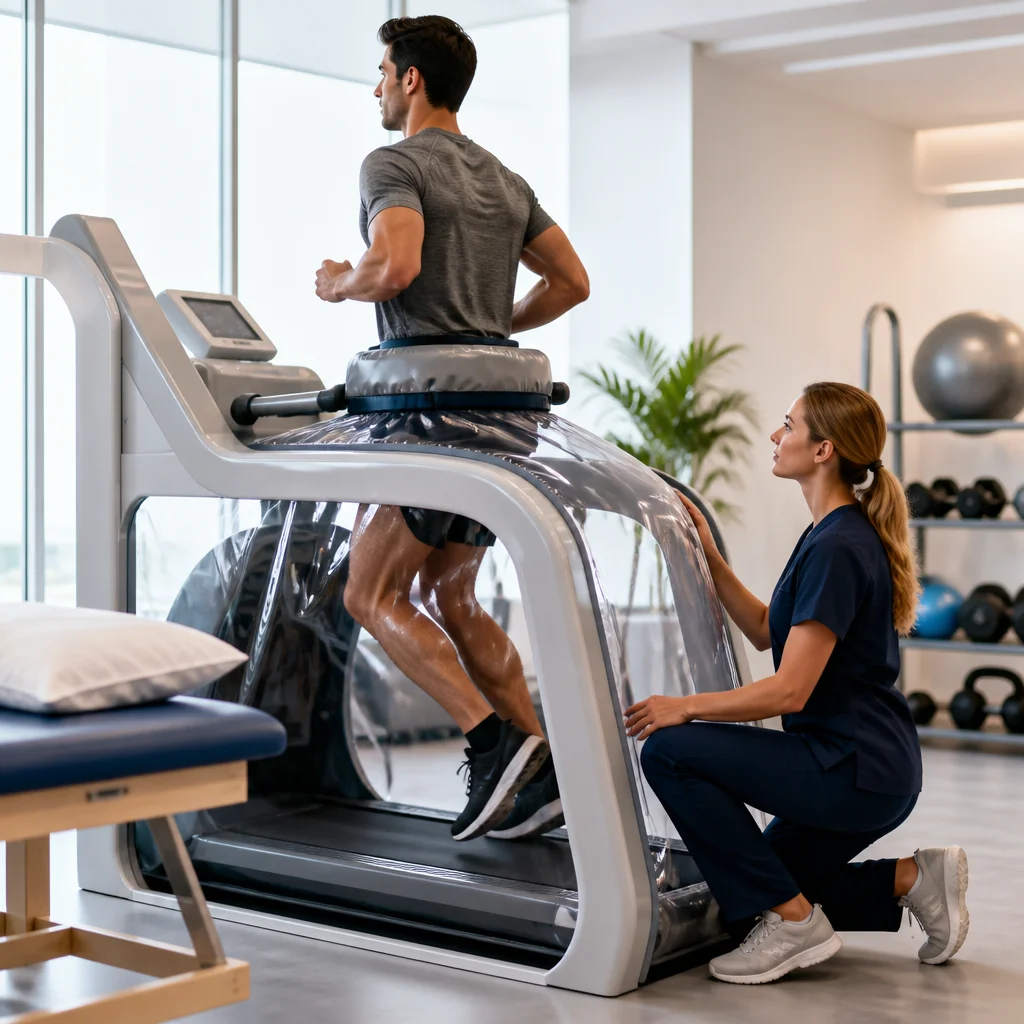
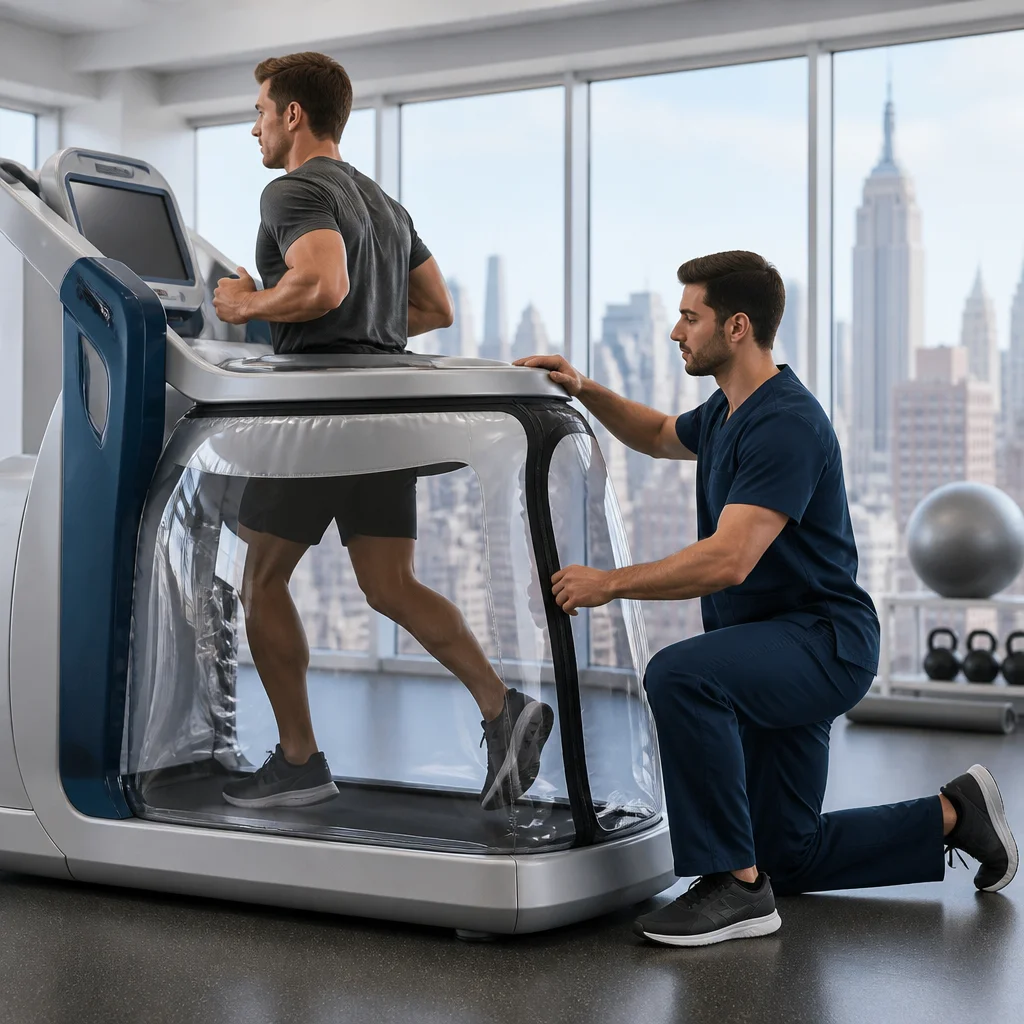
The challenge with stress fracture recovery is timing: too much load, too soon, and you re-injure; too little, and muscles atrophy and bone adapts poorly. We solve this with anti-gravity treadmill technology that reduces your body weight by up to 80 percent.
An anti-gravity treadmill uses differential air pressure to unload your legs while you run. Instead of bearing 100 percent of your body weight on healing bone, you might start at 40 percent. Your cardiovascular system gets a real workout, your running form stays intact, and your stress fracture site experiences controlled, progressive loading.
Here's what this looks like in practice: A runner with a tibial stress fracture begins at 50 percent body weight for short intervals. Over three to four weeks, we gradually increase to 60, 70, then 80 percent. Throughout this progression, you're running, not walking or cycling alone. Your neuromuscular patterns stay sharp. Your aerobic fitness doesn't crater.
Why this matters for your recovery: Muscle atrophy compounds stress fracture injury. Even two weeks of complete non-weight-bearing triggers measurable strength loss. Our anti-gravity treadmill benefits approach keeps you moving while bone heals, cutting overall recovery time significantly.
Your next step: Ask about your personalized anti-gravity progression during your first visit. We'll establish baseline tolerance and map a week-by-week loading plan tailored to your fracture location and imaging.
2. Shockwave Therapy to Stimulate Bone Healing and Callus Formation
Extracorporeal shockwave therapy (ESWT) uses focused acoustic pulses to trigger your body's natural healing response. The mechanism is elegant: shockwaves create microtrauma in target tissue, prompting your body to increase blood flow, trigger growth factor release, and accelerate bone callus formation.
Research on stress fractures shows that shockwave therapy reduces time to bony union by weeks. For runners, this is transformative. Instead of waiting three to four months for callus maturity, patients receiving shockwave often achieve union in six to eight weeks.
The treatment feels straightforward: we position the shockwave head over your fracture site and deliver targeted pulses. Sessions last 15 to 20 minutes. There's minimal discomfort. Most patients tolerate it well without anesthesia. We typically administer shockwave two to three times per week for three to four weeks.
Why this matters for your recovery: Passive bone healing is slow. Shockwave therapy jumpstarts your biology. Combined with progressive loading and strength work, it addresses the core problem: accelerating actual bone remodeling, not just managing pain.
Your next step: Early shockwave application within the first two to three weeks post-fracture yields best results. If you've recently received a stress fracture diagnosis, contact us quickly to evaluate whether shockwave is right for your timeline.
3. Class IV Laser Therapy for Deep Tissue Regeneration and Pain Relief
Class IV laser therapy delivers high-power infrared light deep into tissue, reaching bone and muscle that other modalities can't reach effectively. The photons stimulate mitochondrial ATP production, increase blood flow, and reduce inflammation without heat damage.
For stress fracture sites, this means accelerated cellular repair. The laser penetrates 10 to 15 centimeters into tissue, directly targeting the fracture callus and surrounding muscle. We use class IV laser therapy sessions alongside manual therapy and strength work, not as a standalone fix.
A typical runner might receive laser therapy twice weekly for four weeks. Sessions last 10 to 15 minutes. Pain often drops noticeably within three to five sessions, which gives you psychological confidence and allows you to tolerate more aggressive rehabilitation exercises.
Why this matters for your recovery: Pain drives guarding and muscle inhibition. When we reduce pain pharmacologically through laser stimulation, you can engage in strength and mobility work earlier. This accelerates functional recovery alongside tissue healing.
Your next step: Ask whether laser complements your other therapies. We integrate it when early-stage pain limits your ability to do therapeutic exercise.
4. Manual Therapy Techniques to Address Biomechanical Root Causes
Technology alone doesn't prevent re-injury. Most stress fractures arise from biomechanical faults: muscle imbalances, movement dysfunction, or poor load distribution. We identify and correct these through manual therapy and movement assessment.
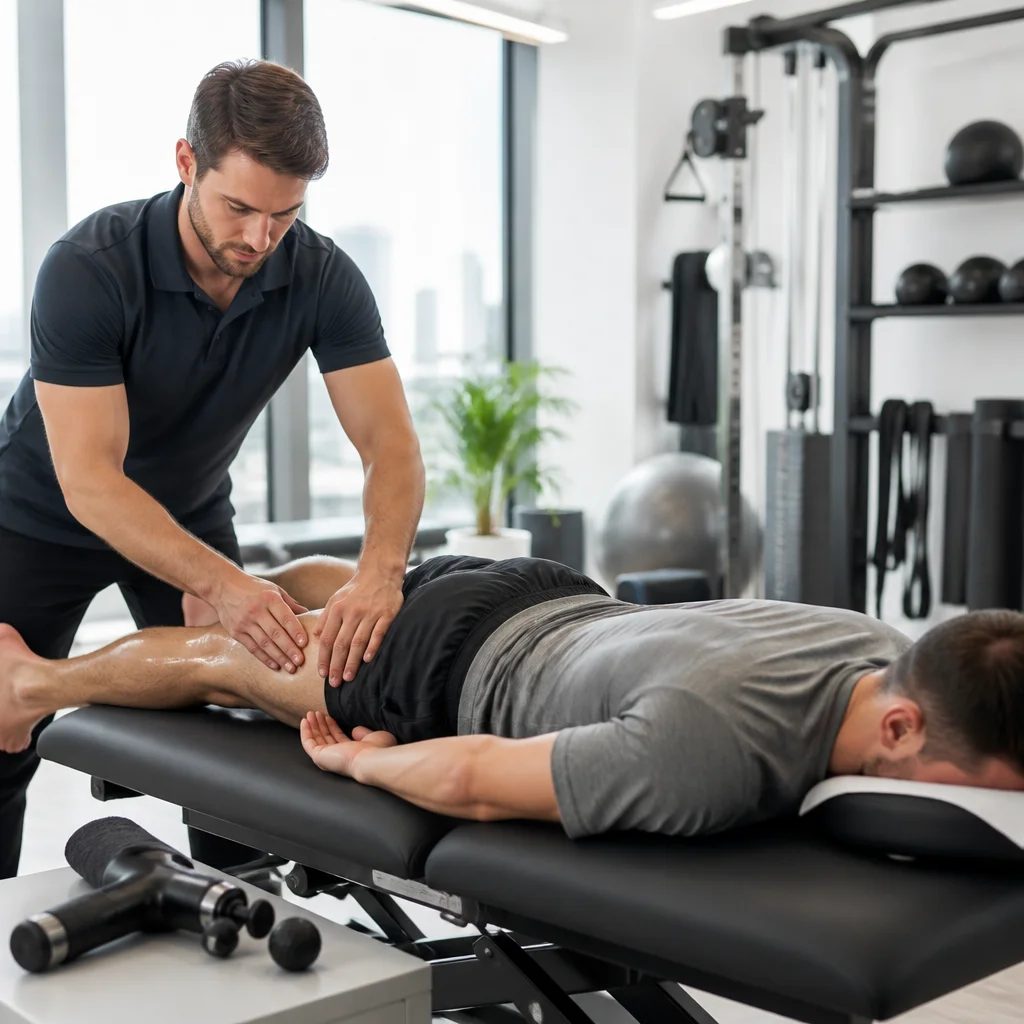
Our physical therapists use advanced manual techniques including joint mobilization, soft tissue manipulation, and trigger point release to restore normal movement patterns. If your hip abductors are weak, load transfers to your tibia abnormally. If your ankle dorsiflexors are tight, your foot strike compensates. If your core is underactive, your lumbar spine hyperextends, sending extra stress downward.
During one-on-one sessions, we assess your running gait, hop mechanics, and single-leg stability. We palpate your fracture region and surrounding soft tissue. We test hip strength, ankle mobility, and spinal control. Then we address deficits with targeted manual work combined with specific exercises.
Why this matters for your recovery: Bone heals. But if biomechanics stay broken, re-fracture is likely. Manual therapy corrects the underlying dysfunction so you return to running stronger, not just faster.
Your next step: Bring a video of yourself running (or run on one of our treadmills) so we can analyze your gait. The clearer we see your movement, the more precisely we target correction.
5. Personalized Strength and Conditioning for Safe Return to Running
Stress fracture recovery isn't just about the fracture site. Your glutes, core, hip stabilizers, and calf need to be bulletproof before you're truly back. Weak muscles can't absorb shock effectively, re-creating the conditions that caused the fracture.
Our strength and conditioning approach is progressive and sport-specific. Early phases focus on stability and control: single-leg stance drills, glute bridges, dead bugs, and resisted band work. Mid-phases add plyometrics and dynamic balance: single-leg hops, lateral bounds, and multi-directional agility. Late phases emphasize return-to-sport power: hill sprints, tempo running, and sport-specific intervals.
Each phase builds on the last and is timed to your fracture healing stage and pain response. We use objective metrics: we measure single-leg hop distance, Y-balance performance, and grip strength. We track these weekly so you see measurable progress and know exactly when you're ready to advance.
Why this matters for your recovery: Runners want to run again. But returning too fast or with weak support structures invites re-injury. Systematic strength progression gives you durability and confidence.
Your next step: Work with our return-to-action strength and conditioning trainers to build a custom program. We'll test your baseline and create a timeline aligned with your running goals.
6. Integrated Recovery Methods: Yoga and Massage Therapy Integration
Recovery isn't only about targeted rehab. Integrated yoga and massage therapy address the nervous system tension, movement restrictions, and recovery acceleration that focused therapy alone may miss.
Therapeutic yoga improves balance, core endurance, and body awareness. It enhances proprioception and proprioceptive feedback, which is crucial for preventing compensatory patterns. Gentle yoga also manages stress and reduces overall sympathetic activation, allowing your body to allocate resources toward tissue healing.
Manual massage complements this. It improves local circulation, reduces myofascial restriction, and helps prevent the muscle guarding and tightness that often accompanies immobilization or pain. Massage isn't decorative; it's functional recovery support.
We integrate these modalities into your overall program based on your needs. Some runners benefit from twice-weekly yoga and bi-weekly massage. Others use massage as a pre-therapy warm-up. The key is sequencing these with your strength work and loading progression so everything works together.
Why this matters for your recovery: The body heals best when the nervous system is calm and tissues are mobile. Yoga and massage create that environment while protecting your fracture site.
Your next step: During your initial evaluation, let us know if you respond well to mind-body work or manual therapies. We'll design a holistic schedule that balances aggressive loading work with restorative modalities.
7. Post-Diagnostic Orthopedic Rehabilitation and Progressive Loading Protocols
After imaging confirms union (usually at 8 to 12 weeks depending on fracture type and treatment), the final phase is progressive loading and return to sport. This is where many clinics stumble. They clear you to run, and you re-fracture because the progression is haphazard.
We follow evidence-based progressive loading protocols. Once imaging confirms solid callus, we move through carefully timed phases: walking intervals, walk-run intervals, continuous easy running, tempo running, and finally, sport-specific work. Each phase lasts one to two weeks. We monitor pain, swelling, and functional performance before advancing.
Our post-diagnostic orthopedic rehabilitation is guided by objective testing. We repeat your hop tests, running gait analysis, and strength metrics. If you're limping, compensating, or experiencing pain, we don't advance; we reinforce. If you're strong, symmetric, and pain-free, we progress.
Why this matters for your recovery: The margin between successful return and re-injury is narrow. Systematic, objective-driven progression virtually eliminates re-fracture risk and gives you genuine confidence that you're truly ready.
Your next step: Schedule a post-imaging session once your physician confirms bony union. Bring your imaging report. We'll establish your post-diagnostic baseline and build your return-to-running timeline.
---
Runner stress fracture recovery has transformed. It's no longer a passive, months-long ordeal. By combining anti-gravity treadmill work, shockwave and laser therapy, manual therapy, progressive strength training, and integrated recovery methods, we cut typical recovery timelines significantly and eliminate the fear of re-injury.
We're not a generic physical therapy clinic. Our clinicians specialize in sports injury recovery and understand what it takes for active New Yorkers to regain competitive edge. We provide one-on-one personalized care paired with technology that actually works, not gimmicks that waste your time.
If you're recovering from a stress fracture, don't settle for rest-and-wait advice. Contact NYPT Health & Rehab today to schedule your evaluation and start your accelerated recovery plan.
Frequently Asked Questions (FAQ)
What technologies do we use to help runners recover from stress fractures?
We combine multiple advanced modalities tailored to your specific injury and recovery stage. Our clinic uses anti-gravity treadmill training to safely rebuild weight-bearing capacity, shockwave therapy to stimulate bone healing, and Class IV laser therapy for deep tissue regeneration. We integrate these technologies with manual therapy, personalized strength training, and integrated yoga and massage to address both your injury and the biomechanical factors that contributed to it.
How long does stress fracture recovery typically take with your approach?
Recovery timelines vary based on fracture severity, your training history, and how consistently you follow our protocols, but our comprehensive approach generally accelerates healing compared to rest-alone strategies. We work with you through progressive loading phases, starting with protected weight-bearing and advancing to sport-specific conditioning as your bone heals and strength returns. Most of our runner patients return to full training within 8-12 weeks, though we customize your timeline based on your individual response to treatment.
Can we help me return to running safely after my stress fracture diagnosis?
Yes, that's our specialty. We design personalized rehabilitation programs that progressively rebuild your running capacity while protecting your healing bone, using our advanced technologies alongside targeted strength and conditioning work. We focus on identifying and correcting the biomechanical issues that led to your stress fracture, so you can return to your peak performance with confidence and reduced re-injury risk.
Comments