

Anti-Gravity Treadmill Training in NYC: How We Help Athletes Return to Peak Performance
Table of Contents
Why NYC Athletes Are Struggling With Traditional Recovery Methods
How Anti-Gravity Treadmill Technology Works: The Science Behind the Solution
Perfect for Post-Injury Return to Running Without Reinjury Risk
Accelerating Sports Performance Recovery With Precision Training
Combining Anti-Gravity Training With Our Comprehensive Therapy Approach
Your Personalized Anti-Gravity Training Protocol at Our NYC Clinic
Getting Started: Schedule Your Consultation and Movement Assessment
Why NYC Athletes Are Struggling With Traditional Recovery Methods
New York's competitive athletes face a unique challenge: the pressure to return to intense training quickly, yet traditional rehabilitation often feels painfully slow. Standard treadmill running or early return-to-sport protocols can aggravate healing tissues, creating a frustrating cycle of setback and regret.
Many injured athletes experience similar obstacles. They're told to rest completely, then suddenly resume full intensity, with little middle ground. This all-or-nothing approach leaves them vulnerable to re-injury, especially when managing high-impact activities like running, basketball, or HIIT training.
Additionally, traditional methods don't account for individual recovery timelines or sport-specific demands. A runner's knee injury requires different loading strategies than a soccer player's ankle sprain. Generic protocols miss these nuances, leaving athletes uncertain whether they're pushing appropriately or risking further damage.
What to do next: If you've struggled with gradual return-to-sport protocols, consider asking your therapist about technology-assisted training methods that allow precise load management during recovery.
How Anti-Gravity Treadmill Technology Works: The Science Behind the Solution
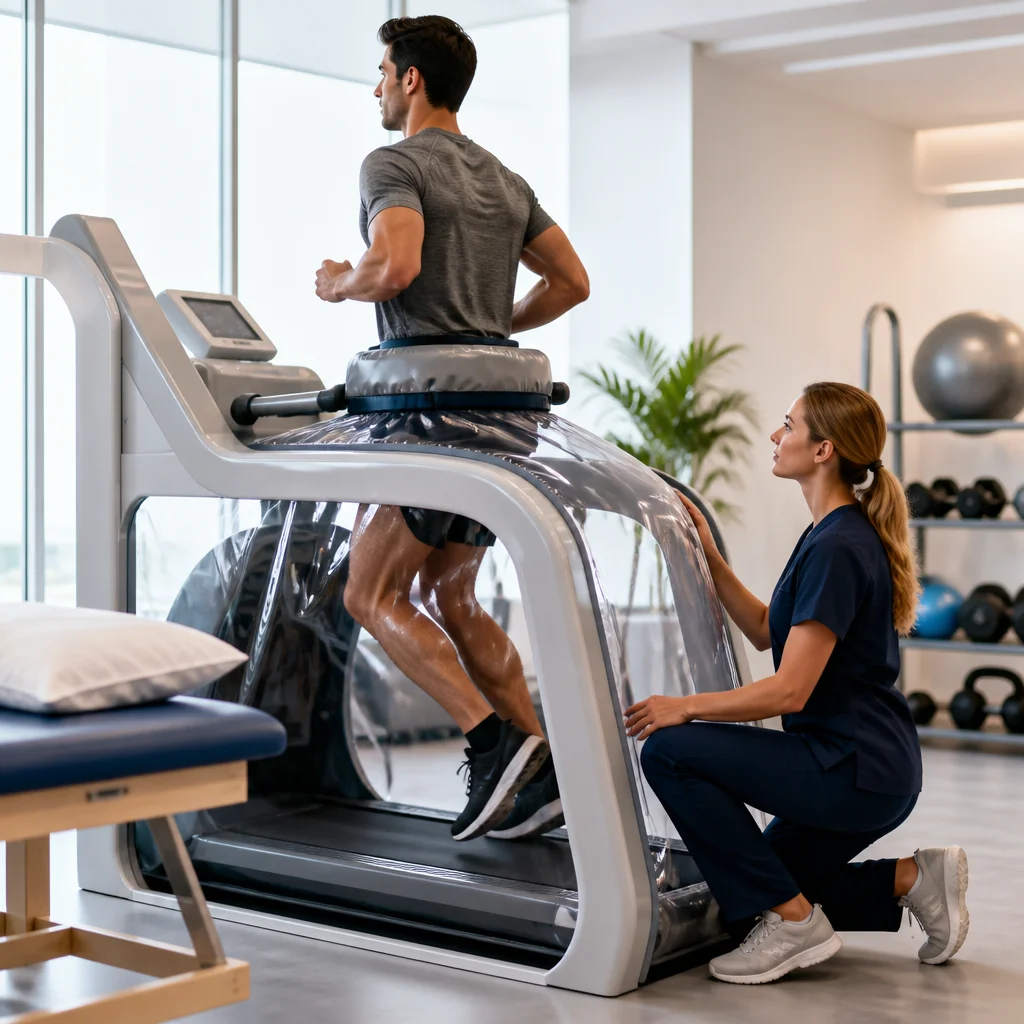
Anti-gravity treadmill technology uses differential air pressure to reduce a user's effective body weight during exercise. Imagine stepping into a chamber where air pressure gently lifts you upward—you can run or walk while bearing only a fraction of your normal impact force.
The mechanics are straightforward but powerful. A sealed chamber surrounds your lower body, creating positive air pressure that counteracts gravity. You control the exact percentage of body weight you carry, ranging from 20% to 100% of your actual mass. This precision allows therapists to calibrate recovery intensity down to single-digit percentage points.
The science supporting this approach is solid. Research demonstrates that reduced-gravity running:
Decreases joint loading without sacrificing cardiovascular benefits
Allows earlier return to running motion patterns
Maintains muscle activation and proprioception
Enables athletes to build confidence during rehabilitation
Reduces pain-related guarding and movement compensations
This isn't about avoiding work during recovery. Rather, it's about managing tissue stress intelligently while maintaining athletic movement quality. Your muscles still work hard; your joints simply experience less compressive force.
Actionable insight: The key advantage isn't just pain reduction—it's the ability to maintain running mechanics and neuromuscular patterns during early-stage recovery when impact would otherwise be prohibited.
Our Anti-Gravity Treadmill Program at NYPT Health and Rehab
We've integrated anti-gravity treadmill training into our comprehensive rehabilitation approach because we recognize that urban athletes need more than pain relief; they need intelligent return-to-performance pathways.
Our program combines the anti-gravity treadmill with personalized physical therapy, manual therapy techniques, and sport-specific conditioning. Rather than using the treadmill as an isolated modality, we embed it within a broader recovery strategy designed around your specific injury and athletic goals.
Here's how we structure your training:
Initial assessment: We evaluate your injury history, movement patterns, and performance objectives during your first session
Load determination: Our clinicians calculate your appropriate starting body-weight percentage based on tissue healing stage and pain response
Progressive protocol: We adjust intensity, duration, and speed weekly as healing progresses and your confidence builds
Integration with therapy: Anti-gravity sessions complement manual therapy, strengthening work, and mobility training throughout your week
Every protocol is individualized. We don't apply cookie-cutter progressions; instead, we listen to your movement feedback, monitor your response, and adjust accordingly.
Next step: During your consultation, we'll discuss whether anti-gravity training aligns with your current recovery phase and goals.
Perfect for Post-Injury Return to Running Without Reinjury Risk
If you've experienced a running-related injury—whether it's tendinopathy, stress fractures, post-surgical reconstruction, or muscle strains—anti-gravity training offers a bridge between immobility and full running volume.
Consider a scenario: You've recovered from an ACL reconstruction and cleared for "gentle running," but full-weight running triggers sharp knee pain. Traditional options leave you stuck: walking feels too limited; jogging feels too risky. With anti-gravity training, you might start at 60% body weight, maintaining proper running mechanics without triggering pain responses. Over weeks, you progress to 70%, 80%, and eventually 100% body weight, rebuilding confidence with each increment.
This graduated approach prevents the common trap where athletes either underload recovery (missing critical tissue remodeling stimuli) or overload it (re-injuring partially healed structures).
The treadmill also provides objective data. Unlike overland running where variables like surface and terrain shift your loading, the anti-gravity treadmill offers controlled, repeatable conditions. You can track speed, duration, and perceived exertion, giving you measurable proof of progress.
What to watch for: Early return-to-running should prioritize movement quality over speed or distance. If your mechanics deteriorate as fatigue sets in, that's your signal to reduce intensity—and the anti-gravity treadmill makes this adjustment instantaneous and visible.
Accelerating Sports Performance Recovery With Precision Training
Beyond injury rehabilitation, anti-gravity training accelerates performance recovery in active athletes managing training load. If you're logging high mileage or intense training cycles, targeted anti-gravity sessions can facilitate active recovery while maintaining aerobic fitness.
The precision loading also supports sport-specific preparation. A basketball player preparing for in-season play needs impact tolerance and explosive movement capacity. Anti-gravity training can develop these qualities progressively, starting at lower loads and building tolerance before introducing court work.
Additionally, anti-gravity training reduces systemic fatigue during heavy training blocks. Because impact stress decreases, your nervous system and tissues recover faster, allowing you to tolerate higher training volume without accumulating excess fatigue.
This matters enormously for competitive athletes in New York's demanding fitness environment. You get the cardiovascular and metabolic benefits of running with substantially reduced recovery cost.
Practical takeaway: Think of anti-gravity training as a "training cost reducer"—you maintain fitness qualities while minimizing tissue damage and recovery demand, allowing you to train harder elsewhere.
Combining Anti-Gravity Training With Our Comprehensive Therapy Approach
The anti-gravity treadmill doesn't exist in isolation at our clinic. We pair it with our integrated wellness services to address the complete picture of your recovery.
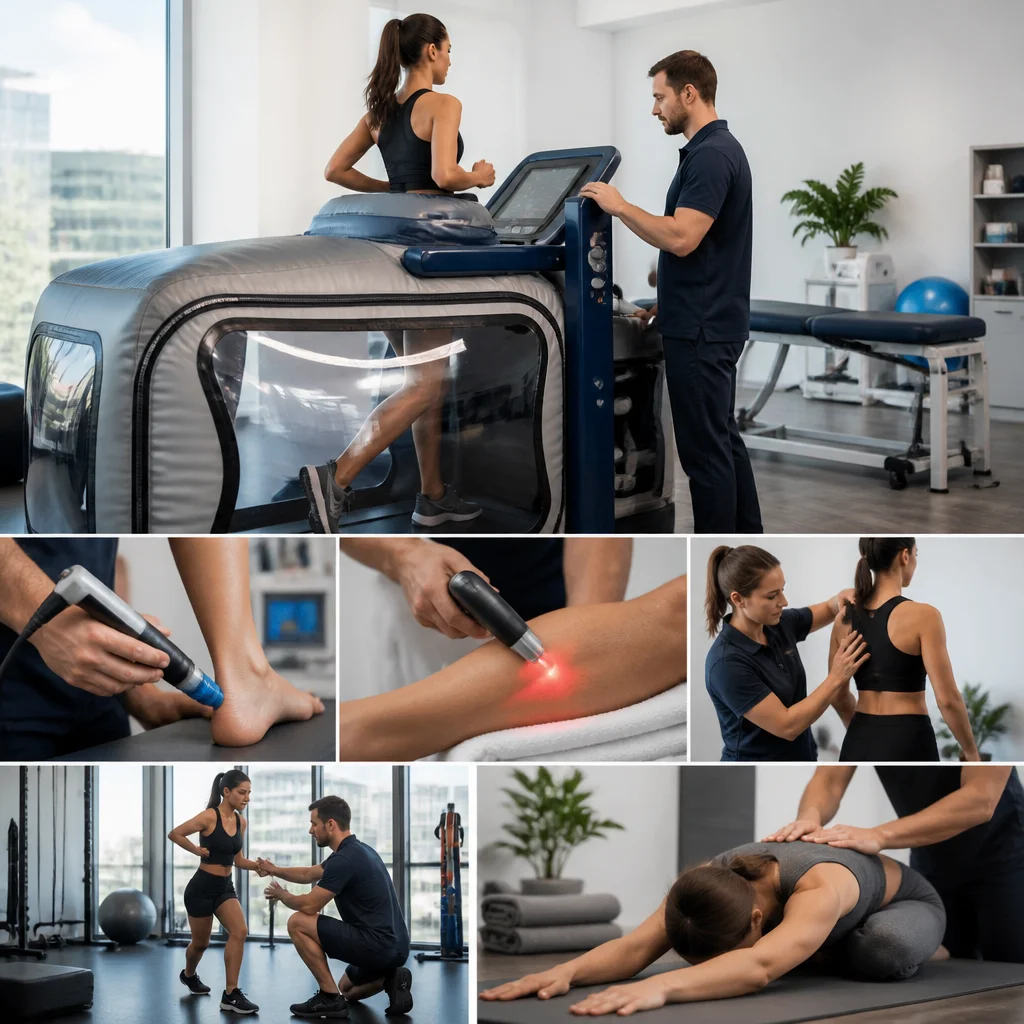
A typical patient might experience anti-gravity treadmill training three times weekly, complemented by:
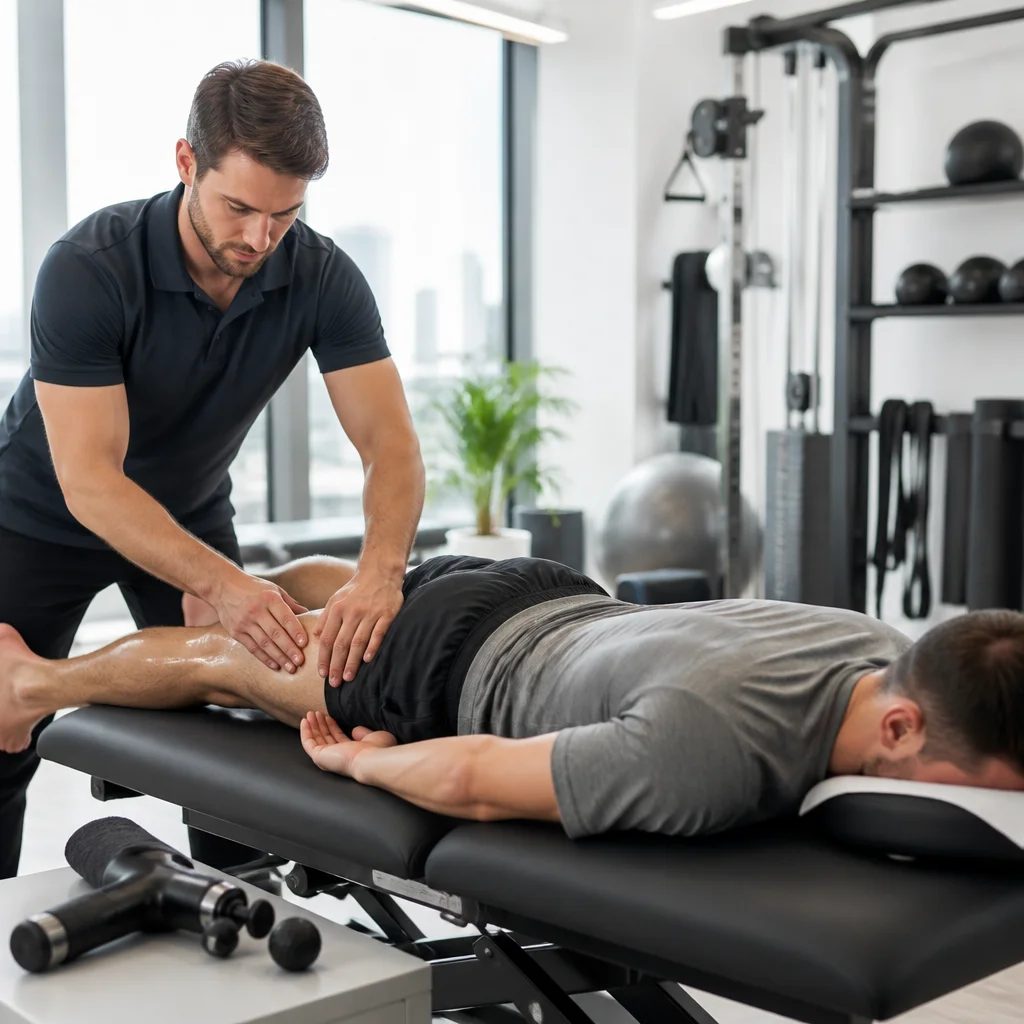
Manual therapy: Our clinicians address soft tissue restrictions, joint mobility limitations, and movement compensations through hands-on treatment
Targeted strengthening: One-on-one sessions build supporting muscle groups and address muscular imbalances
Yoga and mobility work: We incorporate gentle movement practices to enhance body awareness and long-term tissue resilience
Massage therapy: Soft tissue work accelerates recovery and reduces muscle tension between sessions
Advanced modalities: Shockwave therapy and Class IV laser therapy address stubborn inflammation or tissue healing plateaus
This layered approach treats the whole athlete, not just the treadmill time. We've found that patients progress faster and experience more durable recovery when we combine precise loading management with comprehensive soft tissue and movement work.
Implementation tip: When scheduling your program, discuss how anti-gravity training fits within your broader weekly therapy plan to ensure maximum synergy between modalities.
Real Results: What Our Injured Athletes Experience
Our injured athletes consistently report three primary benefits: rapid pain reduction, restored movement confidence, and measurable performance milestones.
Within the first few sessions, most patients experience noticeable pain relief and freedom of movement they haven't felt since injury. This psychological shift is significant—relief itself accelerates mental recovery and motivation.
Over weeks, athletes regain sport-specific confidence. Runners who couldn't jog without sharp knee pain progress to running 20 minutes at conversational pace. Soccer players who couldn't change direction return to full-speed cutting and pivoting. This tangible progress fuels adherence and accelerates return-to-sport timelines.
Many athletes also note improved body awareness and movement quality. The anti-gravity treadmill's controlled environment teaches ideal running mechanics without pain compensation, establishing better movement patterns that persist beyond the training itself.
Expectation setting: Most patients begin noticing meaningful change within 2-3 weeks of consistent training, though full recovery typically requires 8-12 weeks depending on injury severity and baseline fitness.
Your Personalized Anti-Gravity Training Protocol at Our NYC Clinic
When you join our program, your protocol reflects your unique injury status, athletic background, and goals. There's no template we apply universally.
Your first week might look like this:
Session 1: Movement assessment, pain-free range identification, baseline body-weight percentage tolerance
Sessions 2-3: Initial anti-gravity runs at low intensity, focusing on movement quality and pain response monitoring
By week three, most patients progress to longer or faster sessions, or reduced body-weight percentages to increase loading stimulus. We adjust weekly based on your response, pain patterns, and training capacity.
Throughout your program, we monitor several metrics: pain levels during and after training, movement pattern quality, cardiovascular response, and return-to-sport readiness. This data guides our progression decisions and keeps you informed every step.
What we need from you: Honest feedback about pain, movement comfort, and any limitations. Your clinician can only optimize your protocol with accurate real-time information.
Getting Started: Schedule Your Consultation and Movement Assessment
Your journey toward peak recovery begins with a comprehensive consultation and movement assessment. We'll discuss your injury history, current symptoms, athletic goals, and lifestyle demands.
During the assessment, our clinicians evaluate how you move, identify pain triggers, assess mobility and strength, and determine your readiness for anti-gravity training. This information shapes your individualized protocol and ensures we're addressing root causes, not just symptoms.
We're located in New York City and offer flexible scheduling to accommodate your busy athletic life. Most initial consultations take 45-60 minutes.
To schedule your consultation, visit our clinic or contact us directly. We'll answer any questions about anti-gravity training, discuss your specific situation, and develop a recovery roadmap together.
Ready to move forward: Bring a list of previous injuries, current medications, and any imaging reports (MRI, X-rays) so we can dive deeper into your history during your first visit.
Reclaim Your Athletic Edge With Evidence-Based Recovery
Returning to peak performance after injury doesn't require choosing between protection and progress. Anti-gravity treadmill training, paired with comprehensive physical therapy, offers a smarter path forward.
We've helped numerous New York athletes navigate recovery successfully, and we're ready to help you regain your athletic edge. Our approach combines cutting-edge technology with personalized care, ensuring you recover stronger and more resilient than before.
Your comeback starts with intelligent rehabilitation. Contact us today to schedule your consultation and discover how anti-gravity training can accelerate your return to the activities you love.
For further reading: Anti-Gravity Treadmill NYC.
Frequently Asked Questions (FAQ)
How does our anti-gravity treadmill help athletes return to running safely after injury?
Our anti-gravity treadmill uses differential air pressure technology to reduce your body weight by up to 80%, allowing us to gradually rebuild your running capacity without excessive impact stress on healing tissues. We start you at a lower weight percentage and incrementally increase it as your strength and confidence improve, which means you can begin training weeks earlier than traditional methods would allow. This precision approach lets us monitor your biomechanics in real-time while you run, catching any compensatory movement patterns before they cause re-injury.
What makes anti-gravity training different from regular physical therapy at our NYC clinic?
While our manual therapy and targeted exercises address specific mobility and strength deficits, the anti-gravity treadmill gives us a controlled environment to retrain your running mechanics under measurable conditions. We integrate this technology into your broader recovery plan rather than using it as a standalone tool, combining it with our advanced manual therapy, laser treatment, and sport-specific conditioning. This layered approach means we're not just getting you back to running—we're building you back stronger and more resilient than before.
How quickly can I expect to see results with your anti-gravity training program?
Most of our athletes notice improved confidence and reduced pain within the first 2-3 sessions, though measurable gains in running endurance and speed typically emerge over 4-6 weeks depending on your injury history and training frequency. We track your progress through objective metrics like distance, speed, and gait quality so you can see exactly how your body is adapting. Your timeline depends on your specific injury and starting point, which is why we create a personalized protocol during your initial movement assessment.
Comments