

Deep Tissue Massage for Runners: Recover Faster and Prevent Injuries
Table of Contents
Why Runners Experience Muscle Tightness and Pain
Running is one of the most accessible ways to stay fit in New York City, but it's also one of the most demanding activities for your muscles and connective tissues. Whether you're training for a marathon or logging miles through Central Park, the repetitive impact and muscular demands of running create patterns of tightness and tension that go beyond what typical stretching can address. At NYPT Health & Rehab, we work with runners daily who struggle with this cycle, and we've found that targeted deep tissue massage is one of the most effective tools for accelerating recovery and preventing injury.
This guide explains how deep tissue massage works for runners, why it's especially valuable in your recovery toolkit, and how we integrate it with other advanced therapies to get you back to performing at your peak.
Running creates specific patterns of muscular stress that accumulate over time. Every time your foot strikes the ground, your calf muscles, quads, hamstrings, and glutes absorb and generate force to propel you forward. These muscles work in coordinated sequences thousands of times per run, which builds strength but also creates microscopic tears, inflammation, and adhesions in muscle tissue.
The problem worsens when you increase volume or intensity without adequate recovery. Tight muscles restrict blood flow, trap metabolic waste products, and create compensatory movement patterns that load other tissues unevenly. This is why many runners experience pain not at the site of their hardest-working muscles, but in areas that are overcompensating, like the IT band or medial knee.
Beyond the muscles themselves, runners often develop restrictions in fascia, the connective tissue that wraps around muscles and organs. Fascia can become sticky and adhered, limiting mobility and contributing to persistent tightness that rest alone won't resolve. This is where deep tissue work becomes essential, not optional.
What you can do: Track which muscle groups feel tight after most of your runs. This awareness helps us design a targeted massage plan rather than treating everything equally.
How Deep Tissue Massage Accelerates Recovery
Deep tissue massage applies sustained pressure and manipulation to the deeper layers of muscle and fascia. Unlike relaxation massage, which focuses on comfort, deep tissue work targets the specific restrictions that limit your performance and cause pain.
When we work with deep pressure, we increase blood flow to tight areas, which brings oxygen and nutrients while flushing out metabolic waste. This speeds the recovery process significantly. We also break up adhesions and scar tissue that form after repeated stress, restoring normal muscle movement patterns. Many runners tell us that after a single deep tissue session, their running feels smoother and their stride feels more efficient.
The benefits extend beyond immediate relief. Regular deep tissue massage trains your neuromuscular system to relax more effectively, which improves your flexibility and reduces the neurological tension that contributes to muscle tightness. Over weeks of consistent work, this creates lasting improvements in mobility and resilience.
Deep tissue massage also helps prevent injury by identifying and addressing problem areas before they become symptomatic. Your therapist can feel where fascia is restricted, where muscle is overactive, and where compensation patterns are developing. We can intervene early, which saves you weeks of lost training time down the road.
What you can do: Schedule deep tissue massage as a regular part of your training cycle, not just when you're injured. Monthly sessions during heavy training phases prevent the accumulation of restrictions that lead to injury.
The Science Behind Manual Therapy for Athletic Performance
Research consistently shows that manual therapy improves athletic recovery and performance. Massage reduces inflammation markers, decreases muscle soreness, and improves muscle activation patterns. Studies also demonstrate that soft tissue mobilization increases proprioception, your body's sense of where it is in space, which improves coordination and reduces injury risk.
From a biomechanical perspective, manual therapy restores optimal length-tension relationships in muscles. When your hamstrings are chronically tight, they can't fire maximally during push-off, which means your quads and hip flexors overwork to compensate. This creates an imbalanced movement pattern. Deep tissue work restores the hamstring's normal function, which automatically reduces excessive loading elsewhere.
The nervous system responds powerfully to manual therapy as well. Pressure on muscle tissue activates mechanoreceptors that signal your nervous system to relax. This is why a skilled therapist's hands can accomplish what you cannot achieve through self-massage or foam rolling alone. The nervous system learns that the area is safe and can release chronic tension patterns.
We also know that manual therapy combined with movement and strengthening produces better outcomes than any single approach in isolation. This is why we don't rely on massage alone, but integrate it into a comprehensive recovery and performance program.
What you can do: Talk with your therapist about which specific muscles are limiting your performance. Understanding the "why" behind your tightness helps you address root causes rather than just symptoms.
Our Integrated Approach to Runner Rehabilitation
At NYPT, we see deep tissue massage as one component of a personalized runner rehabilitation program. We start with a thorough assessment of your running mechanics, mobility restrictions, and strength imbalances. This tells us where manual therapy will have the most impact and what additional work you need.
Many of our runner clients benefit from a combination of deep tissue massage and targeted manual therapy techniques that address specific restrictions. We work on problem areas, but we also teach you how to maintain the improvements through stretching, self-care, and movement habits.
We assess the entire kinetic chain because running problems rarely occur in isolation. A runner with calf tightness might actually have restricted ankle mobility or weak hip stability as the root cause. Once we identify that, our manual work becomes more effective and longer-lasting because we're addressing the actual problem.
We also educate you about training load, recovery strategies, and running form modifications that prevent your original problem from returning. Our goal is your independence and confidence, not ongoing dependence on massage alone.
What you can do: Come to your first session prepared to describe your running schedule, recent mileage changes, and which specific areas feel tight or painful. This information helps us focus on the areas that will give you the most immediate benefit.
Combining Massage with Advanced Recovery Technologies
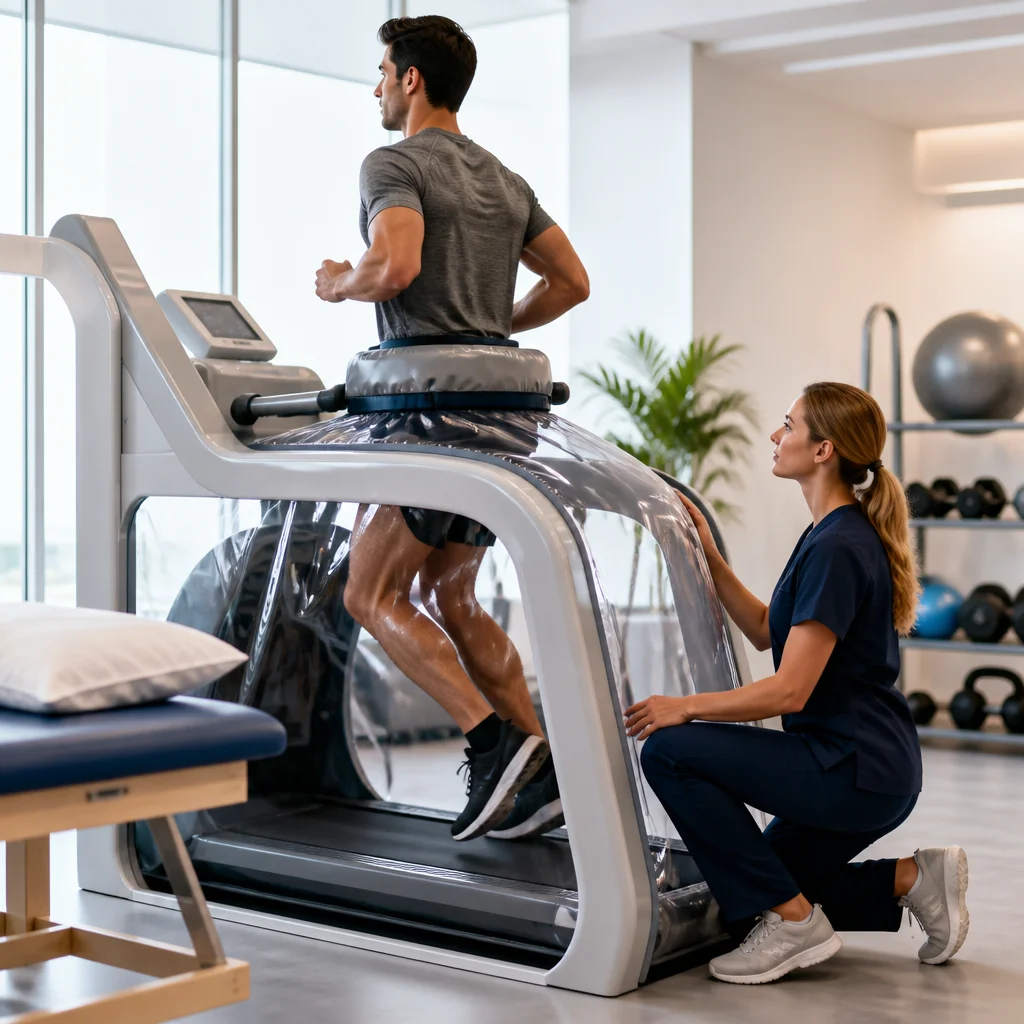
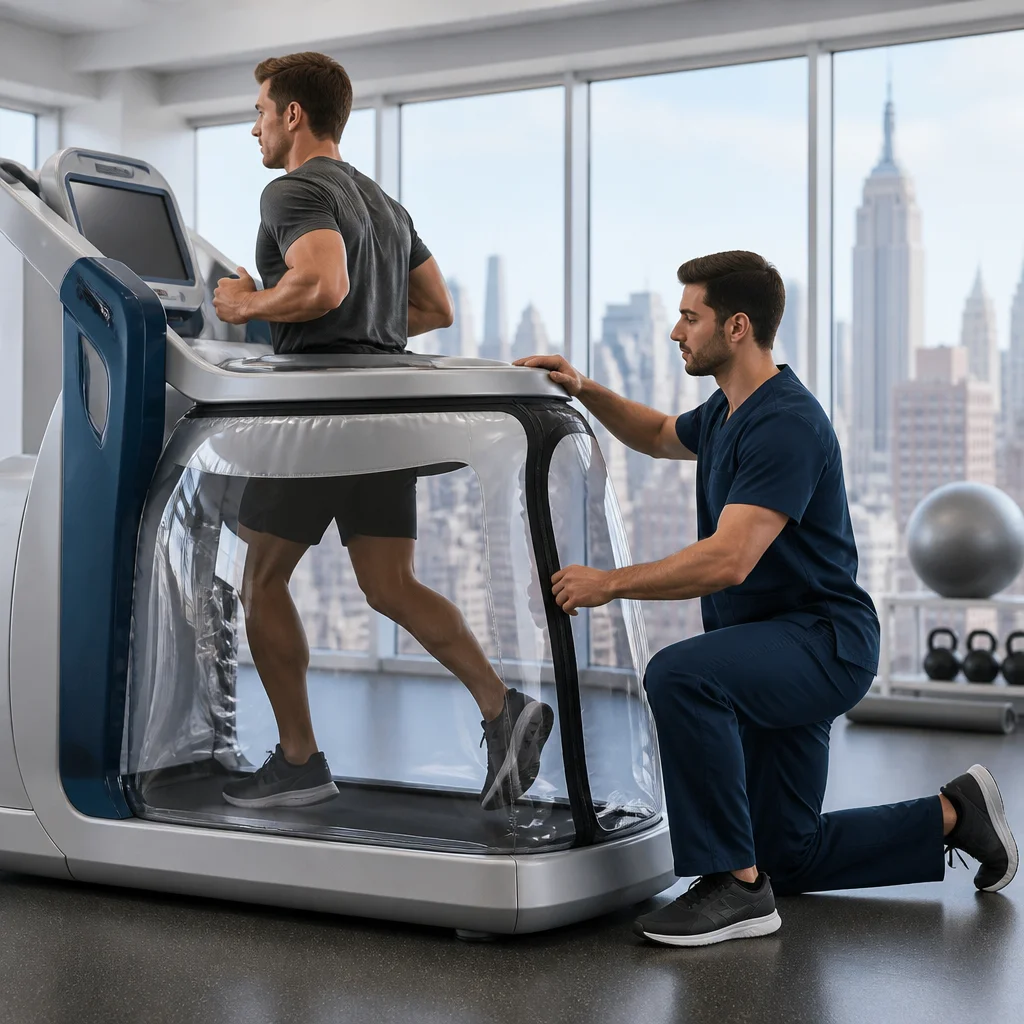
Deep tissue massage pairs powerfully with advanced therapies that target recovery from a different angle. After manual therapy loosens restrictions and improves mobility, technologies like our anti-gravity treadmill allow you to return to running mechanics in a low-impact environment. You get the neurological benefit of running without full bodyweight stress while your tissues adapt.
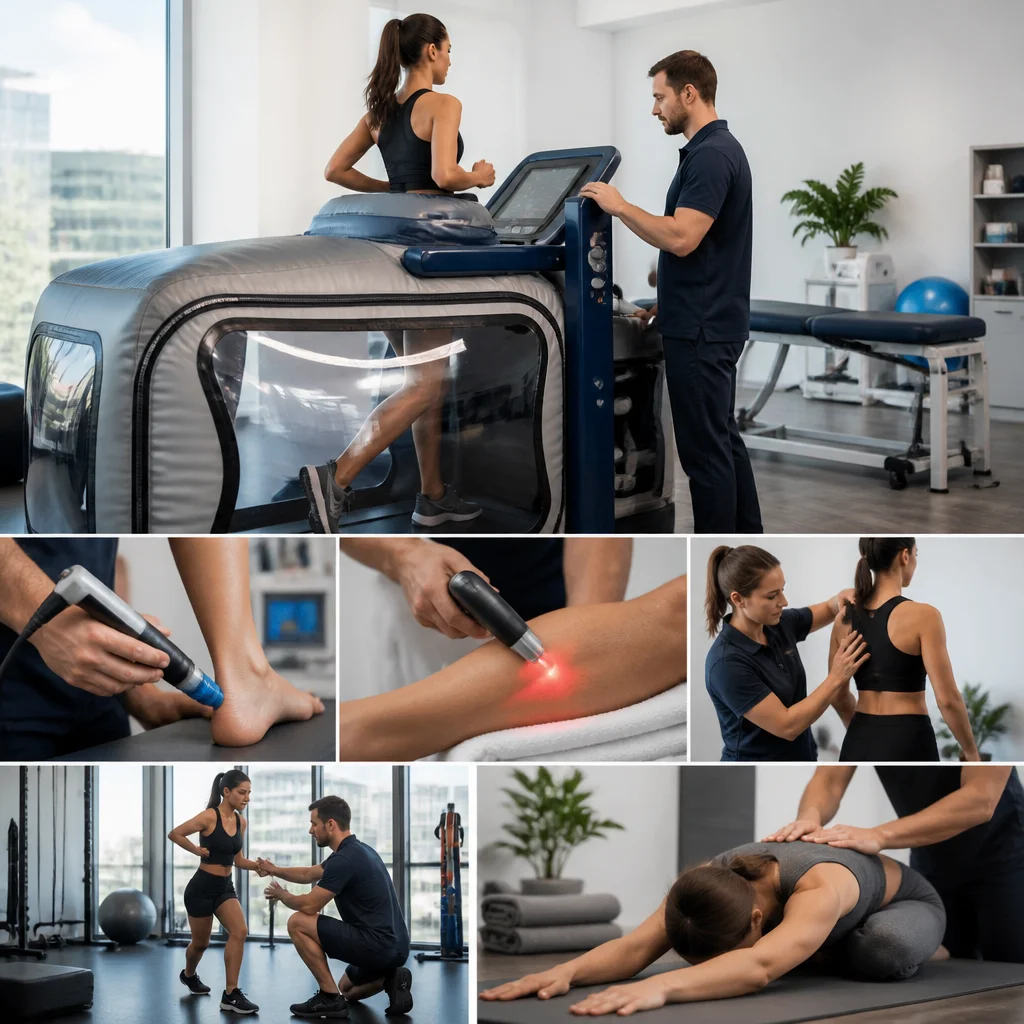
Shockwave therapy and Class IV laser therapy are also highly complementary to massage work. These modalities reduce inflammation, stimulate tissue healing, and can address chronic restrictions that massage alone cannot fully resolve. We often sequence these treatments strategically, using manual therapy first to improve mobility, then using advanced technologies to drive deeper healing.
The combination approach lets us address both the immediate restriction and the underlying tissue quality. A runner with chronic calf tightness might receive deep tissue work, laser therapy to reduce inflammation in the fascia, and training on the anti-gravity treadmill to rebuild running confidence and neuromuscular coordination.
What you can do: Ask during your consultation which advanced technologies might accelerate your specific recovery. Not every runner needs every tool, but combining approaches often yields faster results than any single treatment.
Return to Running: Strength and Conditioning After Treatment
Recovery isn't complete until you're confidently running at your previous level. After deep tissue work and manual therapy improve your mobility, the next phase is rebuilding strength and reestablishing running confidence. We use return to action strength and conditioning with our personal training staff to ensure you're ready.
This phase focuses on exercises that address the specific imbalances we identified during your assessment. If your glutes were weak and underactive, we rebuild their strength and coordination through targeted exercises. If your ankle mobility was restricted, we work on both mobility and strength through the new range of motion.
We also gradually reintroduce running in a structured way. This might mean starting on the anti-gravity treadmill at reduced bodyweight, then progressing to outdoor running with specific pacing and distance guidelines. The goal is to rebuild your tolerance smoothly without triggering pain or compensation patterns.
Many runners feel nervous about returning to running after an injury or period of pain. We build your confidence through progressions that feel manageable and successful, which is far more effective than aggressive return-to-run protocols.
What you can do: Work closely with your therapist to develop a realistic return-to-running timeline. Rushing this phase often leads to re-injury, while structured progression builds lasting resilience.
What to Expect During Your First Session at NYPT
Your first appointment at our clinic includes a thorough assessment before any treatment. We'll discuss your running history, current training volume, previous injuries, and specific areas of pain or tightness. We'll evaluate your posture, mobility, and strength, and observe your movement patterns.
During the manual therapy portion, expect firm pressure applied to tight areas. Deep tissue work shouldn't be painful, but it should feel substantial and purposeful. Good deep tissue work often feels slightly uncomfortable while it's happening, then produces significant relief and improved mobility afterward. Communication is essential, so let us know if pressure needs adjustment.
After your session, you'll likely feel more relaxed and mobile. Many clients notice improved flexibility and easier movement immediately. Some experience mild soreness the following day, similar to muscle soreness after an intense workout, which typically resolves quickly.
We'll provide you with recommendations for recovery, self-care techniques, and follow-up appointments. Most runners benefit from regular sessions during heavy training phases, especially during the build-up to races or significant mileage increases.
What you can do: Arrive hydrated and eat lightly before your appointment. Bring comfortable clothes and be ready to describe your running in detail so we can target treatment to your actual needs.
Real Results: How Our Runners Return to Peak Performance
We work with runners at every level, from recreational joggers to competitive athletes, and we see consistent patterns in how deep tissue massage and integrated rehabilitation support their goals. Runners typically notice improved mobility within the first session, reduced pain within the first few sessions, and restored running confidence within weeks.
One of our marathon runners came to us with chronic calf tightness that was limiting her training. After six weeks of integrated treatment including deep tissue massage, laser therapy, and strength conditioning, her calf mobility improved significantly, her running felt more efficient, and she was able to build training volume without pain. She completed her marathon on schedule and reported better-than-expected performance.
A competitive road racer with IT band tightness needed to reduce pain quickly without losing training time. We combined deep tissue work with anti-gravity treadmill training so he could maintain aerobic fitness while addressing the underlying restrictions. Within three weeks, he was back to normal training and remained injury-free through his race season.
The common thread is that runners who commit to both the massage work and the comprehensive program, including strength and mobility training, achieve the best outcomes. Deep tissue massage alone provides relief, but integrated care gets you back to performing at your peak.
What you can do: Contact NYPT to schedule your initial assessment. We'll evaluate your specific situation and create a personalized plan that gets you back to the running you love, stronger and more resilient than before.
For further reading: Deep Tissue Massage for Runners.
Frequently Asked Questions (FAQ)
How often should I schedule deep tissue massage sessions for optimal running recovery?
We typically recommend our runners start with weekly sessions during the initial phase of treatment, especially if they're managing acute injuries or significant muscle tightness. As your recovery progresses, we adjust the frequency based on your training volume, competition schedule, and how your body responds. Many of our athletes find that bi-weekly maintenance sessions combined with our strength and conditioning program keep them performing at their peak without disrupting their training rhythm.
Can I continue running while receiving deep tissue massage therapy at your clinic?
We work with you to modify your running schedule based on your specific injury and recovery phase. During the acute phase, we may recommend reducing mileage or intensity while we address muscular restrictions and pain patterns through manual therapy. Once we've made significant progress, we gradually reintegrate running into your routine while using our anti-gravity treadmill and other advanced tools to build strength safely. Our goal is getting you back to full training as quickly as possible without compromising your healing.
What makes your approach to runner recovery different from basic massage therapy?
We integrate deep tissue massage with cutting-edge technologies like shockwave therapy, Class IV laser treatment, and anti-gravity treadmill training to address the root causes of your running injuries. Our one-on-one sessions mean we're constantly adjusting our manual therapy techniques based on real-time feedback from your body. We also combine massage with targeted strength and conditioning coaching, so you're not just recovering from your last run but building resilience for your future performance.
Comments