

Cycling Pain-Free: How Integrated PT and Yoga Gets Urban Cyclists Back to Peak Performance
Table of Contents
Why Urban Cyclists Experience Pain and Injury
If you're a regular cyclist in New York City, you know the feeling: smooth rides one week, sharp knee pain or lower back tension the next. You're not alone. We see urban cyclists constantly wrestling with overuse injuries, muscle imbalances, and performance plateaus that keep them off their bikes or grinding through discomfort.
The good news is that cycling pain isn't inevitable, and standard rehab approaches often miss the full picture of what cyclists actually need to recover strong. At NYPT Health & Rehab, we've developed an integrated approach combining specialized physical therapy, advanced manual techniques, and targeted yoga to get you back to pain-free cycling faster than traditional single-modality treatment.
Cycling is a low-impact, repetitive sport, which makes it accessible but also creates specific injury patterns. The same pedal stroke repeated thousands of times per ride can amplify biomechanical weaknesses you might never notice in daily activity.
Common cycling injuries we treat include:
Patellofemoral pain (knee pain around the kneecap)
IT band tightness and lateral knee pain
Lower back strain from prolonged flexion
Hip flexor tightness and gluteal weakness
Neck and shoulder tension from forward positioning
Achilles tendinopathy
What makes urban cycling particularly challenging is that many cyclists maintain high training volume while sitting at desks most of the day. This combination of repetitive strain and postural stiffness creates a perfect storm for overuse injury. Additionally, the demands of city riding, uneven pavement, and variable intensity add functional stress that gym-based cyclists might not experience.
The underlying issue is usually not the bike itself but how your body moves, stabilizes, and recovers. Most cyclists who come to us have compensated for weakness or tightness by adjusting their movement pattern, which compounds the original problem.
The Limitations of Standard Physical Therapy for Cyclists
Many cyclists pursue generic physical therapy and find themselves doing the same exercises everyone does: basic quadriceps strengthening, hamstring stretches, and foam rolling. While these have value, they rarely address the specific demands of cycling or the integration needed between upper and lower body stability.
Standard PT often works in isolation: strengthen the quad, stretch the hip, move on. For cyclists, this misses the interconnected reality of how your body coordinates power, stability, and endurance on the bike. Your knee pain might actually stem from weak hip abductors or a stiff thoracic spine limiting proper positioning. Treating only the knee leaves the real problem untouched.
Additionally, many generic programs don't account for cycling-specific positioning, power demands, or the neuromuscular fatigue that accumulates over long rides. You need rehabilitation that understands how your entire kinetic chain functions during pedaling, not just isolated joint mobility.
Our Integrated Approach: Physical Therapy Meets Yoga
We take a fundamentally different approach by combining evidence-based physical therapy with integrated yoga to address both the structural limitations and the movement patterns that create cycling pain.
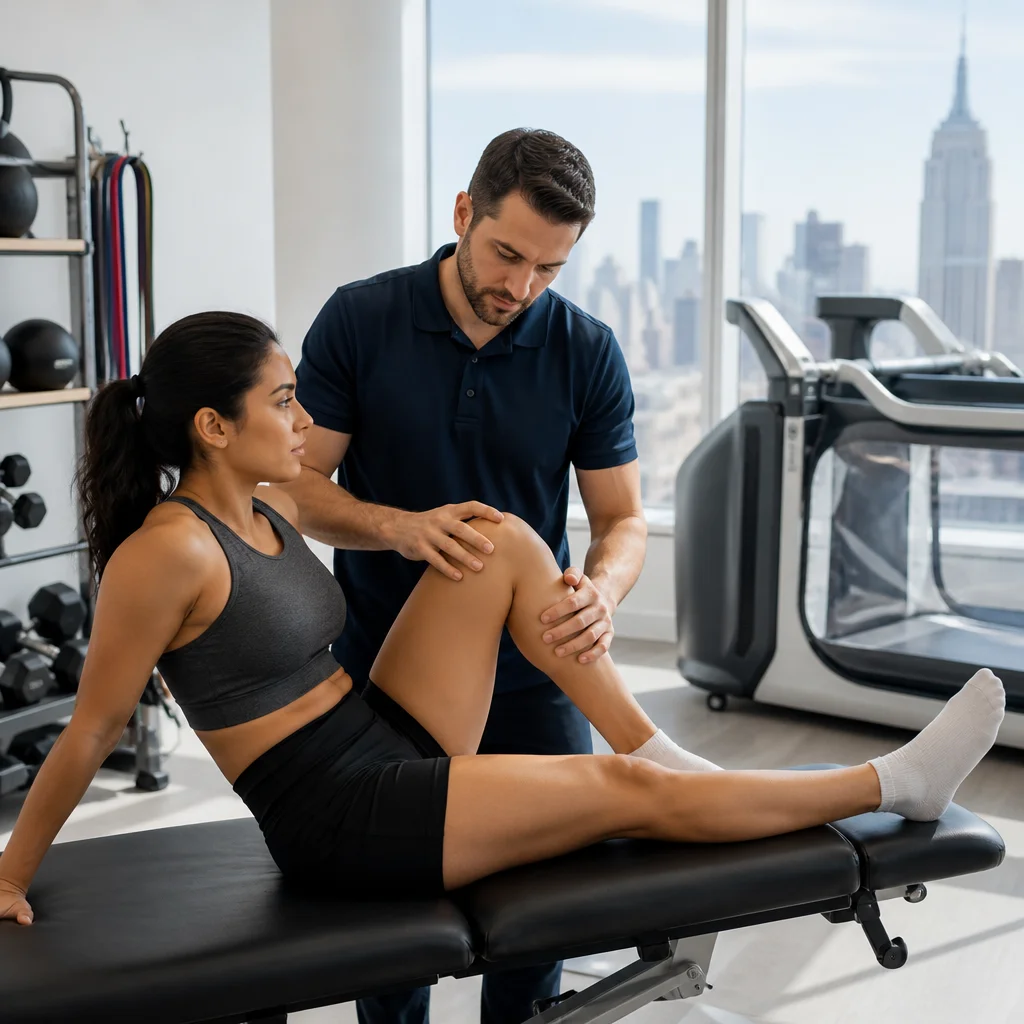
Here's what this means practically: In your first session, we perform a detailed cycling-specific movement assessment. We look at your pedal mechanics, spine positioning, hip stability, and shoulder alignment. Rather than assuming a diagnosis, we identify where your body is compensating and why. Then we design a recovery plan that layers multiple modalities together rather than treating them as separate treatments.
Our integrated model works because it addresses:
Mobility limitations through manual therapy and active stretching
Strength deficits with targeted exercise progression
Movement quality through real-time coaching and feedback
Postural balance through yoga-inspired positioning and awareness
Cardiovascular capacity and power output through sport-specific training
This integrated approach has been shown to reduce injury recurrence and accelerate return to full training more effectively than single-modality treatment. You're not just recovering from an injury; you're building resilience into your entire cycling system.
Advanced Manual Therapy Techniques for Cycling Injuries
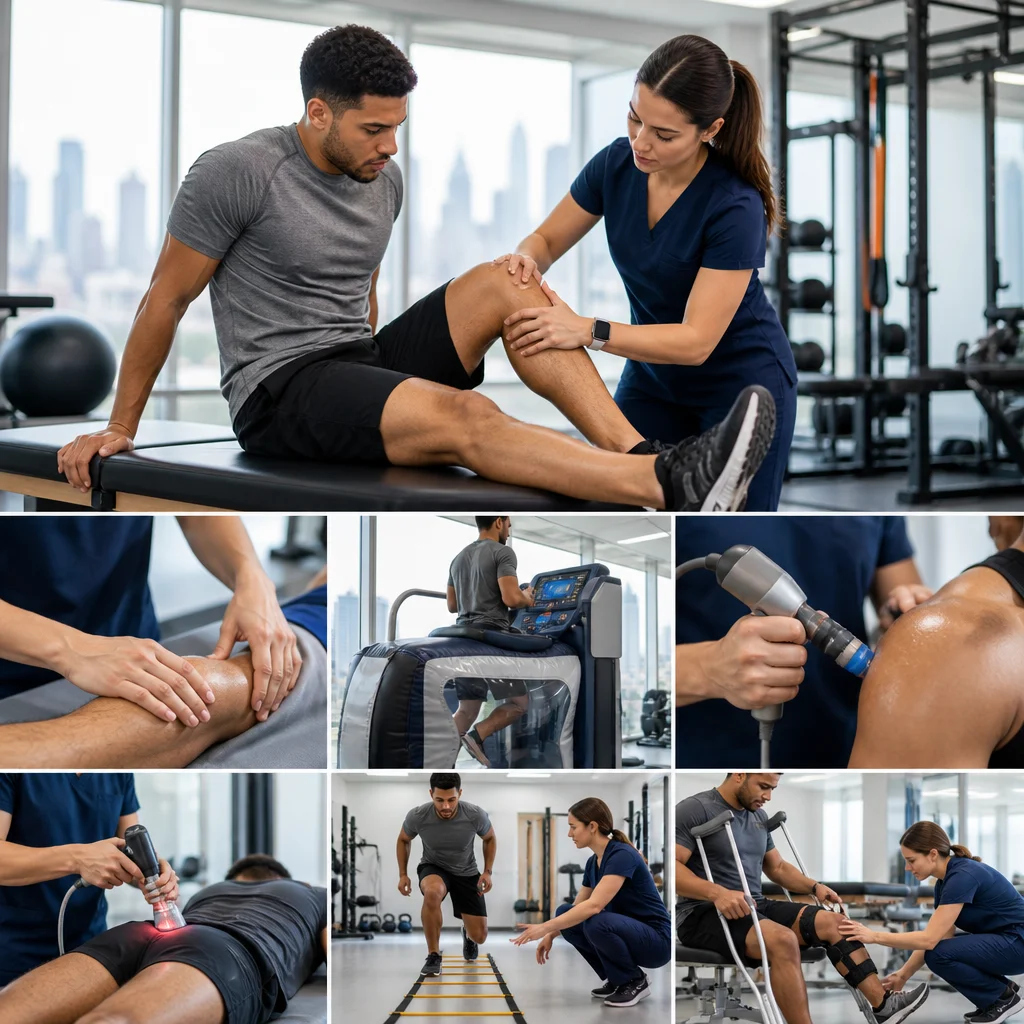
Manual therapy is one of our core tools because cycling injuries often involve soft tissue restrictions, joint stiffness, and neuromuscular tension that exercise alone cannot resolve quickly.
We employ several advanced manual techniques:
Soft tissue mobilization targeting muscles and fascia that restrict pedaling mechanics
Joint mobilization to restore normal arthrokinematics in the knee, hip, and spine
Trigger point therapy for referred pain patterns common in cyclists
Myofascial release to restore tissue extensibility and reduce compensation patterns
A cyclist with lateral knee pain, for example, rarely needs aggressive knee treatment. Instead, we typically address IT band tension, lateral hip tightness, and often restrictions in the ankle or thoracic spine that alter how forces travel through the leg. Hands-on techniques combined with active movement create faster tissue adaptation than passive stretching alone.
Manual therapy also helps us identify and correct movement faults in real time. As we mobilize a restriction, we have you practice the corrected movement pattern immediately. This retrains your nervous system to use better mechanics during cycling itself.
Anti-Gravity Treadmill Training for Cyclist Rehabilitation
One of our most effective tools for cycling recovery is [anti-gravity treadmill training], which allows us to reduce impact and loading while maintaining cardiovascular fitness and movement quality during your return to cycling.
Here's how it works for cyclists: The anti-gravity treadmill uses differential air pressure to reduce your effective body weight by up to 80 percent. This means you can run or walk with significantly less joint loading, making it perfect for cyclists returning from knee pain, hip issues, or post-surgical rehabilitation.
For cyclists specifically, this technology allows you to:
Maintain aerobic capacity while healing lower-body injuries
Practice proper running form without pain, which transfers to pedaling mechanics
Load joints gradually and progressively as tissues heal
Train at higher intensities without aggravating pain patterns
Rather than being forced into complete rest, you're training intelligently. You're keeping your cardiovascular system conditioned while your injured tissues adapt to stress gradually. Many cyclists are surprised at how quickly they return to full training when we use this tool strategically during the rehabilitation window.
Specialized Strengthening for Return to Cycling
Strength work must be cycling-specific to matter. Generic leg presses or isolated hamstring curls don't translate to pedaling power or injury prevention the way targeted, movement-integrated strengthening does.
Our cycling-focused strength program emphasizes:
Hip abductor and external rotator strength for stability and knee alignment
Glute maximus activation for power output and hip extension
Core stabilization with anti-rotation and anti-extension exercises
Ankle and foot stability for efficient power transfer
Upper body and shoulder girdle strength for load management during climbing and sprinting
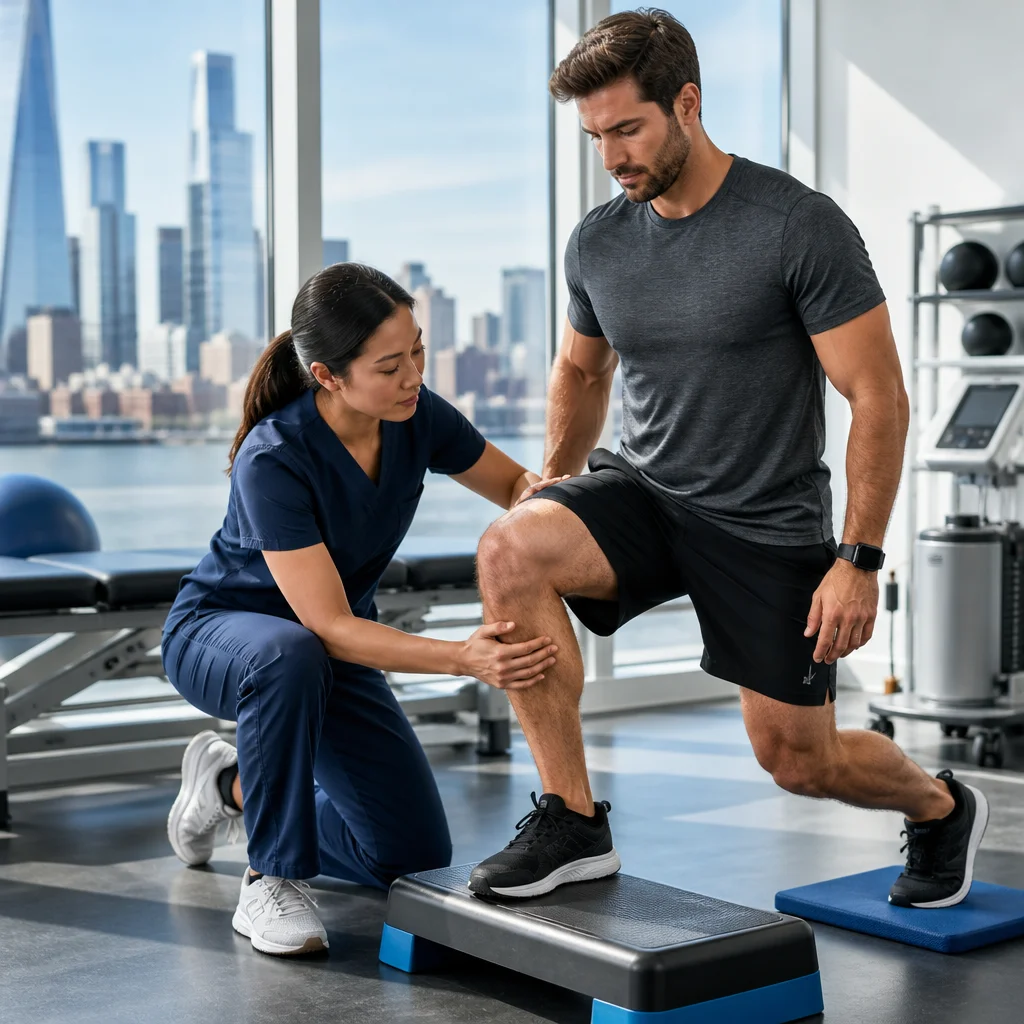
We progress these exercises from isolated control movements to integrated, loaded patterns that mimic actual cycling demands. A cyclist with weak glutes might start with side-lying hip abduction, progress to split squats, then advance to single-leg Romanian deadlifts with rotation, closely mimicking how the glute functions during hard pedaling.
The progression is individualized based on your pain response, strength gains, and cycling goals. We track metrics like power output, single-leg stability, and movement quality to know when you're ready to intensify.
How Integrated Yoga Enhances Your Recovery
Yoga isn't just flexibility work for cyclists. When integrated thoughtfully into your recovery program, yoga addresses movement quality, breathing patterns, and postural awareness that directly improve cycling performance and prevent injury.
Our cycling-focused yoga emphasizes:
Hip opener sequences targeting the deep external rotators and flexors that restrict pedaling
Thoracic spine mobility work to improve posture and breathing during hard efforts
Core stability through functional yoga poses that demand integration rather than isolation
Mental focus and breathing awareness to manage pain and improve body awareness
Eccentric loading in lengthened positions to build resilience in tissues
Unlike a general yoga class, our yoga instruction is integrated with your physical therapy program. Your therapist knows exactly which ranges need work, and yoga becomes a bridge between passive manual work and active strengthening. You gain mobility through supported poses while building control and strength simultaneously.
Many cyclists find that consistent yoga practice, combined with our manual therapy and strengthening, creates lasting improvements in positioning on the bike and reduces the muscle tension that accumulates over high-volume training.
Real Results: From Pain to Peak Performance
We've worked with hundreds of urban cyclists who came to us frustrated, convinced they'd have to stop riding or live with chronic pain. The pattern is consistent: within 4 to 6 weeks of our integrated approach, most cyclists are back to pain-free riding. Within 8 to 12 weeks, they're stronger than before the injury and performing better.
One cyclist came to us with severe patellofemoral pain that worsened every ride. After traditional PT elsewhere, she was gaining mobility but still hurt when cycling. Within our integrated program, we identified restricted ankle mobility and weak hip external rotators causing altered knee mechanics. With combined manual therapy, targeted strengthening, and integrated yoga, she returned to pain-free century rides within 10 weeks and improved her functional power output by 12 percent.
Another urban commuter was dealing with lower back strain from his desk job combined with weekend long rides. Our program addressed his thoracic stiffness, core instability, and hip flexor tightness through coordinated manual therapy and yoga-informed strengthening. He's now riding harder than before his injury and has eliminated the back pain that plagued his commutes.
These results aren't surprising; they're consistent with integrated, personalized approaches to sports injury rehabilitation.
Your Personalized Cycling Recovery Plan at NYPT
Your recovery plan is completely individualized based on your injury, cycling goals, and current fitness level. There's no standard program here because there's no standard cyclist.
Here's what your plan typically includes:
One-on-one physical therapy sessions focusing on your specific limitations and pain pattern 2. Manual therapy integrated with active movement correction 3. Cycling-specific strengthening progression 4. Integrated yoga sessions targeting your mobility restrictions 5. Return-to-cycling milestones, not just pain reduction 6. Sport-specific power and conditioning training as you progress
We also assess your bike setup and riding mechanics because sometimes a small positional adjustment prevents pain from returning. Our goal isn't just recovery; it's building a more resilient, stronger cycling system than you had before.
Throughout your program, we measure progress objectively: pain levels, strength gains, movement quality, and ultimately, your ability to ride at your target intensity without limitation. You'll understand exactly where you stand at each phase and what's required to reach the next level.
Getting Started With Your First Appointment
Your first appointment at NYPT begins with a thorough movement assessment and detailed history. We'll ask about your cycling volume, intensity, bike setup, pain patterns, and performance goals. We'll observe how you move, identify restrictions, and explain what we're finding in clear, actionable terms.
During this evaluation, we perform cycling-specific testing to understand your movement faults and restrictions. We don't diagnose in the medical sense; rather, we identify the movement and tissue limitations creating your pain or performance plateau.
From there, we build your personalized plan, starting treatment immediately. Most cyclists feel noticeably better after their first session because we combine manual work with immediate movement coaching and strategy for managing symptoms at home.
Our one-on-one model means you're never in a group class or doing a generic protocol. Every exercise, every technique, every progression is matched to your specific needs and goals. We're committed to getting you back to pain-free, high-performance cycling as efficiently as possible.
Ready to move beyond pain and back to peak cycling performance? Contact us at NYPT Health & Rehab in New York City. Let's build your personalized cycling recovery plan and get you back on the road stronger than before.
For further reading: Integrated rehab with yoga.
Frequently Asked Questions (FAQ)
How does our integrated physical therapy and yoga approach help cyclists recover faster than traditional PT alone?
We combine targeted manual therapy techniques with functional movement patterns through yoga to address both the injury and underlying imbalances that cause cycling pain. Our approach tackles flexibility, core stability, and movement efficiency simultaneously, so you recover not just from your injury but also build resilience to prevent future problems while maintaining your cycling schedule.
What makes our cycling rehabilitation different from general physical therapy?
We specialize in cycling-specific biomechanics, understanding how hip tightness, knee tracking issues, and lower back strain develop from repetitive pedaling. Our team uses advanced tools like our anti-gravity treadmill and Class IV laser therapy alongside personalized strengthening protocols designed specifically for cyclists, ensuring your return to peak performance happens safely and sustainably.
How quickly can I expect to return to cycling after starting treatment at NYPT?
Recovery timelines depend on your injury severity and starting fitness level, but we design progressive return-to-cycling plans that get you back on the bike within weeks while systematically building strength. We track your performance improvements throughout treatment so you know exactly when you're ready to tackle your usual routes and intensity.
Comments