

Deep Tissue Massage for Runners: Recovery Strategies That Keep You Moving
Table of Contents
Why Runners Suffer from Muscle Tightness and Injury
Running demands everything from your body. The repetitive impact, the muscular demands, and the recovery required to keep pace with your goals create a unique set of challenges that many runners don't fully address until pain forces their hand. At NYPT Health and Rehab, we work with active New Yorkers and competitive athletes who understand that smart recovery isn't optional—it's essential to staying in the game.
Deep tissue massage is one of the most effective tools for runner recovery, but it works best when integrated into a comprehensive rehabilitation strategy. In this article, we'll walk you through why runners experience muscle tightness, how targeted massage accelerates healing, and how we combine manual therapy with advanced technologies to get you back to peak performance.
Running places extraordinary stress on a predictable set of muscles: your calves, hamstrings, quadriceps, hip flexors, and glutes bear most of the load. Every stride creates impact forces up to three times your body weight, and that repetition accumulates tension in the tissues over time.
Muscle tightness doesn't happen in isolation. When runners increase mileage, change terrain, or shift their training intensity without adequate recovery, microscopic tears develop in muscle fibers and connective tissue. The body responds by laying down scar tissue and adhesions—knots of stuck-together muscle fibers that restrict movement and reduce performance. These adhesions also trap nerves and blood vessels, limiting oxygen delivery and nutrient recovery to the very tissues that need it most.
Common culprits include:
Insufficient warm-up and cool-down protocols
Rapid increases in running volume or intensity
Imbalances in strength between opposing muscle groups
Poor running mechanics or biomechanical inefficiencies
Inadequate cross-training and flexibility work
Urban runners face additional challenges. Concrete surfaces, inconsistent terrain, and the mental intensity of city running often compound these issues. Many runners push through early warning signs of tightness, assuming soreness will resolve on its own. By the time they seek help, adhesions have already begun limiting their stride and setting them up for serious injury.
Understanding this progression is your first step toward prevention and recovery.
How Deep Tissue Massage Accelerates Your Recovery
Deep tissue massage targets the deeper layers of muscle and fascia that everyday stretching simply cannot reach. Unlike superficial massage, which feels relaxing but addresses only surface tension, deep tissue work mechanically breaks apart adhesions and restores normal tissue extensibility.
When we apply sustained pressure and slow strokes to affected areas, several things happen at once. First, we interrupt the pain-tension cycle that keeps muscles locked down. Tight muscles send constant signals to your nervous system, which tightens them further as a protective response. Breaking that cycle allows your nervous system to downregulate and muscles to genuinely relax.
Second, deep tissue massage increases blood flow to problem areas, delivering oxygen and nutrients needed for tissue repair while flushing out metabolic waste products that accumulate in tight tissues. This enhanced circulation accelerates the body's natural healing process.
Third, the mechanical action of massage stimulates proprioceptors—sensory receptors that tell your brain where your body is in space. Restoring proprioceptive awareness improves running mechanics and coordination, making you less prone to compensation patterns that lead to secondary injuries.
Runners often report improved stride efficiency, reduced pain during and after runs, and faster recovery between training sessions after establishing a regular deep tissue massage routine. Many also notice better sleep quality, as resolved muscle tension removes a significant source of physical stress.
What to do next: Schedule a massage assessment to identify which muscle groups need the most attention based on your specific running goals and injury history.
The Science Behind Manual Therapy for Athletic Performance
Manual therapy—the hands-on treatment of muscle, fascia, and connective tissue—is grounded in solid evidence. Research consistently shows that skilled manual techniques reduce pain, improve range of motion, and enhance athletic performance when integrated into a broader treatment plan.
The fascial system deserves special attention. Fascia is a continuous web of connective tissue that surrounds every muscle, bone, organ, and nerve in your body. When healthy, fascia is hydrated and mobile, allowing tissues to glide past each other smoothly. When dehydrated or restricted by adhesions, fascia becomes stiff and creates cascading movement problems up and down your kinetic chain.
One landmark principle in sports medicine is that restricting fascia in one area (say, your calf) creates compensation patterns elsewhere (perhaps your knee or hip). Deep tissue massage and myofascial release address these restrictions at their source, which explains why treating your injured hamstring might require working on your glutes, hip rotators, and lower back.
Neurologically, manual therapy also influences your central nervous system. The pressure and movement involved in deep tissue work activate parasympathetic nervous system responses, shifting your body from a stress state (sympathetic) to a recovery state (parasympathetic). This is why runners often feel calm and restored after a good massage session, not just physically but mentally.
Athletes who combine manual therapy with structured strength and conditioning protocols report superior outcomes compared to those using either approach alone. The manual work prepares tissues to respond well to training, while training reinforces the improvements massage creates.
Our Integrated Approach to Runner Rehabilitation
We don't treat massage in isolation. At NYPT, every deep tissue session is part of a personalized rehabilitation strategy designed around your specific goals and injury patterns.
Here's how we structure it. First, we conduct a thorough movement assessment to identify biomechanical imbalances, weakness, and mobility restrictions. This informs both our massage work and our strength-training approach. Second, we deliver targeted deep tissue massage to address tissue restrictions and pain. Third, we pair massage with active rehabilitation exercises that reinforce proper movement patterns and build resilience.
This integrated model matters because muscle tightness is usually a symptom, not the root problem. A tight calf might be protecting a weak anterior tibialis, or tight hip flexors might compensate for glute weakness. If we only massage and never address the underlying weakness, the tightness returns within days.
Our approach ensures that each session builds on the last. We document your progress, adjust our techniques based on how your tissues respond, and progressively challenge your body as recovery advances. This keeps you moving forward rather than cycling through recurring problems.
Combining Massage with Advanced Recovery Modalities
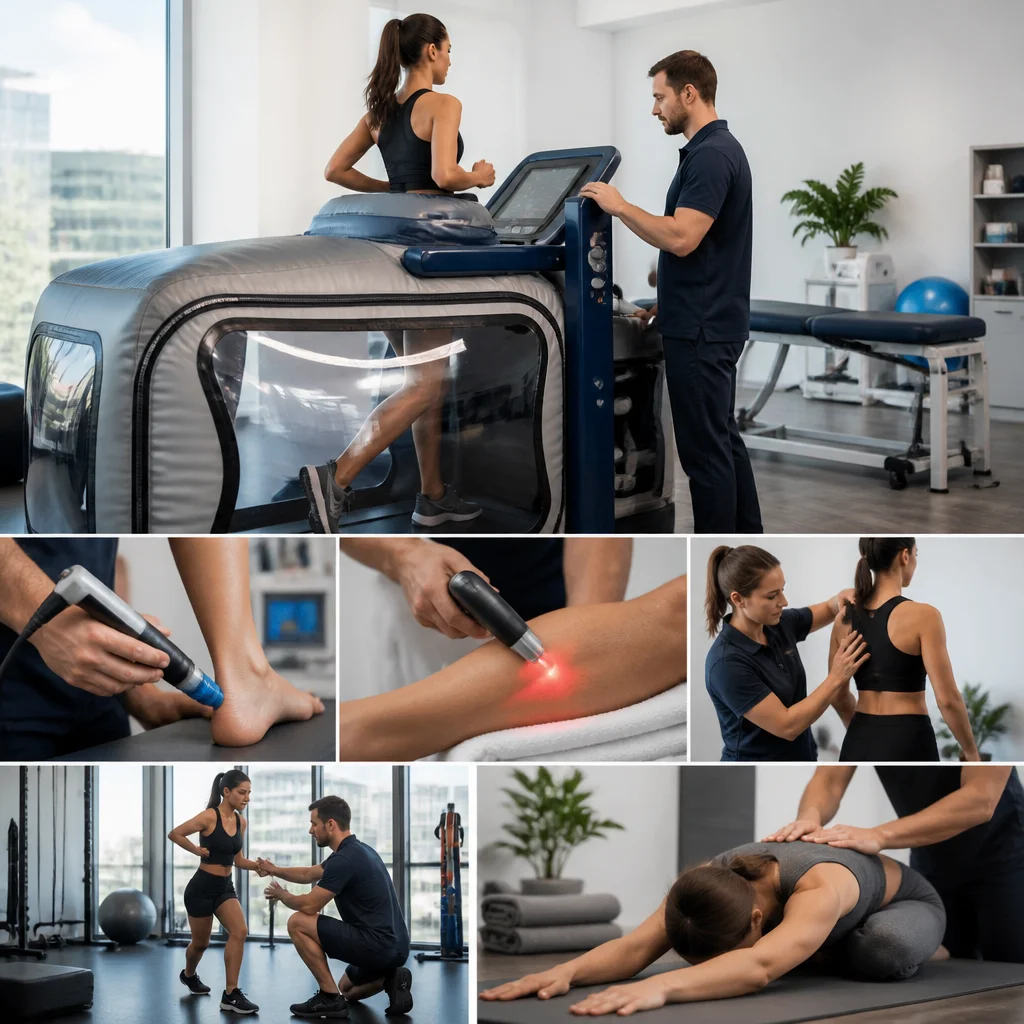
Deep tissue massage is powerful, but we amplify results by combining it with complementary technologies. Our clinic offers several tools that work synergistically with manual therapy.
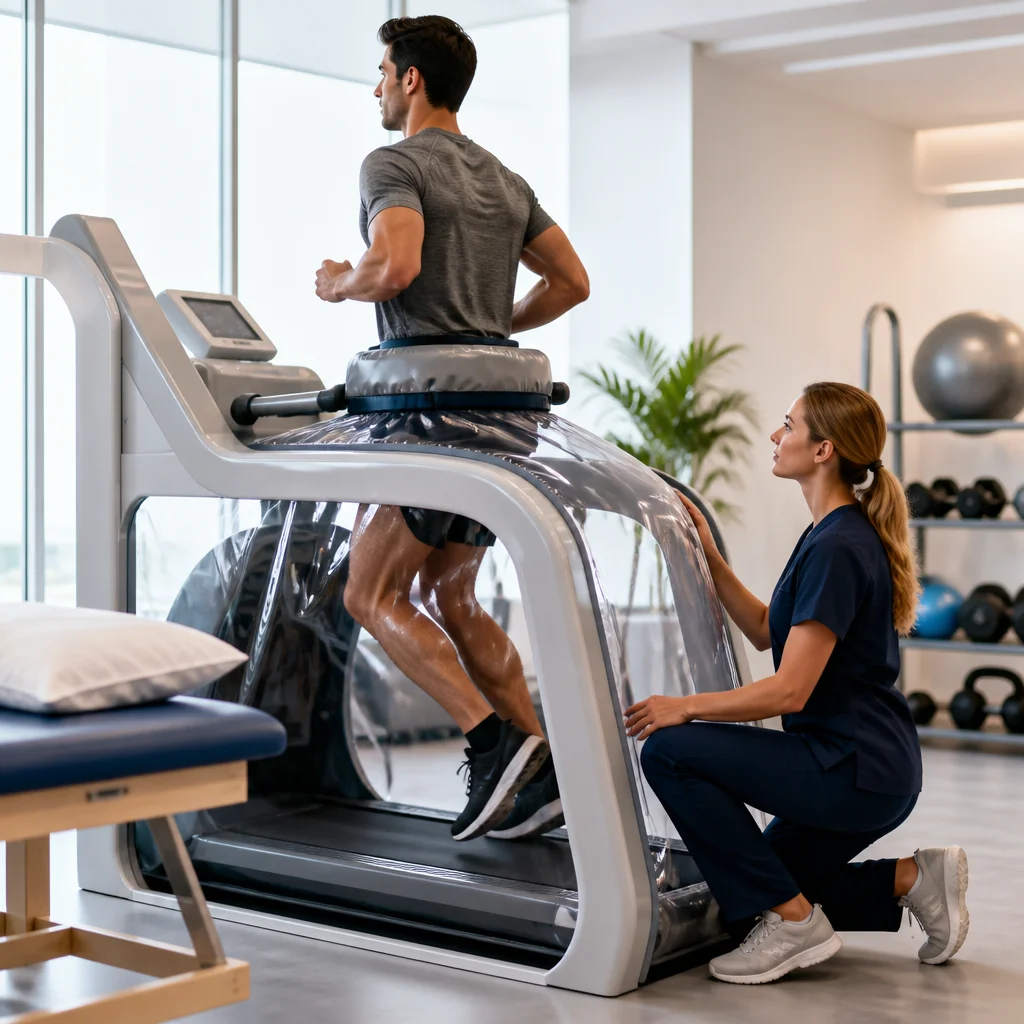
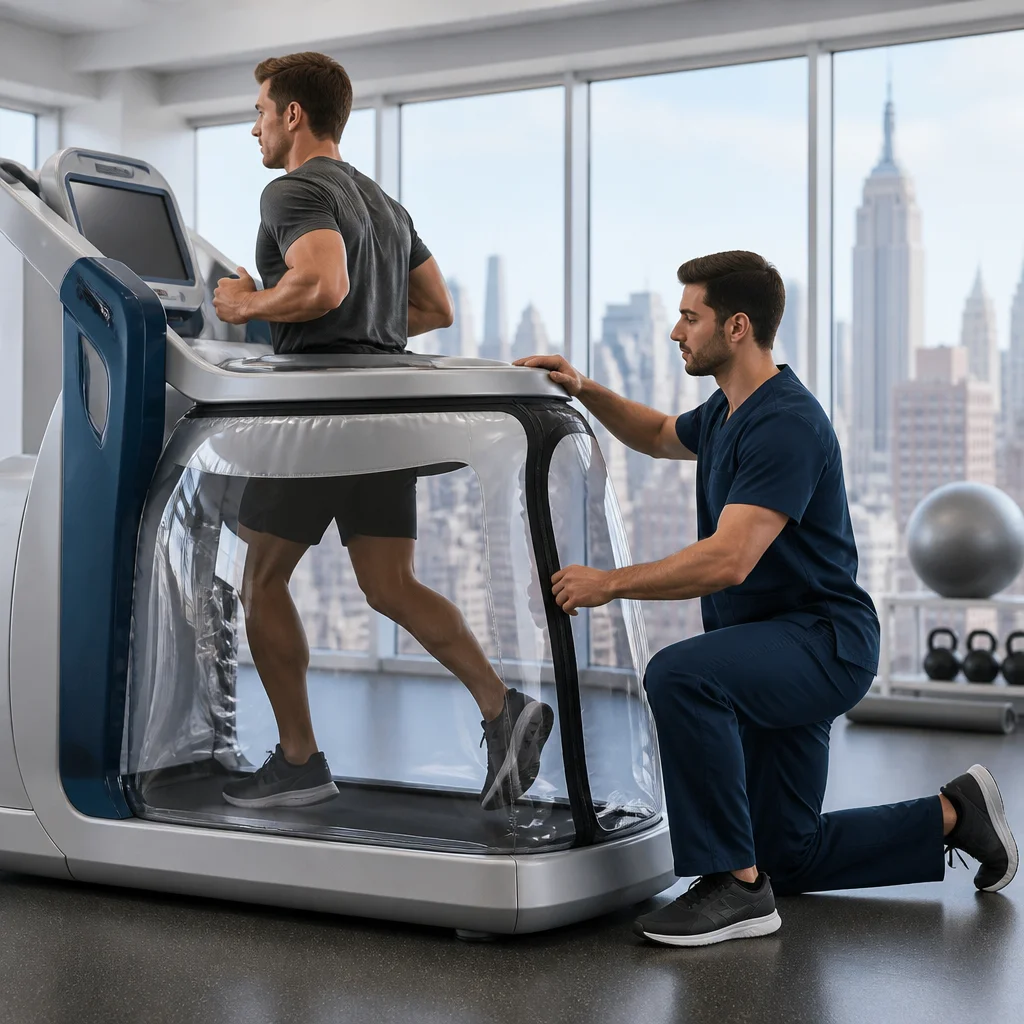
Anti-gravity treadmill training allows you to run with reduced impact while rebuilding strength and confidence after injury. Class IV laser therapy accelerates tissue healing by stimulating cellular repair at the mitochondrial level. Shockwave therapy breaks down stubborn scar tissue and stimulates blood flow to chronically problematic areas.
For runners recovering from tendon-related injuries like Achilles tendonitis or patellar tendinopathy, this multi-modal approach is often more effective than any single intervention. A runner might receive deep tissue massage to a tight calf, then use the anti-gravity treadmill to train running mechanics without pain, followed by laser therapy to support tissue healing at the cellular level.
The sequencing matters. We don't randomly throw every tool at a problem. Instead, we strategically combine modalities based on your current healing phase, training demands, and goals. Early in recovery, we might emphasize manual therapy and gentle movement. As you progress, we layer in laser therapy and more intense training demands on the anti-gravity treadmill.
What to do next: Discuss your training schedule and injury timeline during your initial consultation so we can recommend the best combination of modalities for your situation.
Creating Your Personalized Return-to-Performance Plan
Recovery isn't linear, and it isn't one-size-fits-all. A marathon runner's return-to-training timeline looks completely different from a sprinter's, just as a recreational jogger's protocol differs from a competitive athlete's.
We build your return-to-performance plan by anchoring it to concrete, measurable milestones. Early milestones focus on pain reduction, improved range of motion, and basic strength restoration. Mid-stage milestones emphasize sport-specific movements, running-pace variability, and distance progression. Late-stage milestones involve return to competition, peak performance conditioning, and injury prevention maintenance.
Throughout this progression, we regularly reassess your progress and adjust the plan as needed. Sometimes runners progress faster than expected; sometimes setbacks require modification. Our personalized one-on-one sessions give us the flexibility to respond to your individual needs rather than forcing you into a standardized protocol.
An essential component is education. We teach you which movements and activities support your recovery and which ones might aggravate your injury. You'll learn home care strategies, including when to apply ice or heat, how to modify your training, and which self-massage techniques support professional treatment. This active participation accelerates results and builds your confidence.
Common Running Injuries We Successfully Treat
Our experience with runner injuries spans the full spectrum, from acute strains to chronic overuse conditions. Some of the most common issues we address include:
Runner's knee (patellofemoral pain syndrome) and IT band syndrome
Plantar fasciitis and Achilles tendinopathy
Hamstring strains and muscle pulls
Hip flexor tightness and labral concerns
Calf strains and shin splints
Lower back pain related to running mechanics
Each of these responds well to the combination of deep tissue massage, strengthening, and movement retraining. The key is identifying the root mechanical problem driving the pain, not just treating the area that hurts. A runner with knee pain often needs hip and calf work. A runner with back pain might need core strengthening and better running posture.
Our sports-specific rehabilitation approach means we understand the demands runners place on their bodies. We don't just get you pain-free; we get you resilient enough to handle your training demands.
What to Expect During Your First Session at NYPT
Walking into our clinic for the first time, you'll meet with one of our specialists for a comprehensive intake. We'll ask about your running history, current training volume, past injuries, and your performance goals. This context shapes everything we do.
Next comes a detailed movement assessment. You'll move through various positions and running-related motions while we observe your mechanics and identify restrictions or imbalances. This assessment is usually more revealing than runners expect—we often spot compensations and biomechanical inefficiencies that have been driving their pain.
Then we begin hands-on treatment. You'll experience how deep tissue work actually feels. Unlike gentler massage, deep tissue is more intense and focused. We work into restrictions slowly, communicating with you about pressure levels so you stay in a productive discomfort zone rather than bracing against pain.
After the manual work, we'll often prescribe specific exercises or movement drills to reinforce what we've just released. These aren't generic stretches; they're chosen specifically for your situation.
By the end of your first session, you'll have a clearer understanding of your injury, a concrete recovery plan, and a sense of what sustained treatment will look like.
Complementary Therapies That Enhance Your Recovery
While deep tissue massage is foundational, integrated yoga and massage creates powerful synergies for runners. Yoga builds strength and flexibility while improving body awareness and mental calm. When combined with massage, yoga helps maintain the mobility and tissue quality that massage creates.
We also incorporate targeted stretching protocols, breathing work, and movement education into your recovery. Some runners benefit from cross-training modalities like swimming or cycling that build fitness without the repetitive impact of running. Post-workout foam rolling and self-myofascial release techniques extend the benefits of professional massage between sessions.
Nutrition and sleep matter too. We often discuss these factors with patients because tissue recovery requires adequate protein, micronutrients, and quality sleep. A runner getting deep tissue massage twice weekly but sleeping poorly won't experience optimal results.
Preventing Future Injuries Through Proactive Care
The best injury is the one that never happens. Once you've recovered from a running injury, proactive care prevents recurrence.
For many runners, ongoing monthly or bimonthly massage maintenance is transformative. Rather than waiting until pain develops, regular massage keeps tissue quality high, maintains proper mechanics, and catches small issues before they become big problems. Think of it like vehicle maintenance—regular service prevents breakdowns.
Beyond massage, we emphasize strength-training consistency, proper running mechanics, and smart training progression. Runners who follow a structured strength program (especially focusing on hip and core stability) show dramatically lower injury rates. Those who increase running volume gradually—typically no more than 10 percent per week—also stay healthier.
We teach runners to listen to their bodies and distinguish between normal training soreness and warning signs of injury. Early intervention when warning signs appear prevents months of lost training time.
Success Stories: Athletes Returning to Peak Performance
We've worked with hundreds of New York runners and athletes. A competitive marathoner came to us with chronic calf tightness that was affecting her pace. After eight weeks of deep tissue massage combined with ankle mobility work and eccentric calf strengthening, she returned to racing. She's now training for a sub-three-hour marathon.
Another runner struggled with persistent IT band syndrome for nearly a year. After addressing hip weakness and glute activation patterns alongside targeted massage, he resumed distance training and completed his goal ultramarathon.
These aren't anomalies. They're the expected outcome when runners receive personalized, evidence-based care that addresses root causes rather than just symptoms.
Schedule Your Recovery Consultation Today
Whether you're dealing with acute pain, chronic tightness, or simply want to optimize your recovery, we're here to help. We provide one-on-one sessions tailored to your specific needs and goals.
Contact us at NYPT Health and Rehab to schedule your initial consultation. We'll assess your situation, explain our approach, and design a recovery strategy that gets you back to the running you love. Your body has incredible capacity to heal when given the right support—let us help you access it.
Frequently Asked Questions (FAQ)
How often should runners come in for deep tissue massage during training?
We recommend that runners incorporate deep tissue massage into their recovery routine 1-2 times per month during regular training cycles, and increase frequency to weekly sessions during heavy training blocks or when managing existing muscle tightness. The ideal schedule depends on your running volume, intensity, and how your body responds to training. During your first session at our clinic, we'll assess your current condition and training load to create a personalized massage schedule that supports your performance goals.
Can deep tissue massage prevent running injuries before they happen?
We've found that regular deep tissue massage and myofascial release work effectively as injury prevention tools by addressing muscle imbalances, improving tissue mobility, and identifying problem areas before they develop into full injuries. When we combine proactive massage therapy with our strength and conditioning training, runners can significantly reduce their injury risk and maintain consistent training. We recommend discussing a preventive care plan with our team so we can customize a strategy based on your running history and biomechanical needs.
What's the difference between the massage therapy you offer and a typical sports massage?
Our deep tissue massage for runners is integrated into a comprehensive rehabilitation framework that includes manual therapy, Class IV laser treatment, anti-gravity treadmill training, and personalized return-to-performance conditioning. We don't just address muscle tension in isolation; we assess your entire movement pattern, running mechanics, and recovery needs to create a coordinated plan that gets you back to your peak performance faster. Every session we provide is tailored to your specific running goals and any injuries or limitations you're currently managing.
Comments