

Deep Tissue Sports Massage NYC: Recovery Solution for Active Athletes
Table of Contents
Why Athletes in NYC Choose Deep Tissue Sports Massage
Active New Yorkers know that training hard is only half the battle. The real challenge lies in recovering well enough to do it again tomorrow. Deep tissue sports massage has become essential to how we help our athletes maintain peak performance while preventing the injuries that sideline them. If you're dealing with tight muscles, lingering soreness, or chronic tension from your sport, understanding how targeted massage therapy works can transform your recovery strategy.
We've worked with hundreds of New York City athletes, and the ones who recover fastest share a common habit: they prioritize soft tissue care alongside their training. Deep tissue sports massage addresses the root cause of many performance issues—accumulated muscle tension, restricted mobility, and compromised movement patterns that develop over weeks or months of training.
Athletes choose this approach because it works quickly and produces measurable results. A runner with tight hip flexors, a tennis player with shoulder tension, or a weightlifter with lower back stiffness can often feel meaningful improvement within a few sessions. Unlike passive rest, massage actively restores tissue quality, increases blood flow, and prepares your body for the next training block.
The New York City environment amplifies the need for specialized massage. Our athletes train hard, often combining multiple sports or disciplines in a single week. The combination of high-volume training, stress, and constant movement creates a perfect storm for muscle tightness. We've found that athletes who integrate deep tissue massage into their routine recover faster, perform better, and experience fewer recurring injuries.
Your next step: Identify which areas consistently feel tight after your sport. Most athletes recognize 2-3 trouble zones where tension accumulates.
The Problem: How Muscle Tension Limits Your Athletic Performance
Muscle tension isn't just uncomfortable; it's a performance killer. When muscles stay chronically tight, they restrict your range of motion, alter your movement mechanics, and increase injury risk. We often see athletes pushing through tension, assuming it will resolve on its own. It rarely does.
Tight muscles change how your body moves. A runner with tight calves lands differently, placing extra stress on the knee and hip. A swimmer with restricted shoulders compensates by rotating through the lower back. A CrossFit athlete with tight hip flexors can't fully extend during lifts, reducing power output. These compensatory patterns don't just reduce performance—they create secondary injuries.
The problem compounds over time. Untreated tension restricts blood flow to affected tissues, slowing nutrient delivery and waste removal. This metabolic stagnation keeps muscles in a state of chronic inflammation, making them even tighter. The cycle perpetuates itself until you actively interrupt it.
Stress and training volume both contribute to this pattern. Your nervous system can only manage so much tension before it becomes the limiting factor in your performance. A sprinter who can't fully relax their upper body wastes energy. A soccer player with tight quads can't generate maximum speed. The tight tissue becomes the bottleneck.
Your next step: Notice how your body feels 24-48 hours after hard training. Persistent tightness in the same areas signals the need for targeted intervention.
What Deep Tissue Massage Actually Does for Sports Injuries
Deep tissue massage works through several interconnected mechanisms. The physical pressure applied to muscle tissue increases blood flow, delivering oxygen and nutrients while removing metabolic waste products. This alone reduces soreness and accelerates recovery.
The technique also breaks up adhesions and scar tissue that restrict movement. When muscle fibers are injured or overworked, they can stick together in disorganized patterns. Targeted pressure helps realign these fibers and restore normal tissue structure. Athletes report improved flexibility and reduced pain after just a few sessions.
Beyond the physical effects, massage activates your parasympathetic nervous system, triggering a relaxation response. This nervous system shift reduces muscle guarding and allows deeper relaxation than passive rest alone. Your body actually heals more effectively when it's genuinely relaxed.
For sports injuries specifically, deep tissue massage addresses the soft tissue damage that typically accompanies acute injuries. Sprains, strains, and overuse injuries all involve inflammation and disrupted muscle fibers. Massage reduces inflammation, improves circulation to the injured area, and restores normal movement patterns during the healing window.
We also use massage strategically for prevention. Regular deep tissue work keeps tissues healthy, maintains mobility, and identifies emerging issues before they become injuries. An athlete who gets monthly maintenance massage often avoids the acute injuries that plague those who only seek treatment after pain develops.
Your next step: Schedule an initial assessment to identify which tissues need attention most urgently based on your specific sport and training volume.
Our Integrated Approach to Sports Massage and Recovery
We don't treat massage as a standalone service. At NYPT Health & Rehab, deep tissue sports massage is one component of a comprehensive recovery system tailored to your specific needs and athletic goals.
Our approach combines massage with physical therapy assessment, targeted strength training, and movement pattern correction. Here's why this matters: massage temporarily improves tissue quality and mobility, but without addressing the underlying movement deficits or strength imbalances that created the tension in the first place, you'll return to the same problematic patterns.
When you come in for sports massage, we assess how your injury or tension affects your movement. Does your tight hip limit your running stride? Does your shoulder restriction alter your overhead pressing? These questions guide how we integrate massage with hands-on physical therapy and corrective exercise. You might receive deep tissue work on your calf, followed by mobility drills and strengthening exercises that address the root cause of the tightness.
We also coordinate massage timing with your training schedule. Pre-training massage prepares tissues and nervous system for hard work. Post-training massage accelerates recovery and begins addressing the damage from that session. Strategic timing maximizes results.
Our integrated model means you're not bouncing between different providers with conflicting approaches. We manage your entire recovery pathway, ensuring each intervention builds on the previous one. Integrated rehab for athletes is simply more effective than isolated massage.
Your next step: Bring your training schedule to your first appointment so we can coordinate massage and recovery work with your actual training demands.
Advanced Manual Therapy Techniques We Use in Our NYC Clinic
Deep tissue massage is foundational, but we've built a comprehensive manual therapy toolkit designed for serious athletes. Our practitioners combine traditional deep tissue work with advanced techniques that produce faster, more lasting results.
We use myofascial release to address the connective tissue surrounding muscles. Fascia can become restricted and adhered, limiting mobility even after muscles themselves are loose. Targeted fascia release often produces dramatic improvements in range of motion and pain-free movement.
Soft tissue mobilization and trigger point therapy focus on specific problem areas. These techniques identify and treat localized areas of tension and inflammation that don't always respond to general deep tissue work. An athlete with a specific knot in their piriformis might receive concentrated trigger point therapy that resolves the issue in 2-3 sessions.
We integrate stretching and movement into the massage process itself. Rather than passive massage followed by separate stretching, our therapists combine both to create lasting mobility gains. This active-passive approach is particularly effective for athletes.
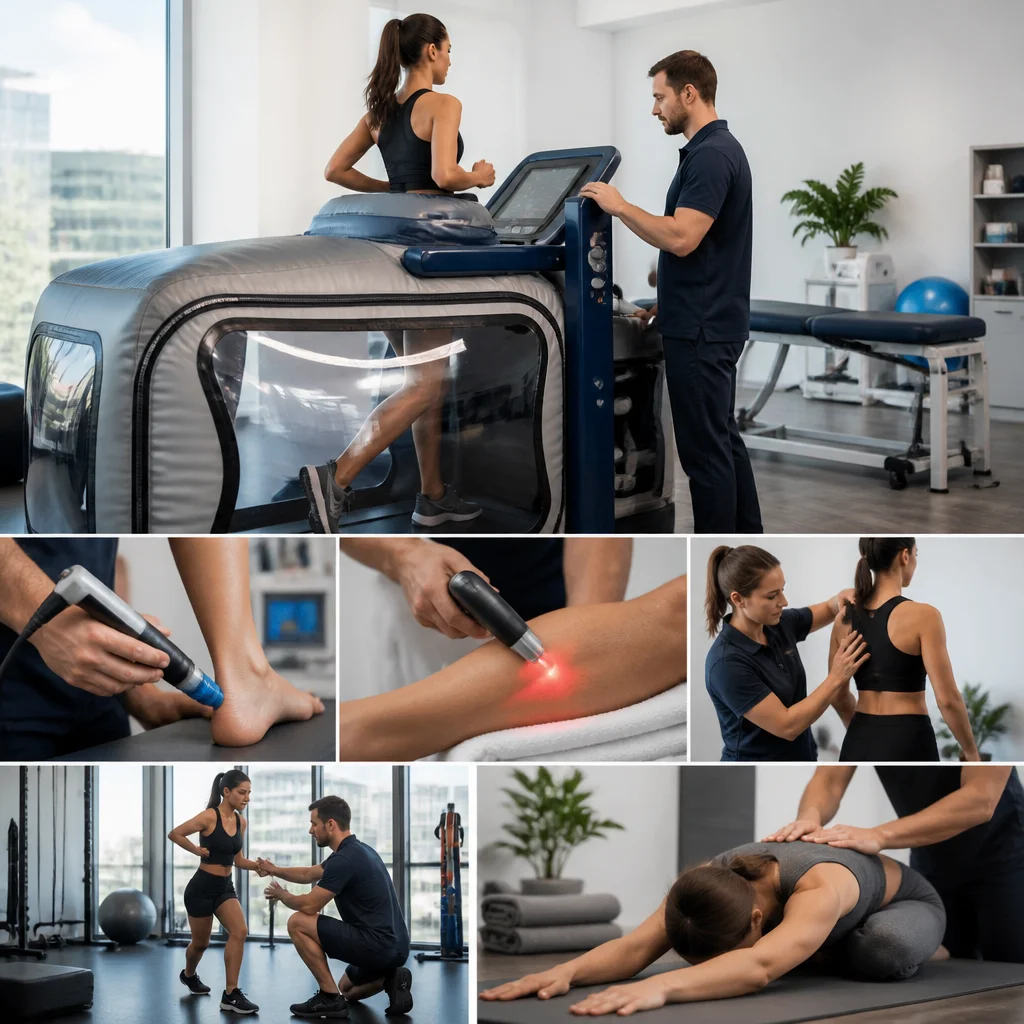
For certain conditions, we complement massage with shockwave therapy or Class IV laser therapy. These modalities reduce inflammation, promote tissue healing, and accelerate recovery from sports injuries. Combined with manual therapy, they create a comprehensive approach to soft tissue healing.
The key distinction is personalization. We don't apply the same technique to every athlete. Your specific sport, training load, injury history, and movement patterns determine which techniques matter most for your recovery.
Your next step: Let us know your primary sports and any chronic tight areas during your intake so we can prioritize the most effective manual therapy techniques.
When to Use Sports Massage Before and After Training
Timing matters significantly when integrating massage into your routine. We recommend different approaches depending on whether you're using massage before or after training.
Pre-training massage should be lighter and more focused on nervous system activation than deep tissue work. We prepare tissues for hard work, increase mobility in movement-critical areas, and enhance nervous system readiness. A pre-competition session might last 20-30 minutes and focus on key areas for your specific sport. Distance runners might need extensive calf and hip flexor work, while overhead athletes might prioritize shoulder mobility.
Post-training massage can be more intensive. After hard training, deeper work helps manage the inflammation and tissue damage created during exercise. Post-training sessions typically last 45-60 minutes and address multiple muscle groups affected by that day's training.
The frequency depends on your training volume and sport. Competitive athletes training 5-6 days per week often benefit from weekly or bi-weekly deep tissue work. Those training 3-4 days per week might need massage every 2-3 weeks for maintenance. Higher training volumes require more frequent intervention.
During heavy training blocks or competition season, massage becomes even more critical. Your body's recovery capacity is maxed out from training stress alone. Regular massage helps manage accumulated fatigue and prevents the cascade of injuries common during high-intensity seasons.
Off-season provides an excellent opportunity for corrective deep tissue work. With training volume reduced, you have more recovery capacity to handle intensive massage that addresses underlying movement patterns and old adhesions. Think of off-season massage as restoring tissue quality in preparation for the next hard training block.
Your next step: Track how you feel 24-48 hours after training. If soreness or stiffness is still limiting movement, add massage to accelerate recovery.
Combining Massage with Physical Therapy for Optimal Results
The magic happens when we combine deep tissue massage with sport-specific physical therapy. Massage opens the door by improving tissue quality and mobility, but physical therapy ensures your body maintains and builds on those gains.
Here's a concrete example: a runner with chronic hip tightness comes in for deep tissue work on the hip flexors, glutes, and piriformis. The massage immediately improves mobility and reduces pain. But if that runner returns to training with the same movement patterns that created the tightness, they'll be back with the same issue in 2-3 weeks.
Our physical therapy component identifies why the hip tightened in the first place. Maybe glute weakness forces the hip flexors to compensate. Maybe poor running mechanics place excessive stress on the hip. Maybe core stability is inadequate. We assess and address these root causes through targeted strengthening and movement retraining.
The combination creates lasting results. Massage handles the immediate soft tissue problem and restores mobility. Physical therapy prevents the problem from recurring by addressing the underlying weakness or movement dysfunction. When runners deal with hip pain, this integrated approach transforms their recovery.
We also use massage and physical therapy strategically during rehabilitation. Early after injury, massage helps manage swelling and pain while gently maintaining mobility. As recovery progresses, physical therapy becomes increasingly prominent, rebuilding strength and movement control. Massage continues supporting the process by managing inflammation and maintaining tissue quality.
Your one-on-one sessions with our specialists ensure this integration happens smoothly. Your therapist and physical therapist communicate constantly, coordinating which techniques to emphasize and tracking your progress toward return-to-sport goals.
Your next step: Ask us to assess your movement patterns in your problem area. Understanding why tension develops guides more effective treatment.
Return to Peak Performance with Our Specialized Recovery Plan
Returning to peak performance requires more than resolving current pain or tightness. It demands a systematic plan that progressively rebuilds your capacity while maintaining the gains from earlier recovery phases.
Our specialized recovery plans incorporate massage, physical therapy, strength conditioning, and sport-specific training in a coordinated progression. Early phases emphasize tissue healing and mobility restoration. Middle phases build strength and movement control. Later phases introduce sport-specific demands and return-to-training protocols.
Massage remains relevant throughout all phases, though its role evolves. Early in recovery, it's a primary healing tool. In middle phases, it maintains mobility alongside increasingly demanding strengthening work. In late phases, it supports high-volume training and competition preparation.
We use measurable benchmarks to track progress and guide decision-making. Can you achieve full range of motion in your previously injured area? Can you perform foundational strength movements without compensation? Can you tolerate sport-specific demands at 75% intensity? These objective measures ensure you're truly ready before advancing.
The final return-to-performance phase is where many athletes fail. They progress through rehabilitation successfully, then return to full training too quickly. Our return-to-action strength and conditioning work bridges the gap between rehabilitation and competition, ensuring your body can actually handle the demands you'll face.
Personalization is critical here. A competitive soccer player has different return-to-sport demands than a recreational yoga practitioner. We design recovery plans that match your specific sport, training volume, and performance goals.
Your next step: Schedule a comprehensive assessment where we evaluate your current capacity and develop a specific recovery timeline with concrete milestones.
---
Deep tissue sports massage is a legitimate, evidence-based recovery tool, not a luxury. The athletes who integrate it strategically into their training recover faster, perform better, and experience fewer injuries. If you're ready to optimize your recovery and return to peak performance, we're here to guide you through a comprehensive, personalized approach that actually works.
Contact NYPT Health & Rehab today to schedule your initial assessment and discover how our integrated recovery services can transform your athletic performance.
Frequently Asked Questions (FAQ)
How do we integrate deep tissue massage with physical therapy for faster recovery?
We combine our hands-on massage techniques with targeted physical therapy to address both immediate muscle tension and underlying movement patterns that caused your injury. Our therapists work together to ensure each massage session supports your rehabilitation goals, so you're not just feeling relief in the moment but actually building strength and mobility for lasting results.
When should I schedule sports massage around my training schedule?
We recommend massage 24-48 hours after intense workouts to aid recovery without compromising your next training session, and we can also use lighter techniques within 24 hours pre-competition to enhance mobility and reduce tension. During your initial consultation, we'll assess your training calendar and help you develop a massage schedule that complements your specific athletic demands.
What makes your deep tissue approach different from general relaxation massage?
We use advanced manual therapy techniques specifically designed for sports injuries, targeting the deeper muscle layers and fascial restrictions that limit your performance rather than providing surface-level relaxation. Our therapists combine deep tissue work with movement assessment, so we're identifying why certain areas are tight and addressing the root cause alongside symptom relief.
Comments