

Managing Chronic Tendonitis: How NYC Athletes Return to Peak Performance
Table of Contents
Why Chronic Tendonitis Sidelines Even Elite NYC Athletes
Chronic tendonitis doesn't care how fit you are or how many marathons you've completed. A runner training for their fifth half-marathon. A tennis player mid-season. A CrossFit competitor at their peak. Each one arrives at our clinic frustrated, sidelined by pain that won't quit, and wondering if they'll ever get back to the activities that define them.
Tendonitis is one of the most common injuries we see in our New York City practice, particularly among active professionals and competitive athletes who demand high performance from their bodies. The challenge isn't just the initial injury—it's the chronic nature of the condition and how standard treatment often falls short of getting you truly back to sport.
We've built NYPT Health and Rehab around a different philosophy: personalized, evidence-based care that addresses the root cause of your tendonitis rather than just managing symptoms. Here's how we help athletes like you reclaim peak performance.
Tendons are dense connective tissue structures that transfer force from muscle to bone. Unlike muscles, they have limited blood supply, which makes them heal slowly. When you overuse a tendon—whether through repetitive impact, sudden intensity increases, or poor movement patterns—microscopic tears develop. Over time, these accumulate into inflammation and pain.
What makes chronic tendonitis so stubborn is that rest alone rarely resolves it. Many athletes we work with have already tried weeks or months of reduced activity, ice, and over-the-counter anti-inflammatories without lasting improvement. The tendon becomes deconditioned, surrounding muscles weaken, and movement patterns compensate in unhelpful ways. Even worse, scar tissue can develop, reducing the tendon's flexibility and strength.
The New York lifestyle amplifies this challenge. Between demanding training schedules, commutes, and the psychological pressure to stay competitive, many patients push through mild pain—exactly when early intervention matters most. By the time someone reaches us, the injury has often progressed to a point where quick fixes don't work.
What to do next: If tendonitis pain persists beyond two weeks despite rest and self-care, professional evaluation prevents the condition from becoming chronic and entrenched.
The Limitations of Standard Tendonitis Treatment Approaches
Traditional treatment typically follows a predictable path: rest, ice, compression, elevation—and if that doesn't work, corticosteroid injections. While this approach helps acute inflammation, it often misses the deeper issues driving chronic tendonitis.
Rest can paradoxically worsen outcomes. Tendons require appropriate loading and movement to rebuild strength and maintain mobility. Complete immobilization leads to deconditioning and stiffness, making return to activity harder. Corticosteroid injections, meanwhile, provide temporary pain relief but don't restore tendon integrity or address movement dysfunction.
Many standard physical therapy programs also follow a generic template rather than adapting to your specific injury mechanics and athletic demands. A runner's tendonitis requires different training considerations than a volleyball player's, yet both might receive identical exercise routines.
We've found that effective chronic tendonitis treatment requires three elements: reducing pain and inflammation, restoring tendon resilience, and correcting the movement patterns that caused the injury. Generic protocols miss this progression.
How Advanced Manual Therapy Accelerates Tendon Healing
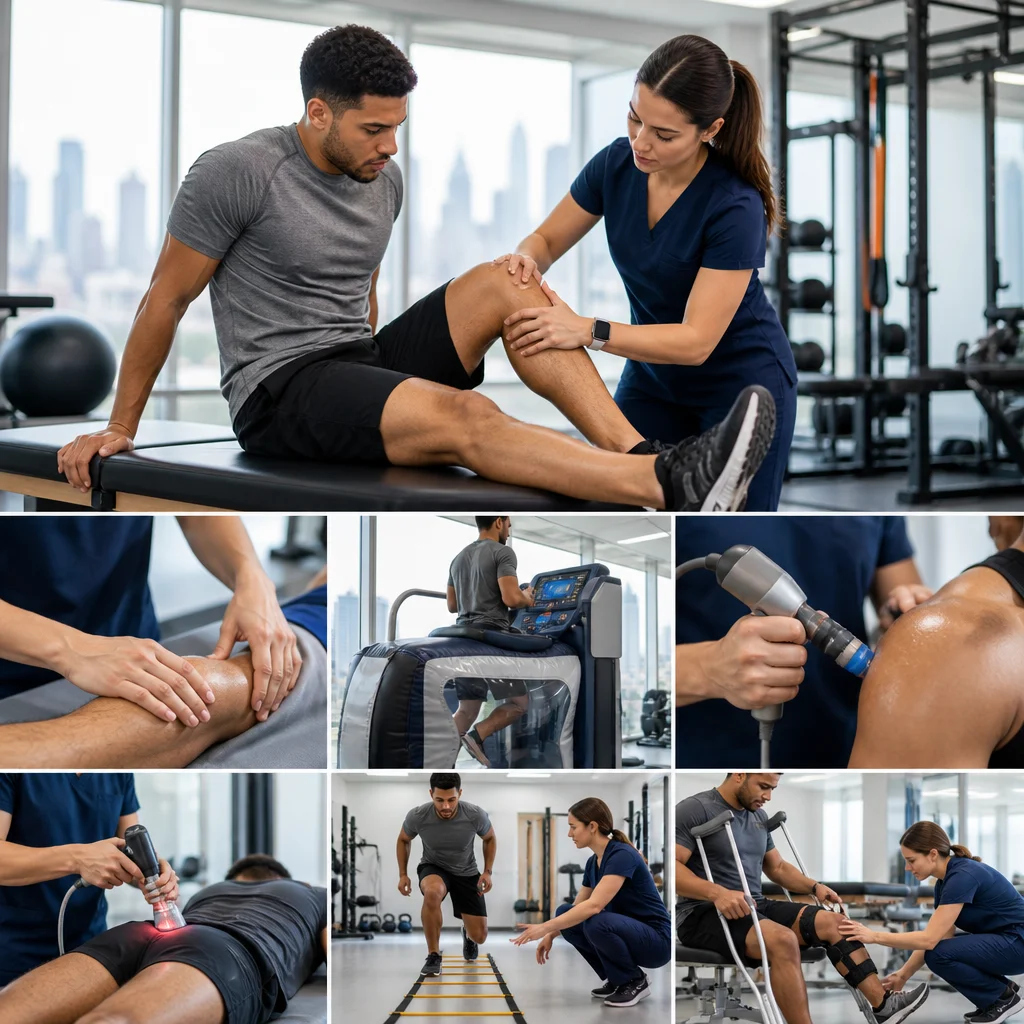
Advanced manual therapy goes beyond basic stretching and massage. Our approach uses evidence-based techniques designed to improve tissue mobility, reduce pain signals, and prepare your tendon for loading.
Soft tissue mobilization techniques target adhesions and restrictions around the injured tendon, improving blood flow to an area with limited circulation. Controlled friction and cross-fiber techniques help break down scar tissue and reorient new collagen fibers along the direction of force. Joint mobilization addresses movement restrictions in surrounding joints—for instance, restricted ankle mobility often contributes to Achilles tendonitis.
We also use myofascial release to address tension in the muscular structures connected to your tendon. The goal is never painful aggression; instead, we work within your tolerance to create lasting changes in tissue quality and mobility.
Manual therapy isn't a standalone fix, but it creates a foundation. By reducing stiffness and pain, we enable you to tolerate the progressive loading your tendon needs to truly heal. Athletes often report immediate improvements in mobility and confidence after our first sessions.
Our Personalized One-on-One Physical Therapy Methodology
Every patient who walks through our door has a unique injury history, movement pattern, training background, and performance goals. We build your recovery plan around these specifics, not a standardized protocol.
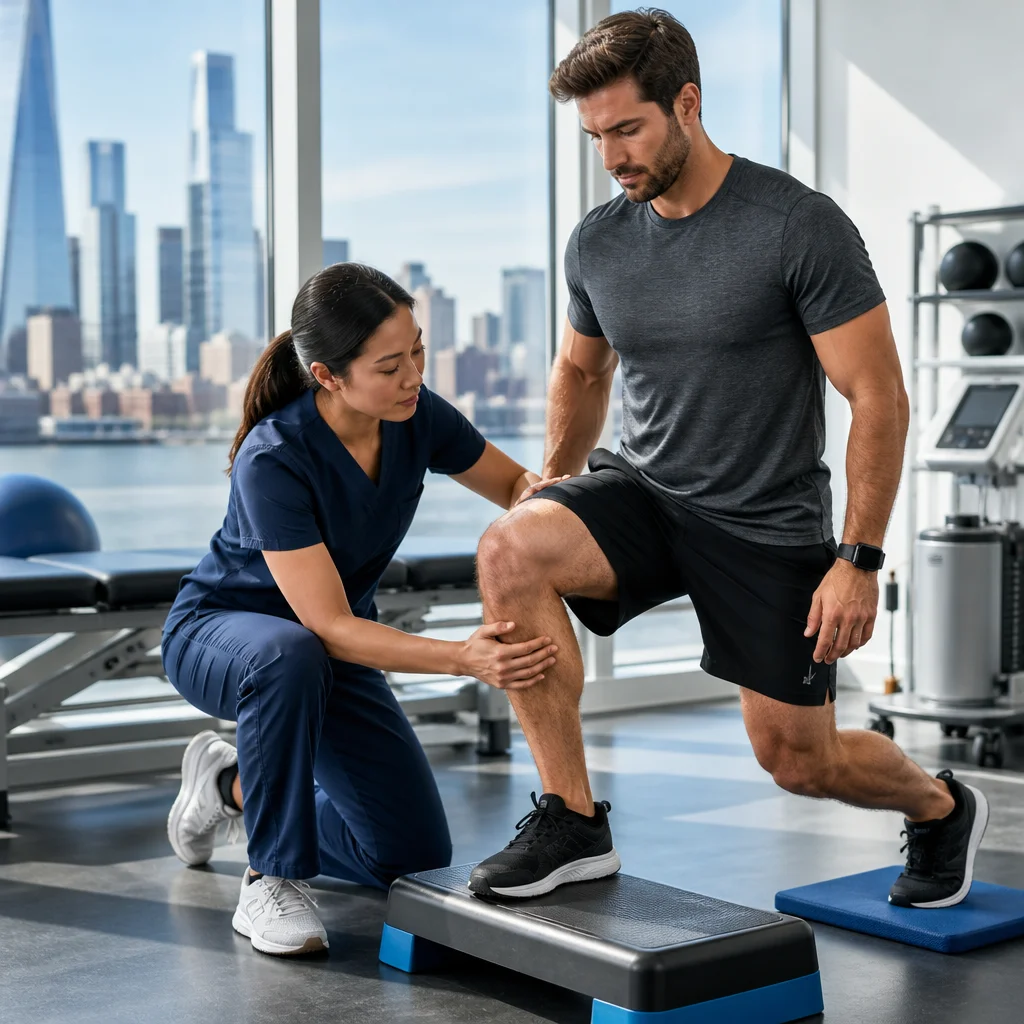
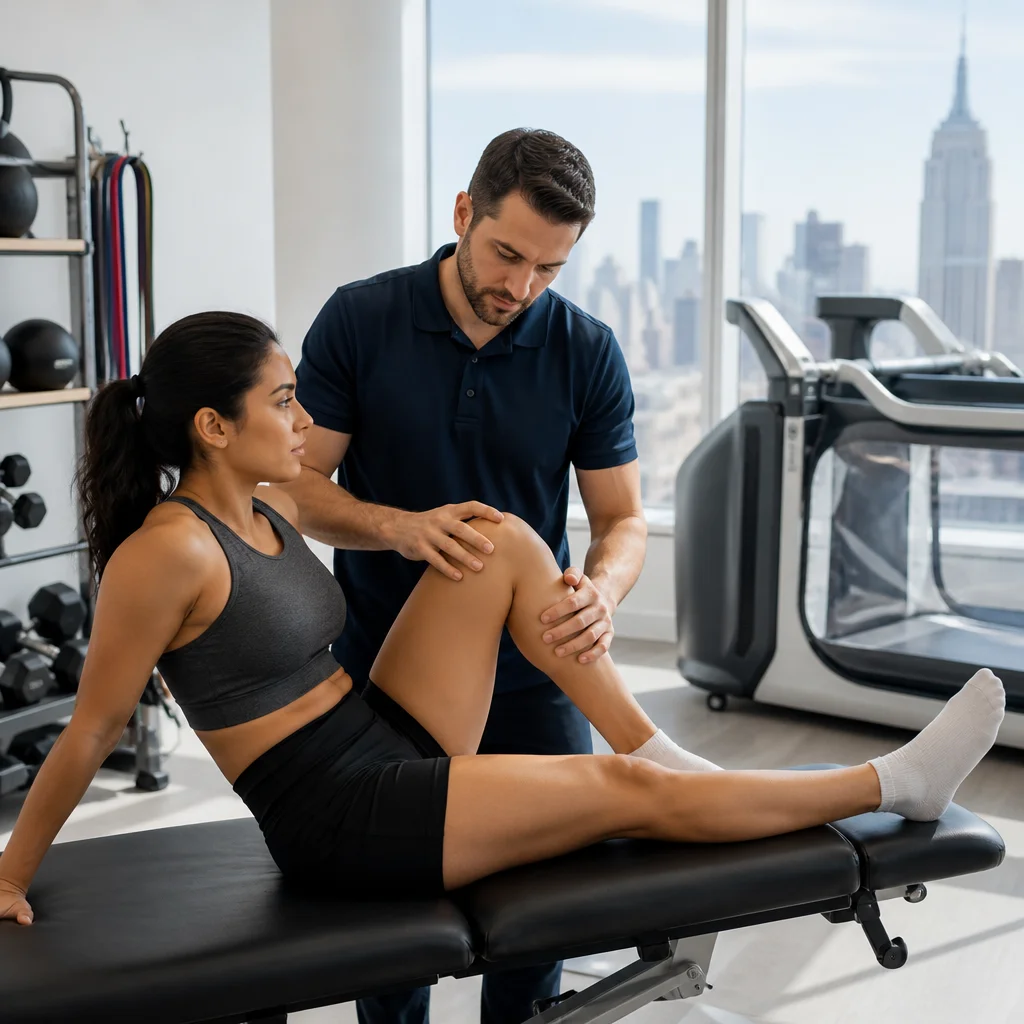
Our one-on-one approach begins with a detailed assessment. We examine not just your injured tendon but your entire kinetic chain—ankles, knees, hips, core, and shoulder, depending on your injury location. We watch how you move, identify compensatory patterns, and understand what's driving repetitive stress on the tendon.
From there, we design a progressive program that typically evolves through these phases:
Pain management and mobility (weeks 1-3): Reducing inflammation, improving range of motion, and establishing pain-free movement patterns.
Tendon loading and strengthening (weeks 3-8): Gradually increasing resistance through targeted exercises that build tendon resilience without aggravating symptoms.
Movement integration (weeks 6-10): Retraining how you run, jump, serve, or perform your sport-specific movements.
Return to sport conditioning (weeks 8 onward): Building capacity and confidence for full athletic performance.
Every session includes direct therapist interaction. Your therapist adjusts exercises based on your response, teaches proper form, and monitors progress. This personal attention is what transforms outcomes.
Shockwave and Laser Therapy for Stubborn Tendon Cases
When conservative treatment hits a plateau, we turn to advanced modalities proven to stimulate tendon healing at the cellular level. Extracorporeal shockwave therapy (ESWT) uses acoustic energy pulses to trigger an inflammatory response that jumpstarts the body's healing cascade. This paradoxical inflammation—controlled and therapeutic—promotes new blood vessel formation and collagen reorganization within the tendon.
Class IV laser therapy works differently. High-powered light energy penetrates deep tissue, reducing pain signals and stimulating cellular mitochondria to produce energy for tissue repair. We use this particularly for patients who haven't responded adequately to manual therapy and exercise alone.
These modalities aren't replacements for movement-based therapy; they're enhancers. We combine them with your strengthening program to accelerate progress. Most athletes we treat with shockwave or laser therapy notice improved pain and function within 2-4 weeks when paired with appropriate exercise.
Anti-Gravity Treadmill Training for Controlled Return to Running
Runners and high-impact athletes face a particular challenge: how to return to running without re-aggravating the tendon. Anti gravity treadmill therapy solves this by allowing us to reduce body weight by up to 80 percent while you run.
This technology lets us progress return-to-running in small, measurable increments. You might start at 40 percent body weight for five minutes, then progress to 50 percent the following week, gradually approaching full-weight running as your Achilles, patellar, or other lower-extremity tendon grows stronger. You get the neuromuscular and cardiovascular benefits of running while protecting the healing tissue.
The anti-gravity treadmill also lets us monitor your running form in real time. We watch for limping, overstriding, or other compensatory patterns that could perpetuate tendonitis. This visual feedback helps you relearn efficient running mechanics.
Post-Rehabilitation Strength and Conditioning for Peak Athletic Performance
Recovery doesn't mean returning to your pre-injury training level. It means building a stronger, more resilient version of yourself.
Our return to action strength and conditioning program focuses on three areas: building tendon capacity to handle high loads, improving neuromuscular control, and addressing any lingering movement dysfunction. This might include eccentric strengthening (where the tendon works while lengthening), explosive power development, and sport-specific plyometrics.
For a tennis player, this looks different than for a runner. We tailor conditioning to your sport's demands: deceleration and lateral movement for tennis, efficient propulsion for running, rapid force production for CrossFit.
We also integrate integrated rehab approaches that combine manual therapy, strength training, and yoga to build long-term resilience. Yoga improves mobility and body awareness. Massage therapy maintains tissue quality. Strength work builds capacity. Together, these prevent re-injury and keep you performing at your best.
Real Results: NYC Athletes Returning to Competition
Over the past years, we've helped hundreds of NYC athletes return to sport after chronic tendonitis. A 42-year-old corporate lawyer who thought her running days were over completes her seventh marathon. A semi-professional volleyball player returns to competition within 12 weeks. A cyclist, sidelined for eight months, finishes a 200-mile event.
These outcomes share common elements: consistent one-on-one therapy, appropriate use of advanced modalities when needed, progressive return-to-sport training, and—critically—patience with the process. Tendon healing takes time. Pushing too hard too fast typically triggers setbacks.
The most rewarding part isn't just the return to sport; it's the confidence athletes regain. They move without fear, train without hesitation, and understand their body well enough to prevent future injuries.
Your Custom Recovery Timeline and What to Expect
Recovery timelines vary based on injury severity, how long the problem has existed, and how diligently you follow your program. Most athletes with acute tendonitis see meaningful improvement within 4-6 weeks. Chronic cases often require 8-12 weeks or longer, particularly if the tendon has significant structural changes.
Expect to feel better before your tendon is fully strong. Pain typically reduces within 2-3 weeks as inflammation settles and movement improves. Functional capacity—your ability to tolerate sport-specific activities—takes longer. This is why we build gradual progression into every program. Returning too quickly based on pain improvement alone causes most re-injuries.
You'll also need to maintain what we build. Once you're back to full training, continuing targeted strengthening and mobility work—even at a maintenance level—prevents relapse. Most of our patients do 15-20 minutes of specific exercises twice weekly long-term.
Starting Your Recovery Journey at NYPT Health and Rehab
If chronic tendonitis has sidelined you, the path forward starts with a comprehensive evaluation. We'll assess your injury, understand your performance goals, and explain exactly what recovery will look like for your specific situation.
Our team combines expertise in sports medicine, orthopedic rehabilitation, and athletic training with access to advanced technologies most clinics don't offer. More importantly, we work with you one-on-one. Your therapist knows your goals, understands your sport, and adjusts your program weekly based on your response.
The next step is simple: schedule a consultation at NYPT Health and Rehab. We'll answer your questions, assess your condition, and outline a realistic path back to peak performance. Your best athletic years aren't behind you—they're ahead, once we address the tendonitis holding you back.
Frequently Asked Questions (FAQ)
How long does chronic tendonitis recovery typically take?
Recovery timelines vary based on the severity of your condition and how long you've been dealing with it, but we typically see our athletes making significant progress within 6-12 weeks of consistent treatment. We customize your timeline through our personalized one-on-one sessions, using advanced manual therapy and technologies like shockwave or Class IV laser therapy to accelerate healing. Our goal is getting you back to competition safely, not just pain-free, which is why we combine rehabilitation with sport-specific strength and conditioning.
What makes your approach to tendonitis different from standard physical therapy?
We don't rely on generic exercise programs or passive modalities alone. Our team combines hands-on advanced manual therapy techniques with cutting-edge technology like anti-gravity treadmill training and shockwave therapy to address stubborn tendon cases that don't respond to conventional treatment. Every session is one-on-one with a specialist who understands the demands of your sport, allowing us to create a recovery plan that gets you back to peak performance rather than just basic function.
Can I return to my sport while still in treatment with you?
We take a progressive, sport-specific approach that allows controlled return to activity as you heal. We use our anti-gravity treadmill and personalized strength and conditioning programs to rebuild your capacity safely, which means you can begin sport-specific movements under our guidance before full competition. Our return-to-action training ensures you're not just physically capable of your sport again, but performing at your peak level.
Comments