

One-on-One Sports Injury Rehab in NYC: Return to Peak Performance
Table of Contents
Why Urban Athletes Struggle With Sports Injuries and Chronic Pain
Advanced Manual Therapy Techniques We Use to Restore Mobility
High-Tech Recovery Tools: Anti-Gravity Treadmill, Shockwave, and Class IV Laser
Integrating Yoga, Massage, and Wellness for Whole-Body Recovery
Returning to Action With Our Strength and Conditioning Program
Why Urban Athletes Struggle With Sports Injuries and Chronic Pain
Life in New York City asks a lot of your body. You might commute by subway, climb stairs all day, train before work, and squeeze in a weekend game or race. That pace makes it easy to ignore early warning signs like tightness in the hip, a nagging knee, or a shoulder that only hurts when you reach overhead.
Urban athletes often face a few common patterns:
Training load that outpaces recovery. Back-to-back classes, long runs, and heavy lifting leave little time for tissues to adapt.
Limited time for care. Between work and social life, rehab appointments and home exercises are the first things to slip.
Mixed movement habits. Desk posture, rideshare seats, and standing on hard floors can alter how you move when you train.
For many people, these factors turn a minor issue into chronic pain. If you have been managing the same ache for months, it is worth taking a closer look at how your body moves under load, not just where it hurts.
What to do next: Track when your pain appears (during warm-up, mid-session, or the next morning) for two weeks. That pattern gives a physical therapist useful clues about what is driving the problem.
The Hidden Cost of Rushing Through Recovery
Most athletes know the feeling of wanting to get back in the game as quickly as possible. The problem is that pain often fades before the underlying tissue, strength, or movement pattern has fully recovered. Returning too early can lead to compensations that shift stress onto other joints.
Consider a runner who feels fine after two weeks of rest and resumes full mileage. Weak hip muscles may still be present, so the knee or shin takes on extra load. Within a month, the original injury returns, now joined by a new one.
Rushing can also cost you:
Time. A setback often adds more weeks off than a structured plan would have required.
Confidence. Repeated flare-ups make it harder to trust your body.
Performance. Subtle strength or mobility deficits can limit speed, power, and endurance long after the pain is gone.
What to do next: Set return criteria before you start rehab. Examples include pain-free single-leg squats, a full range of motion compared with the other side, and completing a sport-specific drill without symptoms.
How Our Personalized One-on-One Physical Therapy Works
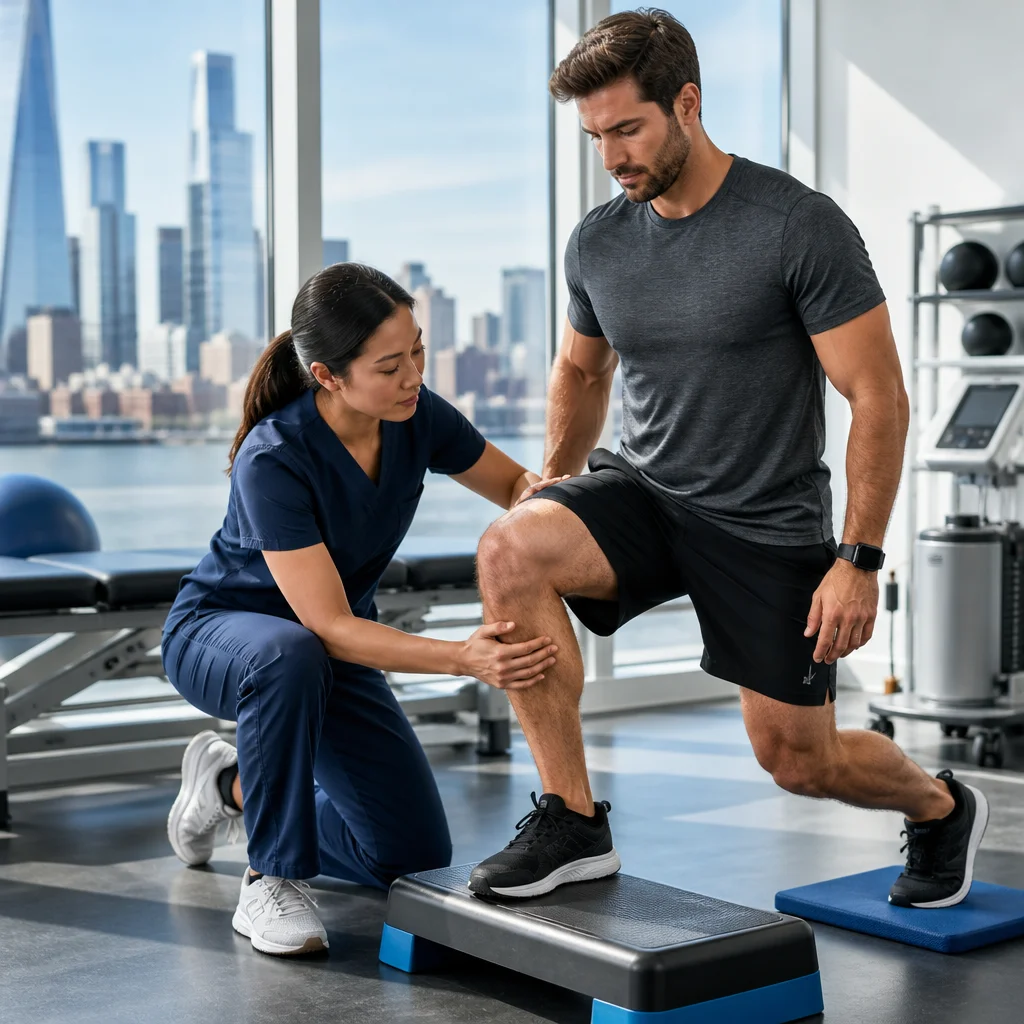
At NYPT Health and Rehab, every treatment plan starts with one-on-one time with your physical therapist. Sessions are not shared with other patients, so your therapist can focus fully on how you move, how you respond to treatment, and what matters most to your training.
A typical process includes:
Detailed assessment. We review your history, goals, and schedule, then test strength, joint mobility, balance, and movement quality. 2. Clear explanation. We walk you through what we found in plain language so you understand the reasoning behind each step. 3. Individualized plan. Your program combines hands-on care, targeted exercises, and progressions matched to your sport or lifestyle. 4. Regular reassessment. We track progress on measurable benchmarks and adjust the plan as your body responds.
Because we see you directly and consistently, small changes in symptoms or movement are caught early, before they become bigger setbacks.
What to do next: Bring your training calendar and a list of upcoming events to your first visit. Knowing your timeline helps us build a realistic plan.
Advanced Manual Therapy Techniques We Use to Restore Mobility
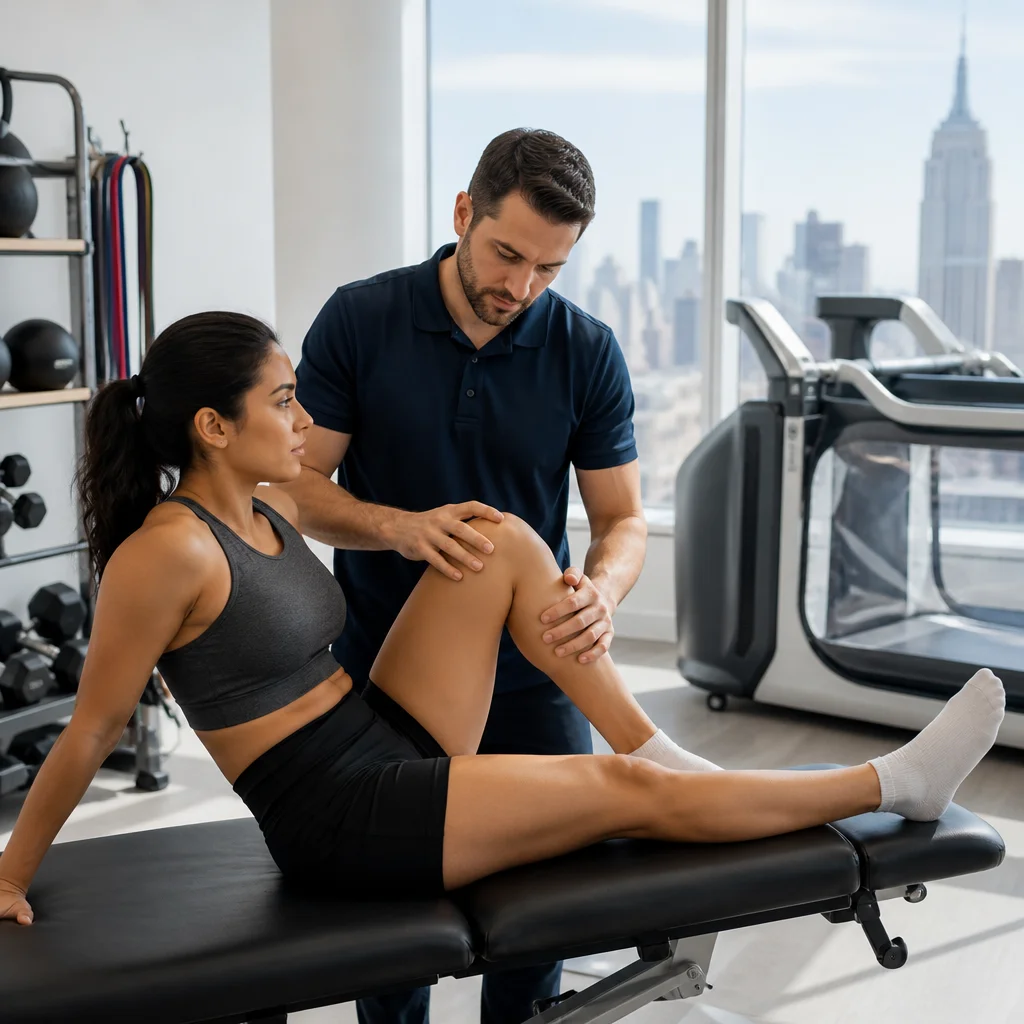
Manual therapy refers to skilled, hands-on techniques that address joint mobility, soft tissue sensitivity, and movement control. Our therapists use a range of approaches, selecting the ones that best fit your presentation and response.
Common techniques include:
Joint mobilization to restore smooth motion in stiff areas such as the ankle, hip, or thoracic spine.
Soft tissue work to reduce tension in muscles and fascia that limit flexibility or cause guarding.
Neural mobilization to help irritated nerves move more freely when symptoms travel down the arm or leg.
Manual therapy works best when paired with active exercise. Hands-on care can create the window of improved motion, and your strength work helps you keep it. We design sessions so you leave with movement you can practice on your own.
What to do next: After your session, use the home exercise your therapist assigns for 5 to 10 minutes daily. Consistency matters more than intensity in the early stages.
High-Tech Recovery Tools: Anti-Gravity Treadmill, Shockwave, and Class IV Laser
We combine hands-on care with advanced equipment when it supports your goals. Each tool has a specific role, and we explain why we recommend it.
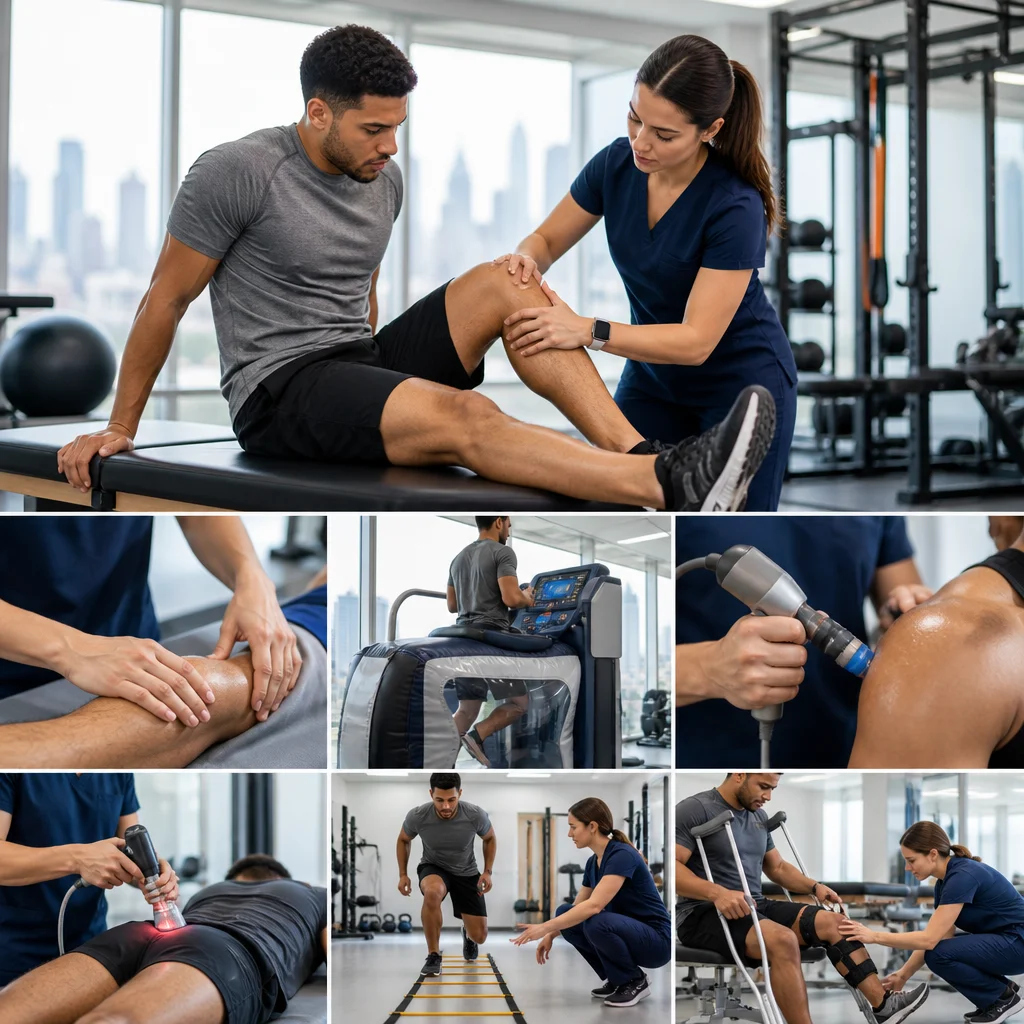
[Anti-gravity treadmill therapy](https://www.nypt.nyc/post/anti-gravity-treadmill-therapy-for-sports-injury-recovery-in-nyc) uses a pressurized chamber to reduce the body weight you carry while walking or running. This lets you practice gait mechanics and build aerobic fitness earlier in rehab, with less load on healing tissues.
Shockwave therapy delivers acoustic pulses to targeted areas. Clinicians often use it for persistent tendon and soft tissue problems that have not responded to other care.
[Class IV laser therapy](https://www.nypt.nyc/post/class-iv-laser-therapy-for-sports-injuries-nyc-athletes-high-tech-recovery-solution) uses higher-powered light energy to support comfort and tissue healing in appropriate cases.
These tools are not stand-alone fixes. We use them alongside exercise and manual therapy, and we adjust their role as you progress.
What to do next: Ask your therapist which tools are appropriate for your condition and what results to expect over the first four to six weeks.
Sports-Specific Injury Recovery Designed Around Your Goals
A marathon runner, a basketball player, and a climber need very different things from rehab, even with similar injuries. We build sport-specific plans around the demands you actually face.
For example:
Runners often need progressive load management, cadence and stride work, and hip and calf strength.
Field and court athletes benefit from change-of-direction drills, deceleration control, and reactive training.
Lifters and climbers may need rotator cuff and grip work, plus progressive loading for the specific movements they perform.
We start with your goals, whether that means finishing a 10K, returning to a weekend league, or lifting heavier without pain. Every phase of rehab moves you closer to those demands.
What to do next: Write down the top three activities you want to return to and the date you hope to resume them. We will map your plan backward from those targets.
Post-Surgical Orthopedic Rehabilitation Under One Roof
Recovery after surgery requires careful timing. Too little movement can stiffen joints and weaken muscles, while too much too soon can compromise healing. We coordinate post-surgical orthopedic rehabilitation with your surgeon's protocol so your progress stays on track.
Our post-surgical care typically includes:
Early range-of-motion work matched to your procedure
Gradual strength progressions as healing allows
Gait training and balance work to restore safe walking
Education on activity limits and when to contact your surgical team
Having your rehab, sports performance goals, and wellness services in one clinic makes it easier to transition smoothly from recovery to return to activity.
What to do next: Share your surgeon's discharge instructions and imaging reports with us before your first visit. This helps us align your plan with medical guidance from the start.
Integrating Yoga, Massage, and Wellness for Whole-Body Recovery
Recovery is not limited to the injured area. Sleep, stress, flexibility, and general conditioning all influence how well you heal and how resilient you feel afterward. Our integrative services support those broader needs.
Yoga sessions build mobility, breath control, and body awareness in a low-impact setting.
Massage therapy can ease muscle tension and help you relax between training blocks.
Wellness guidance covers practical habits such as warm-up routines, hydration, and sleep consistency.
These services complement physical therapy. They help you carry the gains from your treatment sessions into daily life and training.
What to do next: Pick one recovery habit to add this week, such as a 10-minute mobility routine after your workout or a consistent bedtime. Small, repeatable changes add up.
Returning to Action With Our Strength and Conditioning Program
Returning to sport is a process of rebuilding capacity. Our return-to-action strength and conditioning program bridges the gap between rehab and full performance. Working with a trainer who understands injury history helps you progress with confidence.
A typical program focuses on:
Strength: Building force capacity in the muscles and joints that matter most for your sport.
Power and speed: Reintroducing explosive movements at a controlled pace.
Work capacity: Improving endurance and recovery between efforts.
Movement quality: Reinforcing technique so you move efficiently under fatigue.
We use objective checkpoints, such as strength symmetry, movement tests, and sport drills, to decide when you are ready for the next level.
What to do next: Schedule a return-to-action assessment once your pain is consistently low during training. This gives us a baseline to measure your progress.
Why Patients Choose NYPT Health and Rehab in New York City
Patients come to us for practical reasons. We offer one-on-one physical therapy, advanced manual therapy, and high-tech tools in a single clinic. We also coordinate post-surgical care, sports-specific recovery, and strength training so you do not have to piece together separate providers.
What sets our approach apart:
Personal attention from a therapist who knows your case from start to finish.
Clear communication about what we are doing and why.
Goal-driven plans tied to the activities that matter to you.
Flexibility to adjust your program as your schedule and body change.
If you are dealing with a sports injury or chronic pain in New York City and want a plan built around your life, we are here to help. Visit our website to learn more or request an appointment.
What to do next: Contact NYPT Health and Rehab to schedule an initial evaluation. Bring your training history, any imaging, and your return-to-activity goals so we can start building your plan right away.
Frequently Asked Questions (FAQ)
How is one-on-one physical therapy different at our clinic?
We work with each patient in dedicated, one-on-one sessions, so your treatment plan is built around your specific injury, activity level, and recovery timeline. Our therapists track your progress session by session and adjust exercises and manual techniques as your strength and mobility change. You will always know what we are working on and why.
What kinds of sports injuries do we treat in New York City?
We treat a wide range of sports-related conditions, including ligament and tendon injuries, muscle strains, joint pain, and overuse problems common among runners, cyclists, and competitive athletes. We also support patients recovering from orthopedic surgery and those dealing with chronic pain that has not responded to rest alone. If you are unsure whether we can help, we are happy to review your situation during an initial evaluation.
How do our shockwave and anti-gravity treadmill treatments fit into recovery?
We use shockwave and Class IV laser therapy to support tissue healing and reduce pain in targeted areas, and we include them only when they fit your clinical needs. Our anti-gravity treadmill allows you to train at reduced body weight, which lets us keep you moving and building endurance while your injury heals. We explain how each tool supports your goals before we add it to your plan.
Comments