

Shockwave and Laser Therapy in NYC: Faster Recovery for Active New Yorkers
Table of Contents
Why Sports Injuries and Chronic Pain Stall Active New Yorkers
Living in New York means moving fast. Between commutes, long workdays, and training for a half marathon or a weekend league game, many of us push through discomfort until it becomes a bigger problem. At our clinic, we see this pattern often: a nagging tightness in the hamstring that gets ignored for weeks, then turns into a limp that sidelines a season.
Sports injuries and chronic pain are especially disruptive for urban athletes because recovery rarely fits neatly into a busy schedule. Missed sessions, generic home exercise sheets, and treatments that only address symptoms can leave people stuck in a cycle of flare-ups.
Common reasons recovery stalls include:
Returning to activity before the tissue has adapted to load
Relying on rest alone without progressive strengthening
Treating pain without identifying the movement pattern behind it
Waiting too long to get a professional evaluation
What to do next: Track when your pain appears, what activity triggers it, and how long it lasts. Bring those notes to your first visit so we can build a plan around your real routine.
How Shockwave Therapy Stimulates Tissue Healing
Shockwave therapy uses focused acoustic pulses delivered to a specific area of the body. These pulses are not the same as the shockwaves people sometimes imagine. They are controlled energy waves designed to reach tendon, muscle, and bone tissue at a targeted depth.
In practice, we use shockwave to encourage the body's own repair processes. The pulses are thought to stimulate localized blood flow and cellular activity in tissue that has become sluggish after repetitive stress or prolonged injury. For many patients with stubborn tendon problems, this added stimulus helps create the conditions needed for progressive loading to work.
Shockwave is often used when:
Symptoms have lasted several weeks or months
Previous rest and stretching have produced limited improvement
A tendon or soft tissue area is tender and slow to respond
Each session is short, typically a few minutes, and the intensity is adjusted to your comfort. Results develop over a series of visits rather than in a single treatment.
What to do next: Ask your clinician whether shockwave fits your condition. We will explain the expected timeline before starting so you know what progress looks like.
What Class IV Laser Therapy Does for Inflammation and Pain
Class IV laser therapy, also called high-intensity laser therapy, delivers light energy deep into tissue. The wavelengths are absorbed by cells, which may support changes in inflammation, circulation, and pain signaling. Because the energy reaches deeper layers than lower-powered lasers, it is useful for joints, muscles, and tendons that sit beneath the surface.
For active people, the appeal is practical. Laser sessions are comfortable, require no downtime, and can be used alongside exercise. Many patients notice reduced soreness and improved comfort that allows them to participate more fully in rehabilitation.
Laser therapy may be helpful for:
Localized pain following overuse or minor strain
Inflammation that limits range of motion
Discomfort that makes strengthening exercises difficult to start
Laser is a supportive tool, not a standalone cure. Its greatest value comes when pain relief opens the door to the movement work that builds lasting function. You can learn more about our approach on our Class IV laser therapy page.
What to do next: Pay attention to how your pain changes after each session and report it during your visits. This feedback helps us adjust your plan.
Conditions We Treat With Shockwave and Laser Therapy
We use these modalities for a range of musculoskeletal conditions, though every patient is evaluated individually before any treatment is recommended. Commonly addressed concerns include:
Tendinopathies, such as patellar tendon pain in jumpers or Achilles tendon pain in runners
Plantar fasciitis and heel pain
Lateral or medial epicondylitis (tennis or golf elbow)
Rotator cuff and shoulder tendon irritation
Chronic muscle pain and trigger point sensitivity
Post-surgical tissue stiffness and inflammation, once cleared by the treating surgeon
Because similar symptoms can have different causes, a thorough evaluation matters. We look at strength, movement mechanics, training load, and medical history to determine whether these therapies fit.
What to do next: Note where your symptoms are located and how long they have been present. This will help us determine whether a targeted modality is a good match.
Combining Shockwave and Laser With One-on-One Physical Therapy
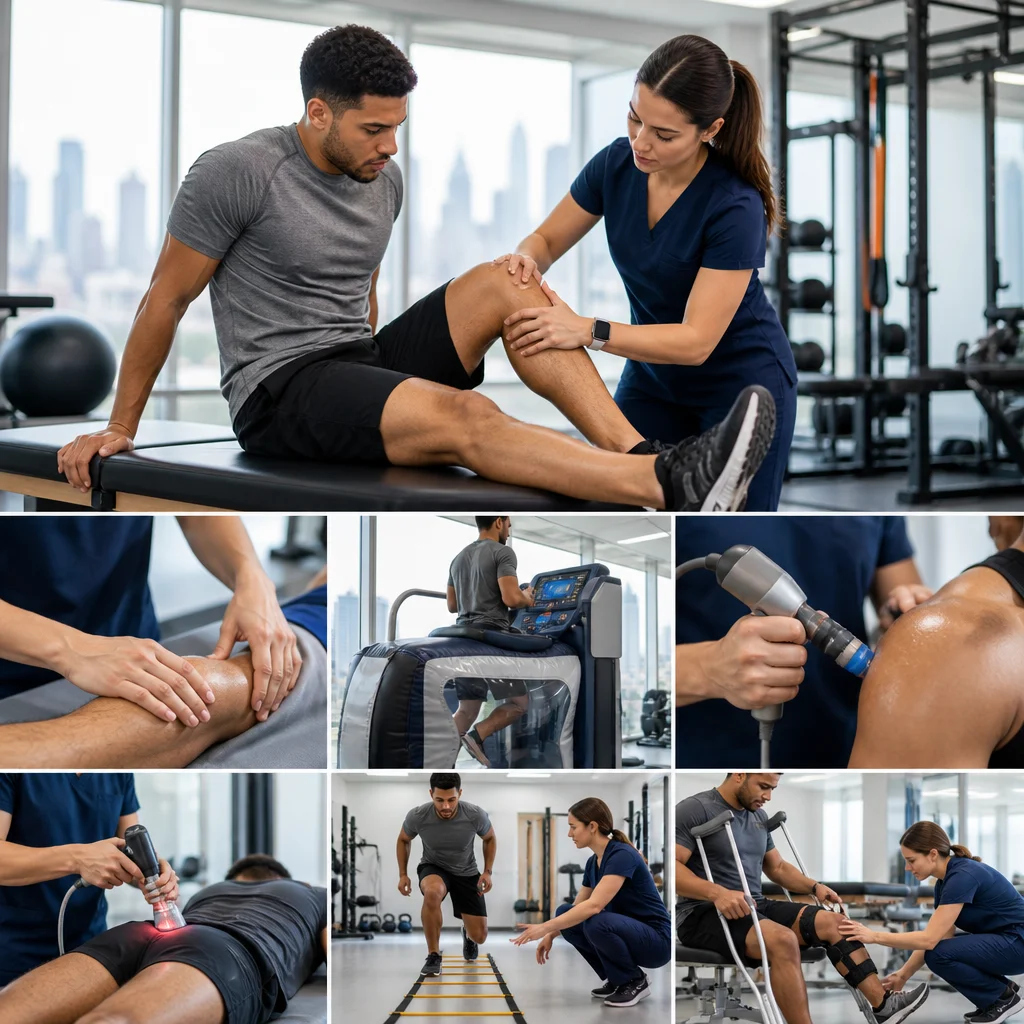
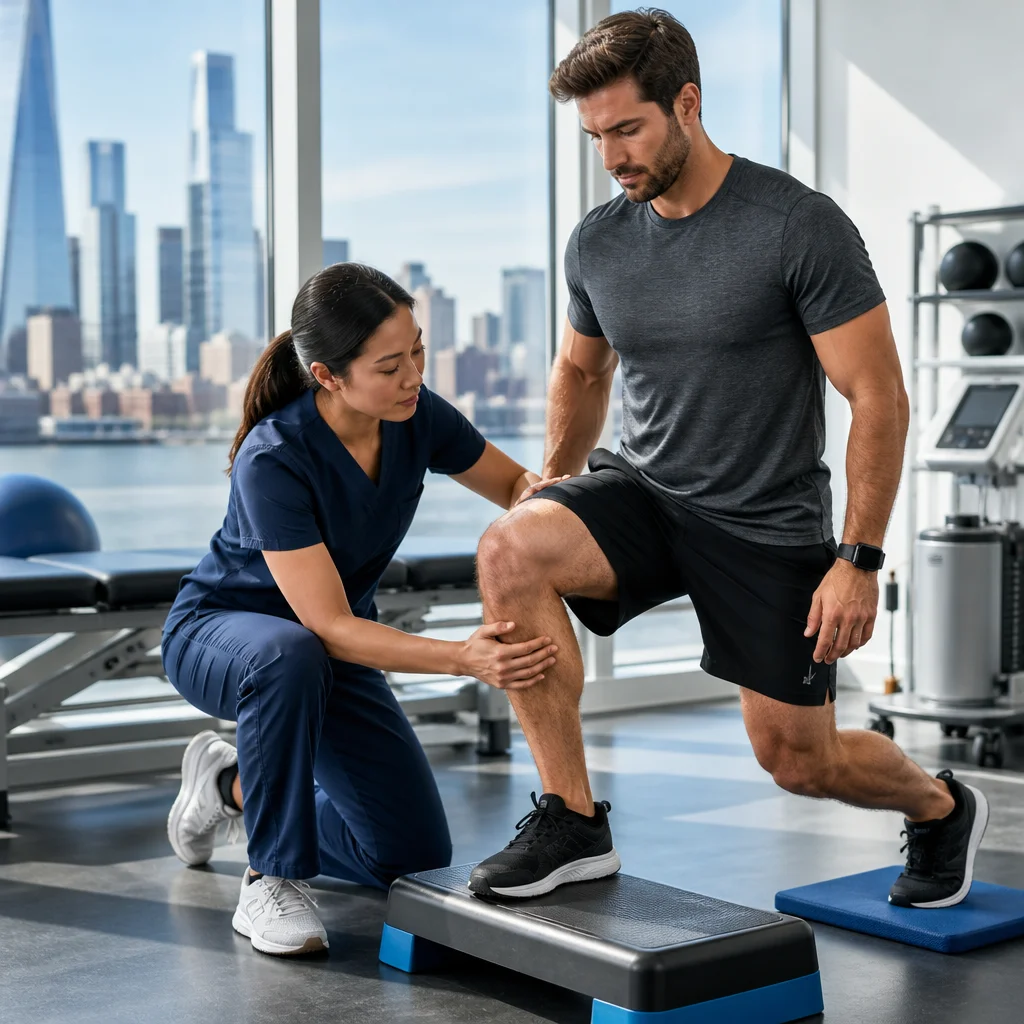
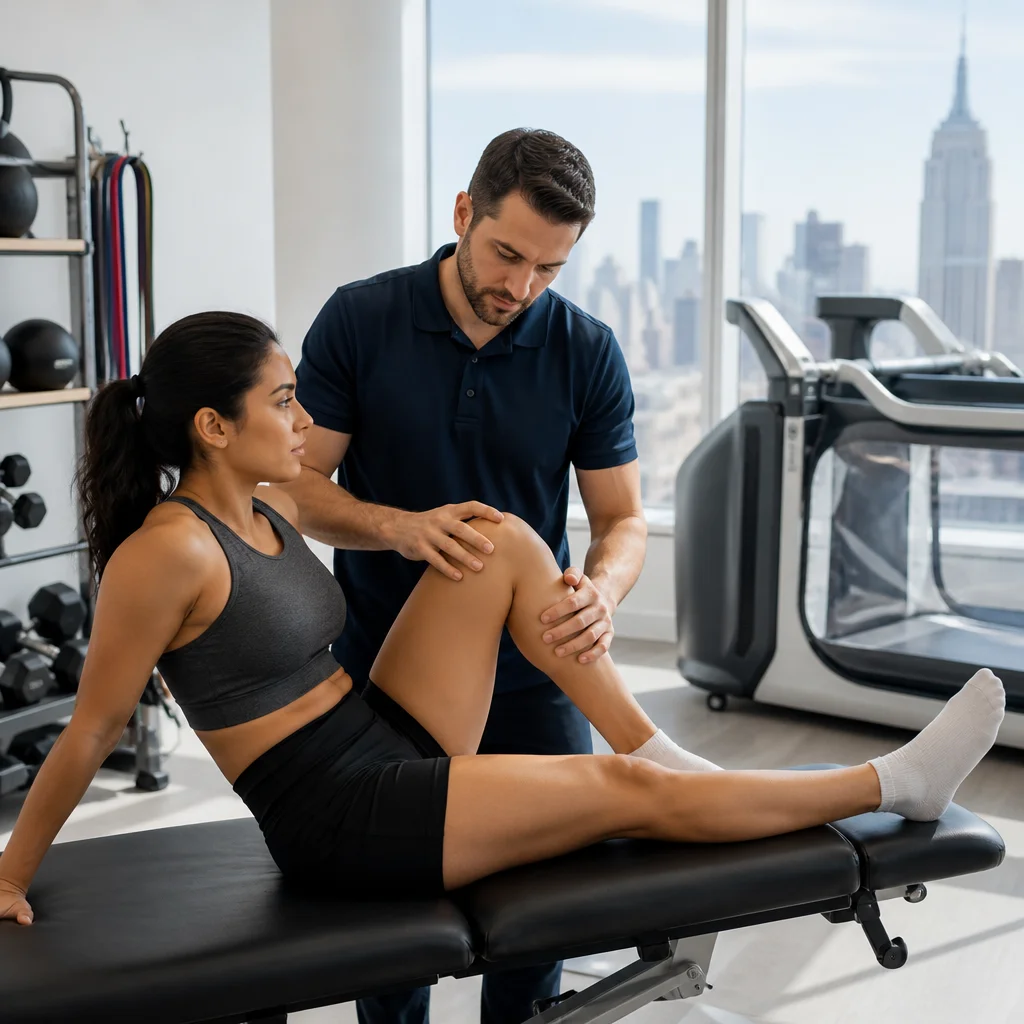
Modalities work best when they support active rehabilitation. In our clinic, shockwave and laser are never used in isolation. Each session is built around one-on-one physical therapy, where your clinician guides you through exercises, adjusts loading, and monitors how your body responds.
A typical integrated approach might look like this:
Use laser to reduce pain and inflammation before a session 2. Perform targeted manual therapy to improve tissue mobility 3. Progress strengthening exercises suited to your sport or daily demands 4. Apply shockwave to stimulate healing in a specific tendon or muscle area
This combination lets the hands-on expertise of your therapist guide the process, while technology adds support where it counts. Our one-on-one format means your plan is never a generic routine.
What to do next: Think about your goals before your first visit. Whether you want to run pain-free or return to competitive play, that goal shapes every step we take together.
Our Personalized Treatment Process From Evaluation to Return to Activity
Recovery is most effective when it follows a clear progression. Our process typically includes four stages:
1. Comprehensive evaluation. We review your history, test movement and strength, and identify the factors contributing to your symptoms.
2. Individualized plan. Together, we set realistic milestones and choose the modalities and exercises that match your condition and schedule.
3. Progressive treatment. Sessions combine hands-on care, technology-assisted therapy, and graded exercise. As symptoms improve, the demands increase.
4. Return to activity. We prepare you for sport, training, or work with sport-specific drills, strength benchmarks, and a plan for managing load after discharge.
Reassessment happens regularly so the plan evolves with you. If something is not working, we change it.
What to do next: Ask us to explain each stage during your evaluation so you know exactly where you are in the process.
What to Expect During and After Your Sessions
Most sessions last between 45 and 60 minutes, depending on your plan. A visit may include manual therapy, laser or shockwave application, and supervised exercise. You may feel mild warmth from laser or a brief tapping sensation from shockwave. Mild soreness after shockwave is common and usually settles within a day or two.
After treatment, we often recommend:
Gentle movement rather than complete rest
Ice or heat as directed by your therapist
Following your home program consistently
Monitoring how your symptoms respond the next day
Improvement usually builds gradually. Some patients feel relief within a few sessions, while tendon-related concerns may take several weeks. We will tell you what to expect for your specific condition.
What to do next: Keep a simple log of your pain levels and activity after each visit. Bringing this to appointments helps us fine-tune your care.
Returning to Peak Performance With Our Integrated Recovery Plan
Returning to peak performance means more than reducing pain. It requires restored strength, control, and confidence under the demands of your sport or daily life. Our integrated recovery plan addresses all of these areas.
Alongside physical therapy and shockwave or laser care, we offer complementary services that support the return:
Anti-gravity treadmill training for controlled, low-impact running progression
Strength and conditioning with personal trainers focused on return to action
Integrated yoga and massage therapy to support mobility and recovery between sessions
This layered approach helps you rebuild capacity step by step. Many patients find that addressing mobility, strength, and recovery together lowers their risk of setbacks.
What to do next: Identify the activity you most want to return to and let us know. We will design the final phase of your plan around that goal.
Getting Started at NYPT Health and Rehab in New York City
If sports injuries or chronic pain are holding you back, you do not have to wait for symptoms to resolve on their own. At NYPT Health and Rehab, we provide personalized one-on-one physical therapy and advanced options like shockwave and Class IV laser therapy, all designed to help active New Yorkers move with confidence again.
To get started:
Schedule an evaluation through our website at nypt.nyc 2. Bring a list of your symptoms, past injuries, and activity goals 3. Ask questions about your plan, timeline, and what success looks like for you 4. Commit to the process, including your home program between visits
We are here to help you understand your body, make informed decisions, and return to the activities you love. Reach out to our team in New York City to take the first step toward faster, more confident recovery.
Frequently Asked Questions (FAQ)
How does shockwave therapy help with sports injuries?
We use shockwave therapy to deliver focused acoustic pulses into tissue that has stalled in its healing, such as tendons and muscle attachments affected by repetitive strain. These pulses stimulate circulation and encourage the body to restart its repair process. Most patients complete a short series of sessions, and we adjust the number and intensity based on how your tissue responds.
What should I expect from Class IV laser therapy at NYPT?
Our Class IV laser therapy uses higher power output to reach deeper tissue, where it can help reduce localized inflammation and ease pain. Sessions are typically brief and comfortable, and many patients describe a warm sensation during treatment. We pair laser sessions with hands-on therapy and exercise so that pain relief supports, rather than replaces, functional progress.
Do I need a referral to start treatment with us?
We welcome patients who come to us directly, and we will review your history, imaging, and goals during your initial evaluation. If you already have a referral or a surgeon's recommendation, please bring those records so we can build your plan around them. Our team will confirm what coverage your insurance may provide before your first treatment.
Comments