

Sports-Specific Shockwave Therapy: How We Accelerate Athlete Recovery in NYC
Table of Contents
The Athletic Injury Challenge: Why Standard Recovery Falls Short
Active New Yorkers push hard every day. Whether you're training for a marathon, competing in your sport, or maintaining peak fitness, your body demands peak performance. But when injury strikes, standard rest-and-ice protocols often leave athletes frustrated.
Many conventional approaches address pain symptoms without targeting the root cause of tissue damage. A typical recovery timeline can stretch weeks or months, keeping you sidelined when you'd rather be training. Additionally, some injuries develop chronic scarring or calcification that conservative therapy alone struggles to resolve.
This gap between injury and return to action is where we see our athletes suffer most. They're motivated, disciplined, and ready to invest in recovery, but they need solutions that work as hard as they do. That's why we've integrated sports-specific shockwave therapy into our comprehensive rehabilitation programs.
Understanding Shockwave Therapy: Science Behind the Technology
Extracorporeal shockwave therapy (ESWT) uses high-energy acoustic waves to stimulate healing in damaged soft tissues. When these focused soundwaves penetrate injured areas, they trigger a cascade of biological responses that promote tissue regeneration at the cellular level.
The mechanism works through several pathways. Shockwaves create microtrauma that activates your body's natural inflammatory response in a controlled way. This jumpstarts neovascularization, increasing blood flow to the treatment area. Simultaneously, the waves stimulate growth factor production and stem cell activation, accelerating tissue repair without requiring surgery.
What makes this technology particularly effective for athletes is its ability to break down calcifications and scar tissue that develop in chronic injuries. The acoustic energy mechanically disrupts these pathological deposits while simultaneously promoting healing. Research consistently demonstrates that shockwave therapy reduces pain, restores function, and shortens recovery timelines compared to passive approaches alone.
How We Deploy Sports-Specific Shockwave Treatment
We don't use a one-size-fits-all approach. Our Class IV shockwave system is adjustable across multiple parameters, allowing us to customize energy levels, frequency, and treatment patterns based on your specific injury, tissue depth, and tolerance.
During your initial assessment, our team evaluates your injury using imaging and clinical testing to determine whether shockwave therapy is appropriate for your condition. We then develop a targeted protocol that addresses your particular tissue damage. For a runner with Achilles tendinopathy, we'd focus treatment directly on the degenerative tendon. For a tennis player with lateral epicondylitis, we'd concentrate energy on the extensor tendon origin at the elbow.
Treatment sessions typically last 15-20 minutes. Most athletes tolerate the sensation well, describing it as a series of rapid tapping or percussion. We adjust intensity to your comfort level while maintaining therapeutic effectiveness. Most protocols call for 3-6 sessions spaced one week apart, though we customize frequency based on your response and recovery goals.
Shockwave Therapy for Common Athletic Injuries
We successfully treat a wide range of sports-related conditions with shockwave therapy. Plantar fasciitis and Achilles tendinopathy respond remarkably well, particularly when calcification is present. Tennis elbow and golfer's elbow benefit from focused treatment on the tendon origins. Patellar tendinopathy in volleyball players and jumpers often improves dramatically after targeted shockwave sessions.
Shoulder injuries including rotator cuff tendinopathy and calcific tendinitis respond favorably to this technology. Hip flexor strains and chronic IT band syndrome in runners and cyclists also show strong outcomes. The common thread across these conditions is that they involve degenerative tissue changes, chronic inflammation, or calcification that shockwave therapy directly addresses.
We also use shockwave therapy in post-surgical rehabilitation, particularly after rotator cuff repair or ACL reconstruction, to enhance tissue healing and restore function. The therapy complements your rehabilitation protocol without interfering with surgical repair.
Combining Shockwave with Our Integrated Rehabilitation Approach
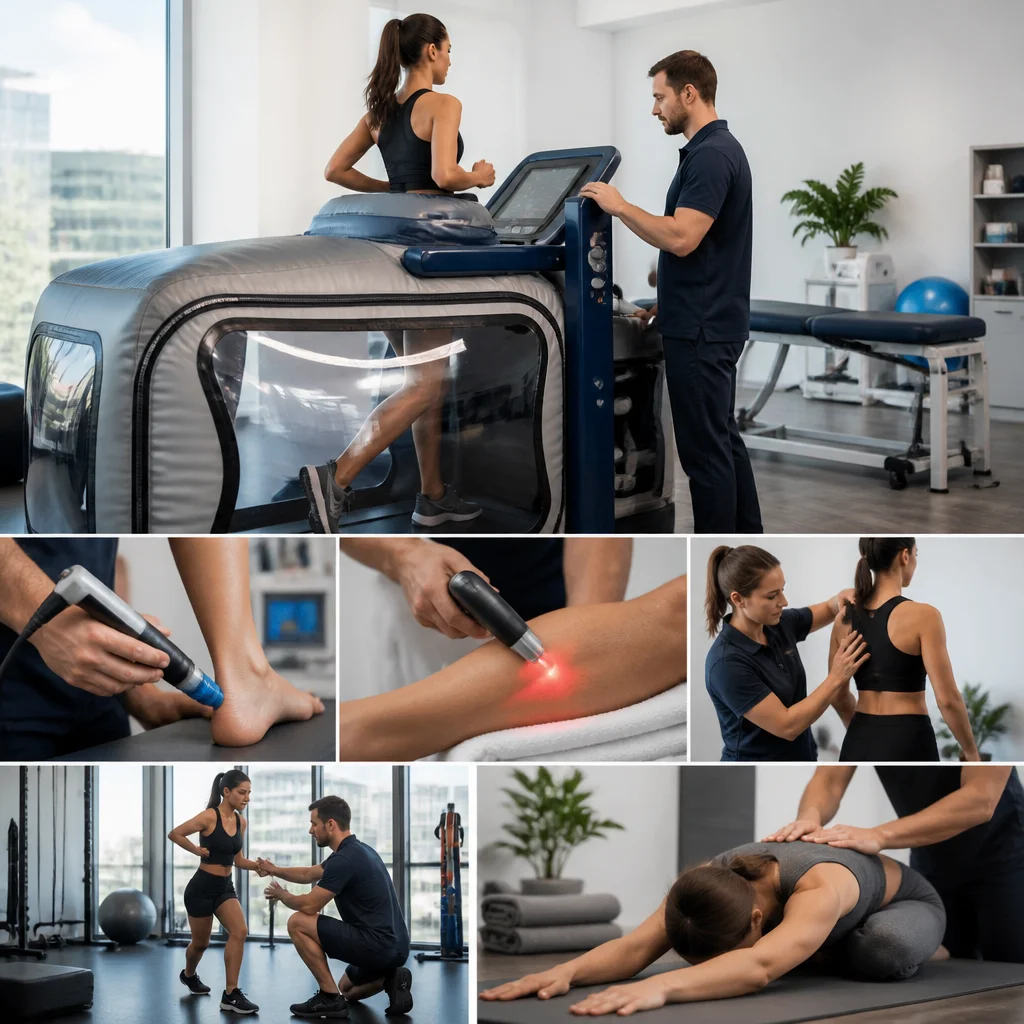
Shockwave therapy works best as part of a comprehensive strategy. We never rely on this single tool in isolation. That's why we combine shockwave treatment with manual therapy, targeted strengthening, movement training, and sport-specific conditioning.
Think of it this way: shockwave therapy accelerates tissue healing and reduces pain. But returning to athletic performance requires restored strength, neuromuscular control, and movement patterns specific to your sport. Our integrated rehab approach weaves together advanced manual therapy techniques, functional training, and personalized conditioning to rebuild your capacity for your sport.
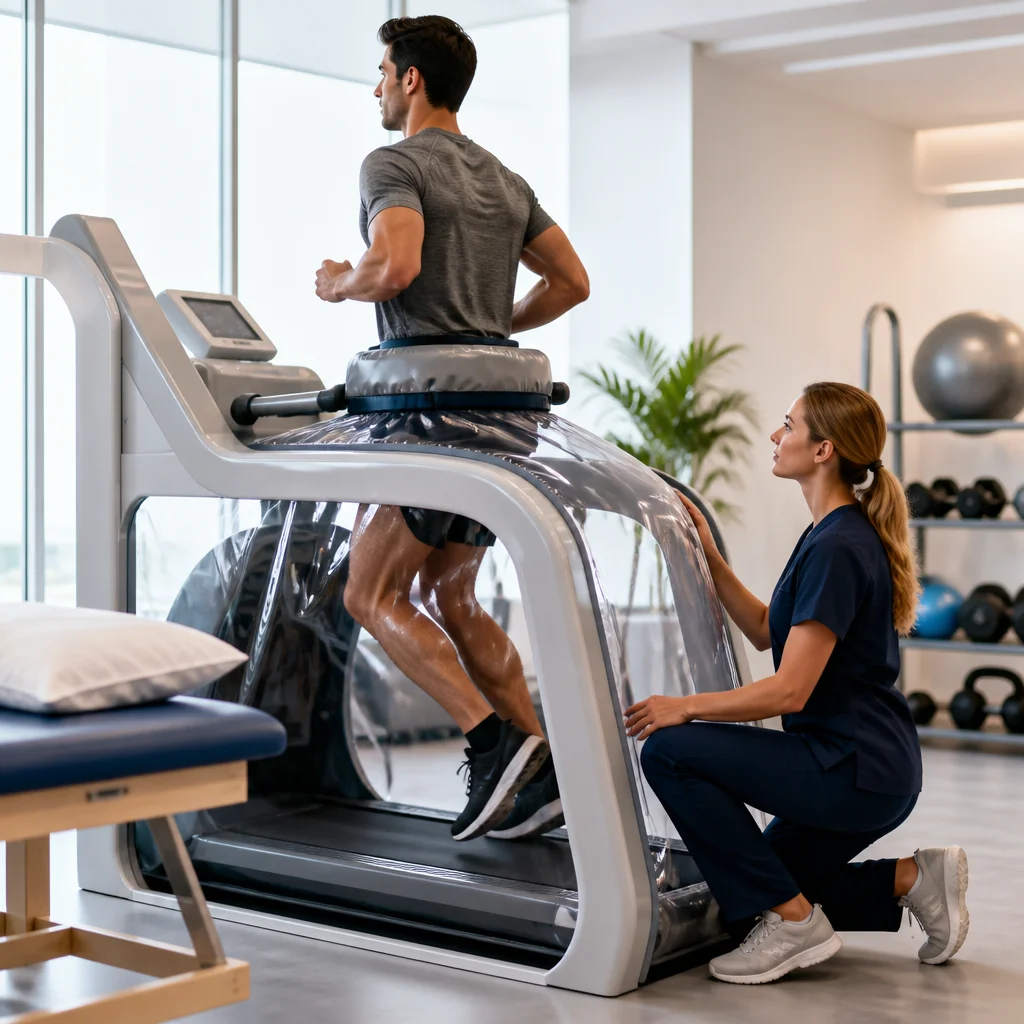
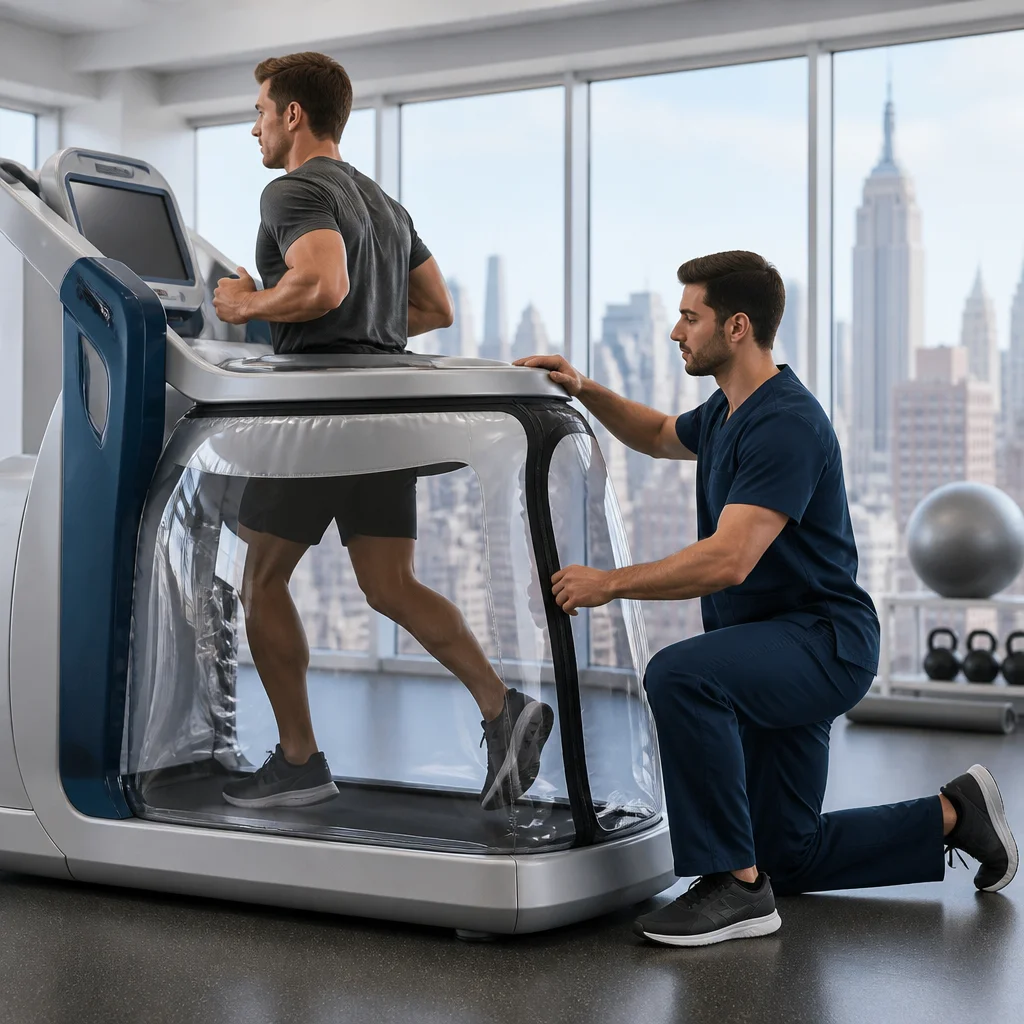
Many athletes also benefit from our anti-gravity treadmill training during recovery. This technology allows you to maintain cardiovascular fitness and running mechanics while reducing impact loads on healing tissues. We layer in Class IV laser therapy for additional pain management and tissue stimulation. Your yoga and massage components address mobility restrictions and muscle tension that often accompany injury.
What to Expect During Your Shockwave Therapy Sessions
Your first session begins with a detailed assessment. Our team confirms the treatment area using palpation and clinical testing, then applies ultrasound gel to the skin for acoustic coupling. You'll feel the handpiece against your skin delivering rapid acoustic pulses. Most athletes describe mild discomfort that's well worth the therapeutic benefit.
We monitor your response continuously and adjust energy levels based on your feedback. Some mild swelling or tenderness immediately after treatment is normal and typically resolves within hours. Most athletes return to their regular daily activities right away, though we recommend avoiding intense training on treatment days.
Between sessions, we provide specific guidance on activity modification and home exercises. Your compliance with these between-session protocols significantly impacts your overall recovery timeline. We also track your progress through repeat clinical testing and functional assessments, adjusting your treatment plan as your condition improves.
Real Results: Athletes Returning to Peak Performance
Our athletes consistently return to their sport stronger and more resilient. A competitive runner with chronic Achilles tendinopathy typically returns to training within 4-6 weeks. Tennis players with calcific rotator cuff tendinitis often resume competitive play within 6-8 weeks. CrossFit athletes with patellar tendinopathy see significant functional improvement after 3-4 sessions.
What matters most isn't just pain reduction, though that's significant. Our athletes regain confidence in their bodies, resolve the underlying tissue pathology, and develop stronger prevention strategies to avoid re-injury. They return to their sport with improved movement patterns and enhanced understanding of their body's needs.
Success depends partly on injury chronicity, tissue damage severity, and your commitment to the full rehabilitation protocol. But across hundreds of athletes we've treated, the combination of shockwave therapy with comprehensive rehabilitation consistently accelerates return to action compared to conventional approaches alone.
Advanced Techniques We Use Alongside Shockwave Treatment
Our Class IV laser therapy delivers photonic energy deep into tissues, reducing inflammation and stimulating cellular repair at a different biological level than shockwave. The two technologies complement each other beautifully. Shockwave creates mechanical stimulation while laser provides photonic stimulation, resulting in synergistic healing effects.
We also integrate advanced manual therapy techniques including soft tissue mobilization, joint manipulation, and myofascial release. These hands-on approaches improve tissue mobility and movement patterns while addressing compensation strategies that developed during your injury period. Our anti-gravity treadmill training allows biomechanical retraining without excessive impact loading.
Strength and conditioning work progresses systematically as your pain decreases and tissue healing advances. Early phases emphasize muscular endurance and movement quality. Later phases focus on power, agility, and sport-specific demands. This progressive overload ensures your tissues adapt and your performance returns at the highest level.
Personalized Recovery Plans for Your Sport
A runner's recovery plan differs fundamentally from a baseball player's or a CrossFit athlete's. We design sport-specific protocols that address the unique demands and injury patterns of your activity.
Runners recovering from lower extremity injuries need different loading strategies and training progressions than baseball pitchers recovering from shoulder injuries. Soccer players require multidirectional agility work and change-of-direction drills. Weightlifters need overhead pressing and pulling progressions that restore stability and strength through full ranges of motion.
During your initial consultation, we discuss your sport, competitive timeline, and performance goals. This information shapes every aspect of your recovery plan, from shockwave protocol parameters to strength training emphasis to return-to-sport progression. We build your plan backward from your specific performance demands, ensuring every session moves you toward your athletic goals.
Your Path to Return-to-Action Success
Start by scheduling a comprehensive assessment with our team. We'll evaluate your injury, discuss your athletic goals, and determine whether shockwave therapy is appropriate for your condition. If it is, we'll outline a clear timeline and detailed recovery plan.
Our one-on-one treatment model means you work with the same clinician throughout your recovery. This continuity of care allows deep understanding of your injury mechanics, your response to treatment, and your individual healing trajectory. You're never shuffled between providers or treated like a number in a high-volume clinic.
We provide realistic expectations about recovery timelines, activity modifications, and milestones along the way. You'll understand not just what we're doing, but why each intervention matters for your specific situation. This educational approach builds your confidence and keeps you engaged in your recovery.
Why NYC Athletes Choose Our Clinic
We combine cutting-edge technology with personalized, attentive care. Our clinicians are experts in sports medicine and injury rehabilitation who understand the demands of athletic training. We invest in advanced tools like shockwave therapy, Class IV laser, and anti-gravity treadmill training because we're committed to the fastest, most effective recovery pathways available.
But technology alone doesn't drive results. Our commitment to one-on-one treatment, comprehensive assessment, and integrated rehabilitation sets us apart. We treat athletes as individuals, not conditions. We address your specific injury within the context of your sport, your goals, and your life in New York City.
Ready to accelerate your recovery and return to peak performance? Contact us today to schedule your evaluation and discover how sports-specific shockwave therapy combined with our integrated approach can get you back to the activities you love.
Frequently Asked Questions (FAQ)
How does shockwave therapy actually speed up my recovery compared to traditional physical therapy alone?
We use focused acoustic waves to stimulate blood flow, reduce inflammation, and trigger your body's natural healing response at the cellular level. When we combine shockwave with our manual therapy, laser treatment, and personalized conditioning, we address both the immediate injury and underlying movement patterns that caused it. Most of our athletes notice reduced pain within 2-3 sessions and can return to sport 4-6 weeks faster than standard rehab alone.
What sports injuries do we treat most effectively with shockwave therapy?
We see excellent results with chronic tendinopathies like tennis elbow and Achilles tendon pain, plantar fasciitis, rotator cuff issues, and patellar tendonitis. We've also successfully treated acute muscle strains and stress fractures in runners, dancers, and competitive athletes across all sports. During your initial evaluation, we'll assess whether shockwave is the right tool for your specific injury or if we should combine it with our other advanced techniques.
How many shockwave sessions will I need before I can return to my sport?
We typically recommend 3-6 sessions spaced one week apart, though your exact protocol depends on injury severity, your sport's demands, and how your body responds. We structure each session within our broader return-to-action plan that includes manual therapy, anti-gravity treadmill training, and sport-specific strength work. We'll track your progress closely and adjust your treatment timeline based on your functional goals, not just pain levels.
Comments