

Top 7 Benefits of Anti-Gravity Treadmill Training for Post-Op Recovery
Table of Contents
1. Accelerated Return to Weight-Bearing Exercise
After orthopedic surgery, the path back to running, walking, and the activities you love feels impossibly long. You're caught between two conflicting needs: your body needs to move and rebuild strength, but traditional weight-bearing exercise on a healing joint feels risky. This tension is where most post-op patients get stuck, losing precious weeks to overly conservative protocols.
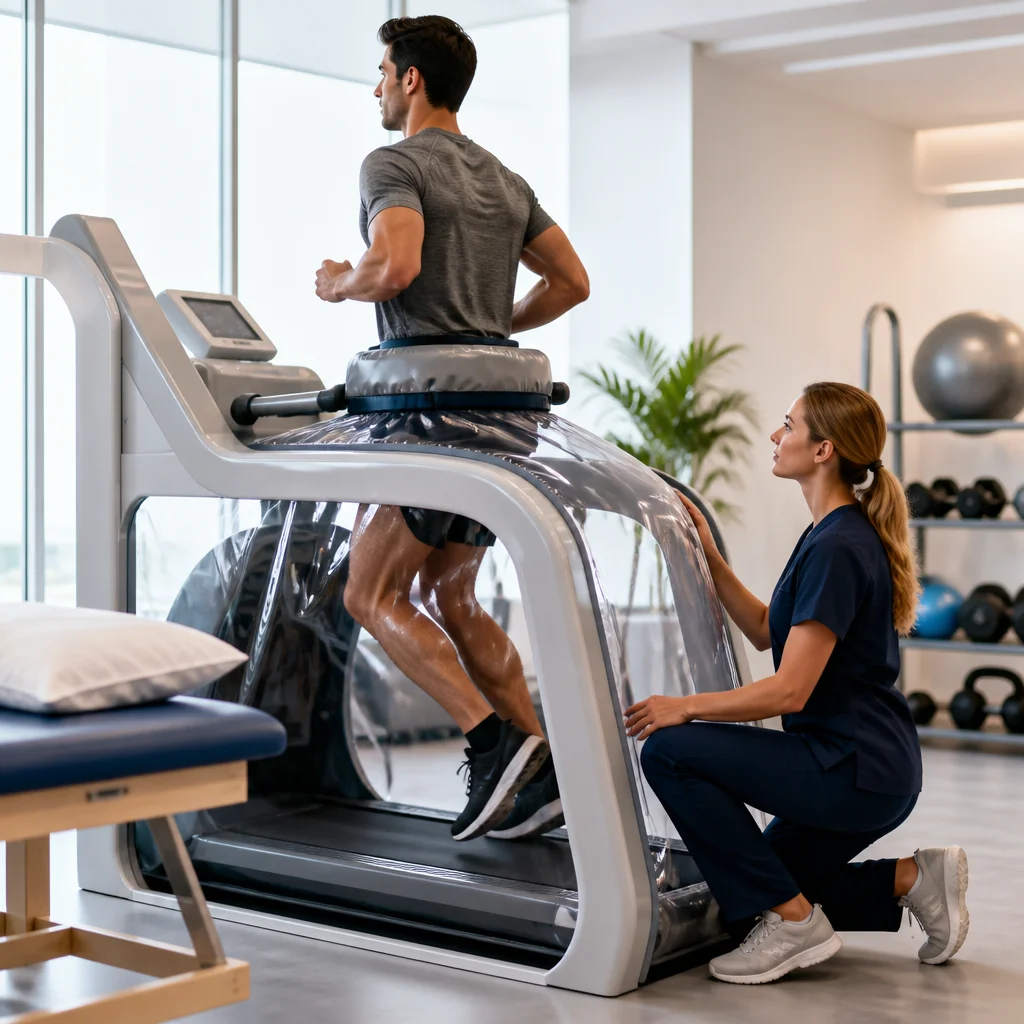
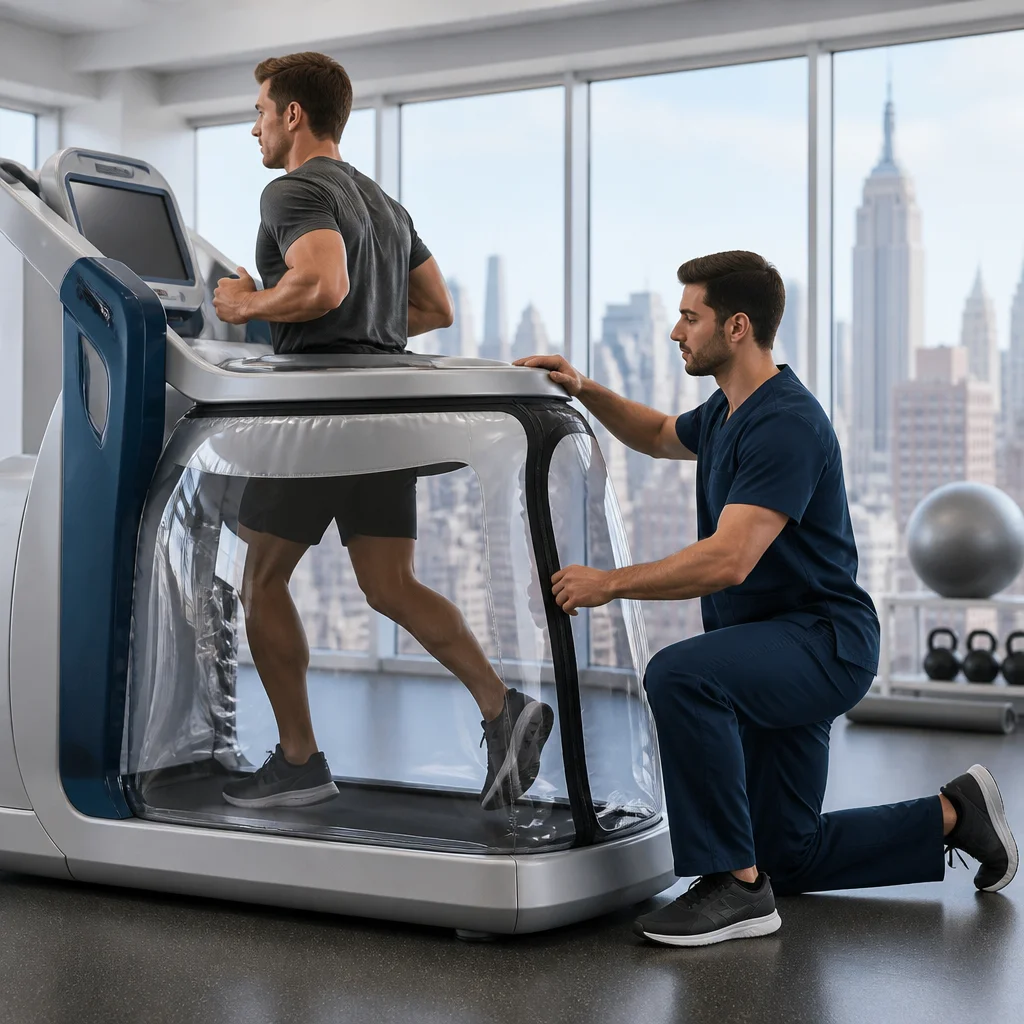
At NYPT Health & Rehab, we've found that anti-gravity treadmill technology fundamentally changes this equation. By unweighting your body up to 80%, these specialized treadmills let you start moving safely weeks earlier than conventional methods allow. You're not guessing at load tolerance or white-knuckling through pain. Instead, we control exactly how much weight your recovering joint bears, letting you progress with precision.
Here's why this matters: active New Yorkers and competitive athletes who use anti-gravity training return to sport faster, with better outcomes, and fewer setbacks. Let's walk through the seven specific benefits that make this technology non-negotiable for serious post-operative rehab.
The biggest bottleneck in post-op recovery is timing. Surgeons typically restrict full weight-bearing for 4-12 weeks depending on the procedure. During that window, traditional rehabilitation leaves you walking on crutches, doing isometric strengthening in isolation, and watching your cardiovascular fitness evaporate.
Anti-gravity treadmill training compresses this timeline because we can begin controlled, partial weight-bearing immediately after initial healing permits gentle movement. If your surgeon clears you for 25% body weight at week two, the treadmill delivers exactly that load. By week four, we're at 50%. By week six, you're close to full weight tolerance. This graduated progression happens under our direct supervision, with real-time biofeedback showing whether you're limping, favoring one side, or loading asymmetrically.
The result is that athletes we work with typically return to unrestricted walking and light jogging 3-4 weeks faster than those using traditional progression alone. Your nervous system also regains confidence in the surgical limb more quickly because you're practicing the movement pattern without fear. That psychological confidence matters enormously for comeback performance.
Your next step: If you're in the early post-op window, ask your surgeon about partial weight-bearing clearance and contact us for a consultation. We'll design a treadmill protocol that matches your specific surgical timeline.
2. Reduced Joint Stress During Early Recovery Phases
Joint stress isn't binary. You don't either stress the joint or you don't. Every gram of load matters during those vulnerable first weeks after surgery, when tissues are fragile and remodeling.
Walking normally, even with perfect gait mechanics, puts 1.2-1.5 times your body weight through your lower extremity with each step. That's manageable for a healthy joint but potentially catastrophic for a freshly repaired ACL, meniscus, or post-surgical ankle. Crutches reduce load but eliminate the movement stimulus your brain and muscles need to begin relearning stability patterns.
The anti-gravity treadmill gives us the sweet spot: you can move with near-normal gait mechanics while bearing only 50%, 60%, or 75% of your body weight, depending on tissue readiness. We observe your movement quality, adjust the unweighting in real-time, and progress only when your body demonstrates readiness. Many patients tell us this feels like training "with permission" rather than training "despite pain."
Research also shows that reduced load during early retraining decreases swelling, fluid buildup, and inflammation markers compared to aggressive early weight-bearing. That means less time in the pain-inflammation-guarding cycle and more time building actual strength.
Your next step: Discuss with your physical therapist whether unweighting therapy should be part of your post-op plan, especially if traditional weight-bearing efforts trigger excessive swelling.
3. Improved Cardiovascular Conditioning Without Pain
Surgery doesn't just affect your joint. Weeks of immobilization and modified activity tank your cardiovascular fitness. Many athletes we see 4-6 weeks post-op have lost 15-25% of their aerobic capacity. That deterioration affects recovery psychology and delays return-to-sport readiness.
Traditional treadmill work after surgery is limited because impact and joint stress cap how hard you can push. You're walking slowly, restricted to low intensities, watching your heart rate stay well below training zones. It feels futile, and honestly, it is. You're not getting meaningful cardiovascular stimulus because the joint limitations dominate.
Anti-gravity unweighting completely changes this. At 60% body weight, you can walk or jog at brisk speeds without joint overload. Your cardiovascular system doesn't know the difference between running fully weighted and running at reduced body weight. Your heart rate rises, oxygen consumption increases, and conditioning builds exactly as it would in healthy training. We've had athletes maintain nearly normal aerobic fitness throughout post-op recovery by using the anti-gravity treadmill for controlled cardio sessions 3-4x per week.
The performance difference is striking: athletes who maintain aerobic conditioning during rehab return to full sport faster and with better early-phase performance compared to those who take a passive recovery approach. You're not just healing the joint. You're staying strong while the joint heals.
Your next step: Once weight-bearing is approved, ask us about integrating anti-gravity cardio sessions into your weekly schedule. Even 20-30 minutes of unweighted walking or jogging at moderate intensity makes a measurable difference in recovery speed.
4. Enhanced Proprioception and Balance Restoration
Your joint's sensory system (proprioception) took a hit during surgery. Inflammation, swelling, pain, and immobilization all disrupt the neural feedback loops that coordinate balance, stability, and movement control. You may feel "clumsy" on the healing side or notice that step-ups, stairs, or uneven ground feel shaky weeks into recovery.
Traditional rehab addresses this through static balance work and isolation exercises. These are valuable, but they happen in controlled, artificial environments. Your brain learns to balance in standing while holding a rail, but then struggles when you return to real-world walking or running on NYC streets with actual perturbations.
Anti-gravity treadmill training restores proprioception in a dynamic, functional context. You're moving continuously, adapting to belt speed, and responding to subtle weight shifts while the treadmill unweighting removes the fear component. Your brain can focus on rebuilding the sensory pathways without panic or guarding. We also layer in difficulty by adding gentle treadmill incline, varying speed, or introducing subtle lateral weight shifts as tolerance improves.
Many patients notice that proprioceptive confidence returns remarkably fast using this approach. By 6-8 weeks post-op, you might feel nearly normal on the treadmill and then bring that neural confidence back to ground-based activities. It's proprioceptive training that actually feels like training, not like rehabilitation exercises.
Your next step: Tell us about any balance concerns or "weak feeling" in your surgical limb. We'll assess whether anti-gravity training with progressive perturbation work fits your rehab timeline.
5. Personalized Loading Progression for Orthopedic Surgery
Not all surgeries are the same, and not all post-op timelines follow textbook protocols. A meniscus repair in a 28-year-old runner requires different loading progression than an ACL reconstruction in a 35-year-old recreational athlete or a rotator cuff repair in a thrower.
At NYPT Health & Rehab, we work directly with your surgeon's restrictions and your tissue-healing timeline to customize anti-gravity loading in real-time. Our therapists don't apply generic "phase 2" protocols. Instead, we assess tissue quality, movement control, pain response, and swelling trajectory each session and adjust the unweighting percentage accordingly.
This personalized approach prevents two common mistakes: progressing too aggressively and stalling recovery by being overly conservative. If you tolerate 70% body weight without swelling increase or pain flare, we move you to 75-80% the following week. If swelling spikes after a session, we dial back unweighting and give tissues a day to respond. This dynamic, data-driven progression is impossible with fixed protocols or traditional treadmill work.
The result is that we typically see faster return-to-sport timelines without increased re-injury risk. We're not pushing timeline aggressively at the expense of tissue integrity. We're matching load precisely to tissue readiness, session by session.
Your next step: Bring your post-op clearance paperwork and weight-bearing restrictions to your initial evaluation. We'll map out a specific week-by-week anti-gravity progression and adjust based on your weekly response.
6. Prevention of Secondary Injuries During Rehabilitation
Here's a pattern we see constantly: patients push through early rehab, develop compensatory movement patterns, and then injure something else. An athlete favoring a post-op knee starts favoring the opposite side, strains the opposite hip, and now there are two injured sites. Or overly aggressive early loading triggers swelling, forcing a regression that derails confidence.
Anti-gravity training dramatically reduces this risk because we can monitor and correct movement quality throughout the session. The treadmill belt provides continuous biofeedback. If you're limping, overstriding, rotating asymmetrically, or landing unevenly, we see it immediately and adjust either the unweighting, speed, or cuing. You build the correct movement pattern under controlled conditions rather than practicing compensatory patterns that stick with you.
There's also a psychological component: knowing you're being unweighted gives you permission to move normally rather than guarding or protecting. That reduces the nervous system's tendency to develop secondary compensations. Your brain isn't in survival mode. It's in learning mode.
Secondary injury prevention matters enormously because each new injury delays your return and erodes confidence. Athletes who use anti-gravity training and progress methodically typically stay healthy throughout rehab. Those who push traditional progressions too fast often end up with multiple sites to manage.
Your next step: If you're already several weeks into post-op recovery and feeling like you're limping or compensating, don't ignore it. A movement assessment using anti-gravity unweighting can identify and correct compensatory patterns before they lead to secondary injury.
7. Faster Functional Recovery for Athletes
All the cardiovascular fitness, strength, and proprioceptive gains matter only if you get back to doing what you love. For athletes, "functional recovery" means returning to sport-specific movements, sport-specific intensity, and sport-specific confidence.
Traditional post-op rehab often leaves a gap: you pass clinical tests (strength, range of motion, single-leg hop tests), but you don't feel ready to compete. That gap between clinical readiness and sport-ready confidence causes many athletes to return cautiously, perform below their baseline for 2-4 weeks, or suffer setbacks that weren't inevitable.
Anti-gravity training bridges this gap because we can introduce sport-specific demands at graduated intensities. A soccer player can work on directional changes and quick-start/stop mechanics at 70% body weight. A runner can practice race-pace intervals at 60% unweighting, then progress to 75%, then 85% as tissue tolerance increases. A tennis player can simulate lateral court movements with graduated load. You're practicing your sport during rehab, not just rehabbing in isolation.
This sport-specific progression is why athletes working with us typically feel genuinely ready to return to competition when cleared. It's not a clinical box-check. It's genuine confidence earned through practicing the actual demands you'll face.
Your next step: Tell us your specific sport or fitness goal when we discuss your rehab plan. We'll design anti-gravity progressions that mimic your actual demands, so you're not just medically cleared to return. You're mentally and physically ready.
---
Post-operative recovery doesn't have to mean weeks of lost fitness, psychological frustration, or overly conservative protocols that extend your timeline unnecessarily. At NYPT Health & Rehab, we use anti-gravity treadmill training as a cornerstone of our post-surgical orthopedic rehabilitation because it delivers measurable advantages across every dimension of recovery: speed, safety, cardiovascular fitness, movement quality, and sport-specific readiness.
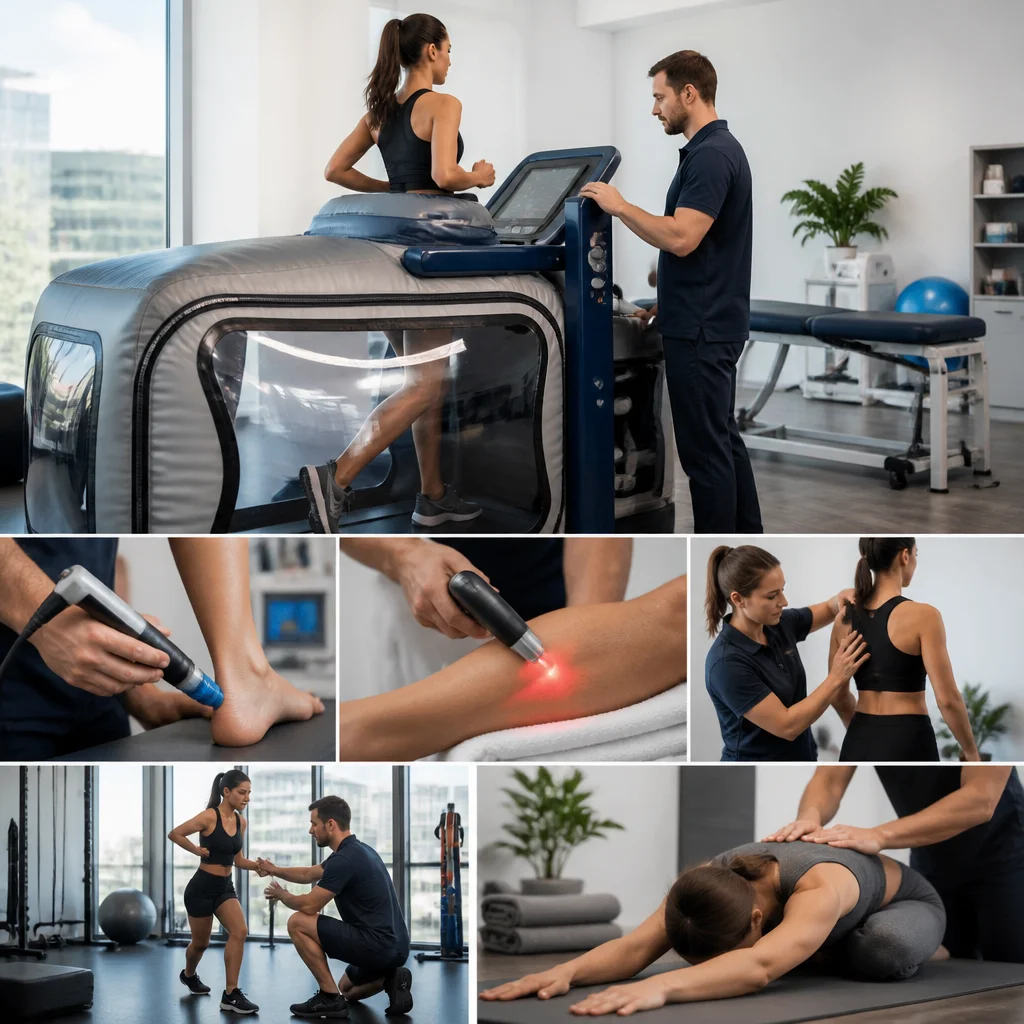
We combine anti-gravity technology with our post-surgical rehab expertise, one-on-one session structure, and manual therapy to create recovery plans tailored to your specific surgery, your timeline, and your goals. If you're recently post-op and want to return to your active lifestyle without unnecessary setbacks, schedule a consultation with us. We'll assess your current status, explain how anti-gravity training fits your recovery, and get you progressing safely toward your comeback.
Your surgical repair is just the start. Real recovery is what happens in the weeks and months after. We're here to make sure those weeks count.
Frequently Asked Questions (FAQ)
What makes anti-gravity treadmill training different from regular treadmill rehabilitation?
Our anti-gravity treadmill uses NASA-derived technology to unload up to 80% of your body weight, allowing us to safely progress your walking and running during early post-op phases when traditional treadmills would cause too much stress. This graduated weight-bearing approach lets us rebuild your strength and cardiovascular fitness while protecting your healing surgical site, something we can't achieve with conventional equipment alone.
How soon after surgery can I start using the anti-gravity treadmill?
We typically begin anti-gravity treadmill training within 2-4 weeks post-op, depending on your specific surgical procedure and how your incision is healing. Our physical therapists work closely with your surgeon to determine the right timing and starting weight percentage for your individual recovery plan, ensuring we challenge your body safely without compromising your healing.
Can anti-gravity treadmill training really help me return to my sport faster?
Yes, we've seen our athlete patients regain their functional fitness and sport-specific movements significantly faster because we can maintain cardiovascular conditioning and neuromuscular control during early recovery stages when they'd normally be completely sidelined. Combined with our return-to-action strength and conditioning training, the anti-gravity treadmill lets us bridge the gap between post-op protection and full athletic performance in a way traditional rehabilitation can't match.
Comments