

ACL Reconstruction Rehab for Competitive Soccer Players in NYC: Our Approach
Table of Contents
Understanding the ACL Injury in Competitive Soccer
The anterior cruciate ligament (ACL) is one of the four main ligaments that stabilize the knee. It controls forward movement of the shin bone and helps keep the knee steady during sudden stops, pivots, and direction changes. For soccer players, those movements happen constantly, which is why ACL injuries are among the most common serious knee injuries in the sport.
Most ACL injuries in soccer happen without contact. A player decelerates quickly, plants the foot, and twists the knee while the thigh muscles are not fully prepared to absorb the load. Many athletes describe hearing a pop, feeling the knee give way, or experiencing rapid swelling within the first few hours.
If you suspect an ACL tear, the next step is a proper evaluation. Our team can assess knee stability, range of motion, and strength, and coordinate with your physician on imaging and surgical planning if needed.
Why Structured Rehab Matters After ACL Reconstruction
ACL reconstruction restores the structure of the knee, but the knee still has to relearn how to move, load, and control force. A graft that has been surgically placed needs time to heal, and the muscles that protect the joint often weaken quickly after surgery. Without a structured plan, athletes can return with lingering weakness, altered movement patterns, or a higher risk of re-injury.
A well-organized rehab program addresses several areas at once:
Joint mobility: restoring full extension and flexibility without overstressing the graft
Quadriceps and hamstring strength: rebuilding the muscles that support the knee
Neuromuscular control: teaching the body to land, cut, and stop safely
Sport-specific readiness: preparing the knee for the speed and unpredictability of real play
Think of rehab as a sequence rather than a checklist. Each stage builds on the last, and moving forward too early can undo progress. If you are working with a clinic, ask how they measure readiness at each stage so you know why you are advancing.
Our Phased ACL Rehabilitation Framework
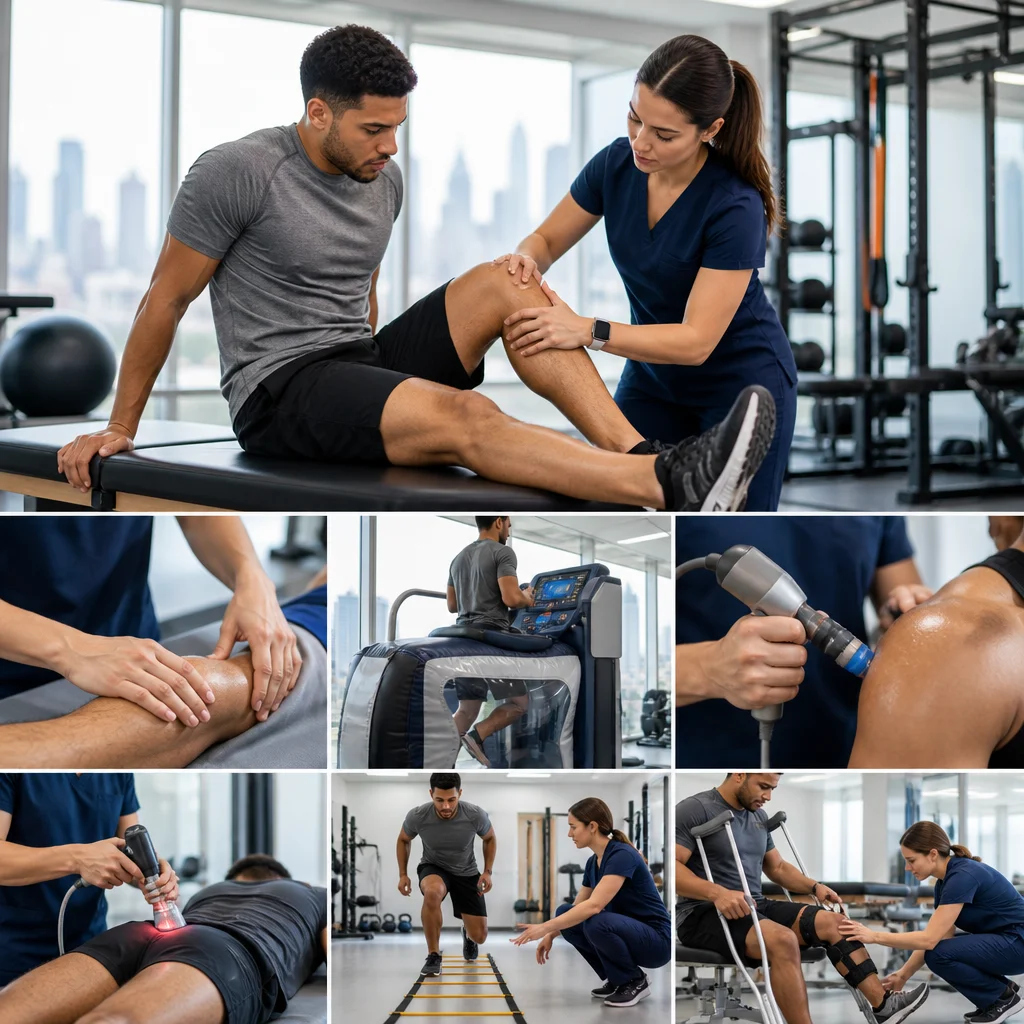
We guide ACL recovery through phases tied to tissue healing and functional milestones rather than calendar dates alone. Timelines vary depending on surgical technique, graft type, age, and individual progress, so we adjust each plan based on how your knee responds.
Phase 1: Protection and early motion. The focus is controlling swelling, restoring knee extension, and activating the quadriceps. Early work might include gentle range-of-motion exercises and muscle activation drills.
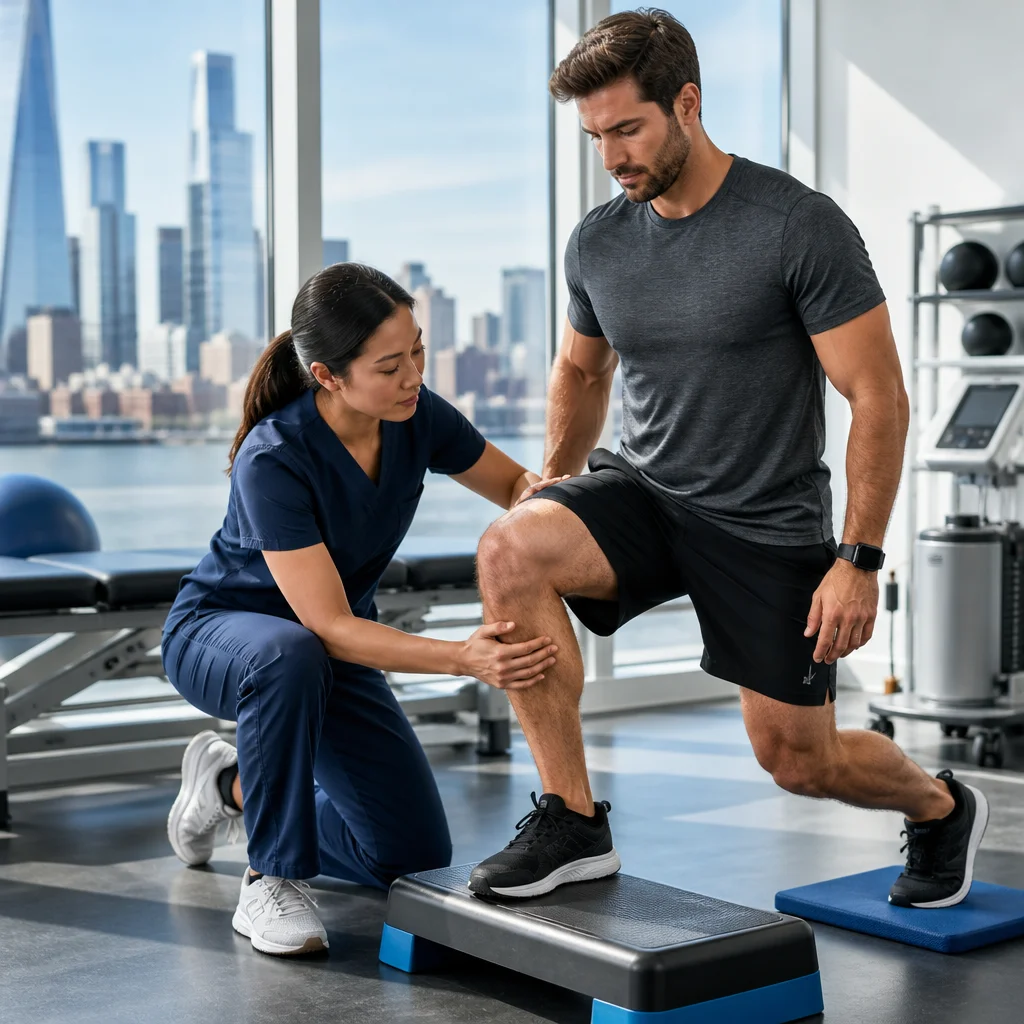
Phase 2: Strength and control. We progress loading with resistance training, balance work, and single-leg exercises. The goal is to rebuild the capacity of the leg to absorb force.
Phase 3: Sport-specific training. Athletes begin controlled running, cutting, jumping, and agility drills. Soccer-specific movements such as lateral shuffles, pivots, and deceleration drills are introduced gradually.
Phase 4: Return-to-play preparation. The final phase includes higher-intensity conditioning, reactive drills, and objective testing to confirm readiness.
Progression is never based on how the knee feels alone. We look at measurable strength, symmetry, and movement quality at each step.
One-on-One Physical Therapy Built Around Your Sport
Most soccer players have a clear idea of what they need to get back to: match intensity, sprinting, changing direction under pressure, and playing without fear. Our sessions are one-on-one, which means your therapist is focused entirely on your progress, your schedule, and your position on the field.
A midfielder who covers long distances needs different conditioning than a goalkeeper who explodes laterally from a stationary position. We tailor exercises, load, and drill selection to match those demands. If you have a game schedule, tournament plans, or a season ahead, we build the timeline around those realities.
Our one-on-one approach also means we catch problems early. A subtle change in landing mechanics or a small strength imbalance can be corrected before it becomes a setback. You can learn more about how this works in our guide to one-on-one sports injury rehab.
Advanced Tools We Use: Anti-Gravity Treadmill and Shockwave Therapy
Two of the tools we use most often in ACL rehab are the anti-gravity treadmill and shockwave therapy. Each serves a specific purpose.
Anti-gravity treadmill training allows athletes to run or walk with a percentage of their body weight offloaded through air pressure. This makes it possible to start running earlier in the rehab process, build cardiovascular fitness, and practice gait mechanics while protecting the healing joint. As strength improves, we reduce the offloading percentage. You can read more about how this works in our overview of anti-gravity treadmill therapy.
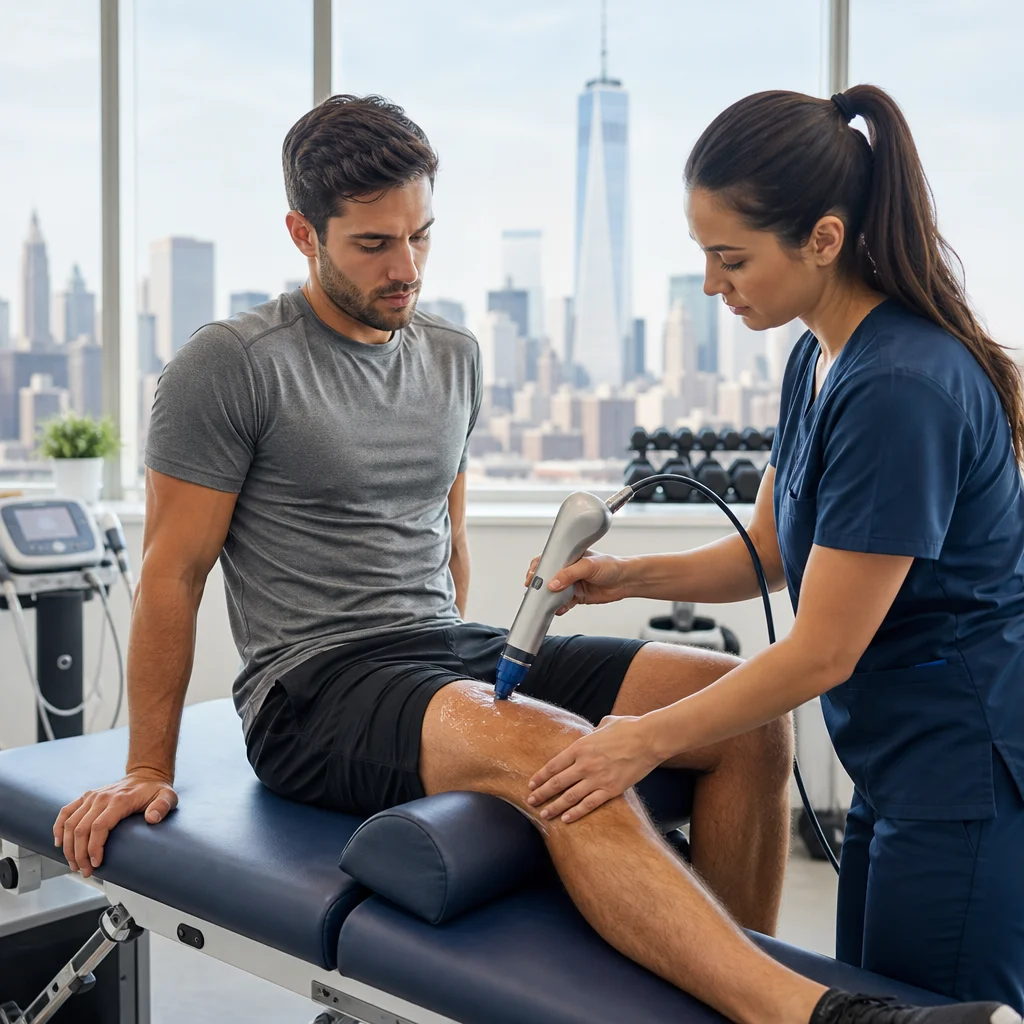
Shockwave therapy delivers acoustic pressure waves to targeted tissue. Clinicians often use it to support recovery in areas with persistent soreness or tissue irritation around the knee and surrounding muscles. It is typically one part of a broader plan that includes manual therapy and progressive exercise, not a standalone fix.
Ask us how these tools fit into your plan, what results to expect, and how we will track progress.
Strength, Conditioning, and Return-to-Play Testing
Strength is one of the strongest predictors of safe return to soccer. We measure it rather than guess. Common assessments include single-leg press or squat strength, hop tests for distance and symmetry, and timed agility drills.
A typical return-to-play testing battery might include:
Limb symmetry index for strength and hop performance (aim for the surgical leg to match closely with the uninvolved leg)
Single-leg balance and landing control
Sprint and deceleration tests
Sport-specific agility drills with changes of direction
Conditioning matters just as much. Soccer requires repeated sprints and aerobic endurance, so we build those capacities progressively. Our strength and conditioning work, including return-to-action personal training, helps bridge the gap between clinical rehab and match-ready fitness.
Managing Pain, Swelling, and Recovery Between Sessions
What you do between sessions influences how quickly you progress. Some soreness and swelling are normal during rehab, especially after strength or conditioning work. The key is learning to tell the difference between expected fatigue and a signal that you have done too much.
Practical habits that help:
Use the RICE principles (rest, ice, compression, elevation) for flare-ups, adjusted as directed by your therapist
Track swelling and pain the morning after training to gauge your load
Complete your home exercise program consistently, even on rest days
Prioritize sleep, hydration, and nutrition to support tissue repair
Communicate changes early rather than pushing through sharp or worsening pain
Mild soreness that settles within 24 hours is usually manageable. Persistent swelling, locking, buckling, or pain that increases over several days is a reason to contact your clinician promptly.
How to Know You Are Ready to Return to Soccer
Feeling ready is not the same as being ready. We look for objective and functional signs before clearing an athlete for full play. These typically include:
Near-symmetrical strength and hop performance compared with the uninjured leg
Full, pain-free range of motion
Confident single-leg landing and deceleration mechanics
Completion of sport-specific drills at full speed without swelling or instability
Successful completion of progressive team-style training sessions
Readiness also includes psychological confidence. Many athletes feel hesitant when cutting or planting hard after ACL surgery, and that hesitation is common. We address it directly through graded exposure and drills that rebuild trust in the knee.
Return usually happens in steps: individual training, small-sided games, modified practice, then full match play. Your coach and medical team should agree on that progression.
Getting Started with NYPT Health and Rehab in New York City
If you are recovering from ACL reconstruction or managing a knee injury that is keeping you off the pitch, the best next step is a clear plan. Here is how to get started with us:
Share your history. Bring your surgical report, imaging, and any notes from your surgeon or physician. 2. Schedule an evaluation. We assess strength, mobility, movement quality, and your sport goals. 3. Build your plan. You will receive a phased roadmap with clear milestones and testing points. 4. Train one-on-one. Your sessions focus on your knee, your position, and your timeline. 5. Test and progress. We reassess regularly and adjust the plan as you improve.
We see active New Yorkers and competitive athletes across the city, and we are committed to helping you return with confidence. To book a consultation, visit NYPT Health and Rehab and reach out to our team. We will walk you through what to expect and help you decide whether our approach fits your recovery goals.
Frequently Asked Questions (FAQ)
How long does ACL reconstruction rehab usually take for competitive soccer players?
Most of our soccer patients progress through rehab over roughly 9 to 12 months before a full return to competition, though timelines vary with the graft type, surgical details, and how each athlete responds. We set milestones at every phase rather than relying on the calendar alone. Clearance to return is based on strength, movement quality, and sport-specific testing.
What happens in a typical one-on-one session at our clinic?
Each session is delivered one-on-one with a physical therapist who designs the plan around your sport, position, and training schedule. We combine manual therapy, progressive strengthening, and movement retraining, and we adjust the load based on how your knee responds from visit to visit. You will leave each session with clear guidance for the work you should do between appointments.
How do we decide when a player is ready to return to soccer?
We use objective return-to-play testing that measures limb symmetry in strength, hop performance, and landing mechanics, rather than relying on time since surgery alone. We also assess confidence and readiness for cutting, pivoting, and sprinting under controlled conditions. When you meet our benchmarks across these tests, we work with you on a graduated return to team training.
Comments