

How Shockwave Therapy Accelerates Sports Injury Recovery in NYC
Table of Contents
The Challenge: Why Traditional Sports Injury Recovery Falls Short for NYC Athletes
How Shockwave Therapy Works: The Science Behind Faster Healing
Shockwave Therapy vs. Conservative Treatment: Why Athletes Choose This Path
Sports Injuries We Successfully Treat with Shockwave Technology
What to Expect During Your Shockwave Therapy Sessions at NYPT
Combining Shockwave Therapy with Our Integrated Rehabilitation Approach
Real Recovery Timelines: When You'll Return to Peak Performance
Why NYPT's Shockwave Therapy Program Delivers Superior Results
The Challenge: Why Traditional Sports Injury Recovery Falls Short for NYC Athletes
You're a runner who just strained your Achilles. Or a tennis player dealing with chronic elbow pain. Or a CrossFit enthusiast sidelined by a shoulder injury. Your first instinct is to ice, rest, and hope it resolves. Sometimes that works. Too often, it doesn't.
Traditional conservative treatment relies heavily on passive rest and gradual, undefined timelines. For active New Yorkers juggling demanding schedules, demanding careers, and the desire to stay competitive, extended downtime isn't just frustrating—it's a lifestyle disruption. Standard physical therapy protocols can take weeks or months, and some chronic injuries seem to plateau, never quite healing fully.
The real problem is that many soft tissue injuries create persistent inflammation and scar tissue buildup that rest alone cannot resolve. Your body gets stuck in a stalled healing cycle. This is where most athletes reach a crossroads: accept extended recovery times, or explore advanced treatment options that actually stimulate tissue regeneration rather than simply managing pain.
We've found that athletes who combine targeted interventions with evidence-based therapy achieve faster, more complete recovery. That's why shockwave therapy has become transformative for our patients.
How Shockwave Therapy Works: The Science Behind Faster Healing
Shockwave therapy uses acoustic pulses to trigger deep tissue healing at the cellular level. Here's how it actually works: high-energy sound waves penetrate through the skin to reach injured tendons, ligaments, and muscle tissue. These acoustic pulses create controlled microtrauma, which signals your body's natural repair response.
Your body responds by increasing blood flow to the treated area, stimulating stem cell activation, and promoting new collagen formation. Unlike rest, which often maintains the status quo, shockwave therapy jumpstarts your healing cascade. The treatment essentially tells your body, "This tissue needs attention now."
The process takes place over several sessions, typically spaced one to two weeks apart. During each session, we deliver precise shockwave pulses to the exact injury site. The treatment is non-invasive, requires no surgery, and doesn't involve medication injections or systemic side effects.
What makes shockwave particularly effective is its ability to reach deep structures that manual therapy alone cannot access. A chronically inflamed Achilles tendon or a calcified rotator cuff responds well because the acoustic energy penetrates exactly where the damage is, triggering regeneration rather than just masking symptoms.
Next step: Understanding whether your specific injury responds to shockwave is the key first question. We evaluate this during your initial consultation.
Shockwave Therapy vs. Conservative Treatment: Why Athletes Choose This Path
Conservative treatment (rest, ice, physical therapy, anti-inflammatory medication) remains important and often effective for mild to moderate injuries. The challenge is timing and predictability. Some athletes heal in 4-6 weeks with conservative care. Others plateau after 8 weeks with no clear path forward.
Shockwave therapy addresses this by accelerating the biological healing process. Where conservative treatment focuses on symptom management, shockwave targets the underlying tissue damage. This isn't an either-or choice; many athletes benefit most from combining both approaches strategically.
Here's a practical comparison:
Conservative therapy alone: Typically 8-16 weeks, variable outcomes, ongoing pain management during recovery.
Shockwave integrated with targeted rehabilitation: Often 4-8 weeks to functional recovery, tissue regeneration happening in parallel with strengthening work.
Shockwave for chronic injuries (6+ months): Can resolve previously stalled cases where conservative treatment alone had plateaued.
Athletes choose shockwave because they're tired of guessing. They want a treatment backed by research that targets the root problem, not just the symptoms. In our experience, patients who pursue shockwave therapy typically return to sport 2-4 weeks faster than those relying solely on conservative management.
The trade-off is that shockwave requires a committed series of sessions and concurrent rehabilitation work. But for competitive athletes in New York's high-performance culture, that investment pays off almost immediately.
Sports Injuries We Successfully Treat with Shockwave Technology
We've successfully treated dozens of sports-specific injuries using shockwave therapy. The conditions that respond best share a common trait: they involve chronic inflammation or calcification of tendons and ligaments.
Our most common shockwave cases include:
Achilles tendinopathy and chronic Achilles pain: Particularly effective for runners and CrossFit athletes who've struggled for months.
Plantar fasciitis: Severe heel pain that persists beyond 3 months benefits dramatically from shockwave.
Shoulder impingement and rotator cuff tendinitis: Tennis players and swimmers see significant relief.
Lateral epicondylitis (tennis elbow): Repetitive strain injuries in competitive athletes often resolve within 4-6 weeks.
Knee patellar tendinitis: Basketball and volleyball players dealing with jumper's knee respond well.
Hip flexor and gluteal tendon issues: Common in cyclists and distance runners.
We tailor each shockwave protocol to your specific injury and sport. A runner's Achilles protocol differs from a swimmer's shoulder protocol in terms of frequency, intensity, and concurrent rehabilitation priorities. This customization is essential because recovery for sport requires sport-specific strength return, not just pain relief.
When you come in for evaluation, we assess your injury history, imaging if available, current pain level, and your timeline to return to competition. From there, we determine whether shockwave is appropriate and how it integrates into your overall recovery plan.
What to Expect During Your Shockwave Therapy Sessions at NYPT
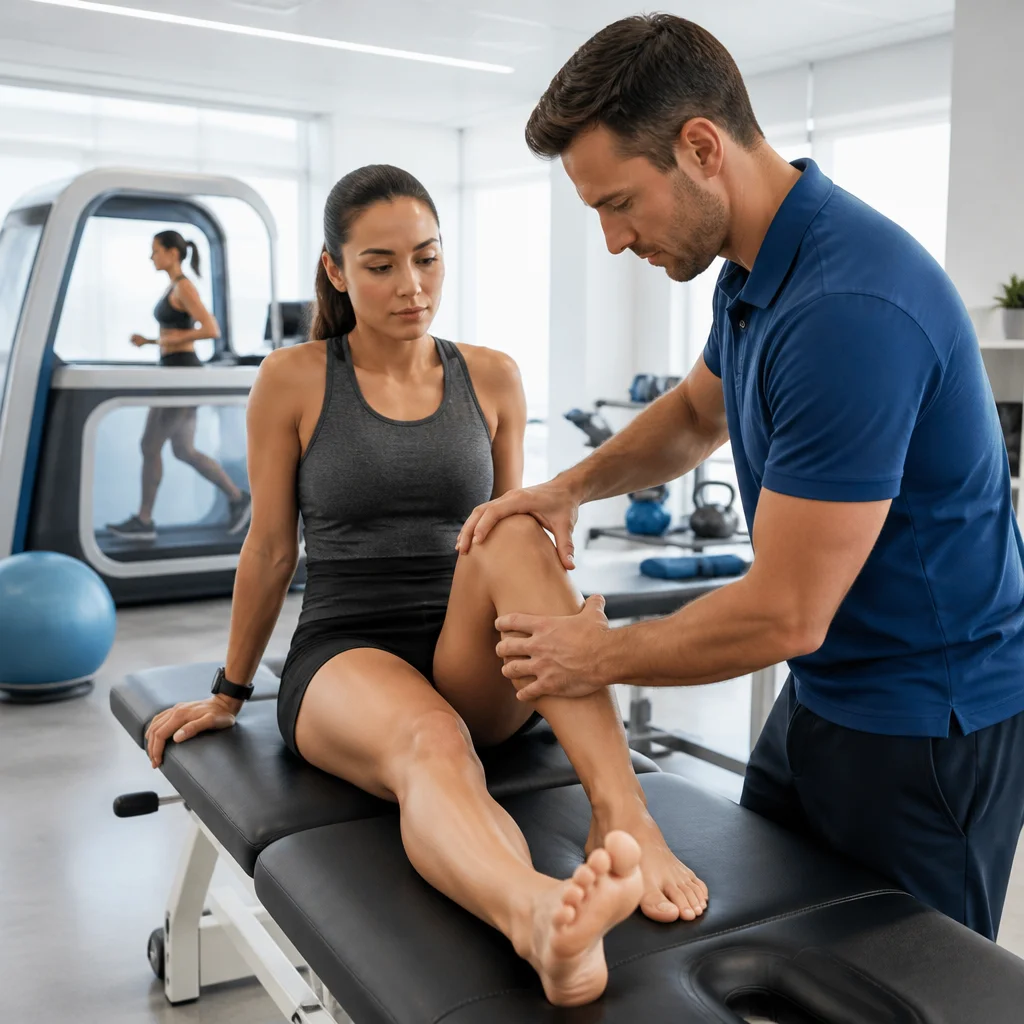
Your first shockwave appointment begins with a thorough assessment. We examine the injured area, confirm the diagnosis, and discuss your return-to-sport goals. If we determine shockwave is a good fit, we explain the entire process so you know exactly what's happening.
During the actual treatment, you'll sit comfortably while we apply ultrasound gel to the treatment area. A handheld applicator delivers the acoustic pulses. Most patients describe the sensation as a tapping or thumping feeling—not painful, but definitely noticeable. Sessions last 10-15 minutes for the active treatment portion.
We control the intensity and frequency of pulses based on your comfort and the specific tissue being treated. Some patients experience mild soreness afterward, similar to the feeling after a good strength training session. This is normal and typically resolves within a few hours to a day.
After treatment, you'll continue with our integrated rehabilitation protocols. We don't send you home to rest. Instead, you'll work with our team on targeted exercises, manual therapy, and movement retraining to support the healing tissue and rebuild strength.
Action step: Bring or schedule imaging (ultrasound, MRI, or X-ray) if you have it. This helps us optimize the shockwave protocol and gives us a baseline to track progress.
Combining Shockwave Therapy with Our Integrated Rehabilitation Approach
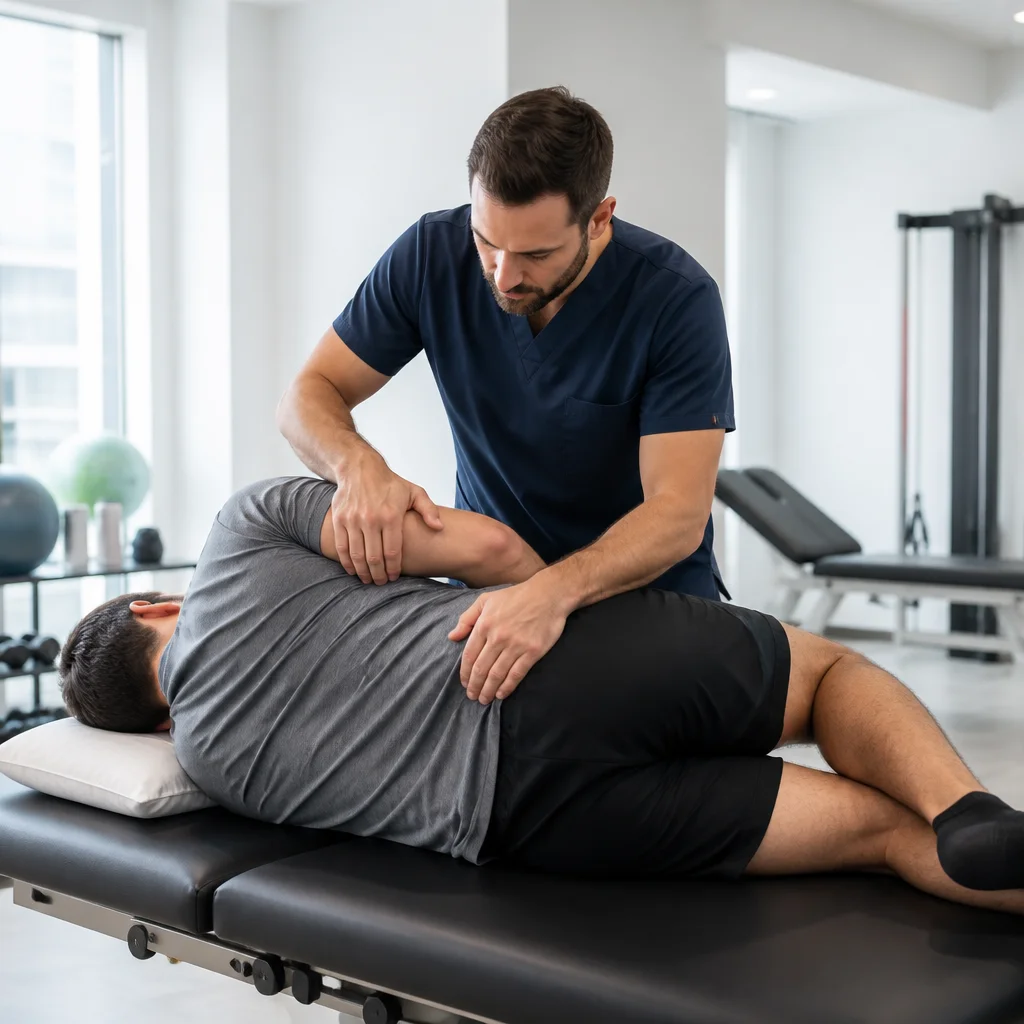
Shockwave therapy works best when it's part of a comprehensive recovery plan. We integrate it with manual therapy, targeted strengthening, and movement retraining to ensure your tissue doesn't just heal, but heals stronger.
Here's how we structure the combination:
Weeks 1-2 (Initial phase): First shockwave session, followed by 2-3 rehabilitation sessions focused on mobility and gentle loading. We address any movement restrictions and start rebuilding basic stability.
Weeks 3-4 (Progressive phase): Second shockwave session alongside strengthening that mimics your sport's demands. If you're a runner, we incorporate running-specific exercises. If you're a tennis player, we add rotational power work.
Weeks 5-8 (Return phase): Final shockwave session with sport-specific conditioning, agility drills, and movement sophistication. By this stage, most athletes are beginning low-intensity practice in their sport.
Our one-on-one sessions mean we modify this timeline based on your individual progress. Some athletes need more manual therapy initially. Others progress to advanced strengthening faster. We adjust real-time.
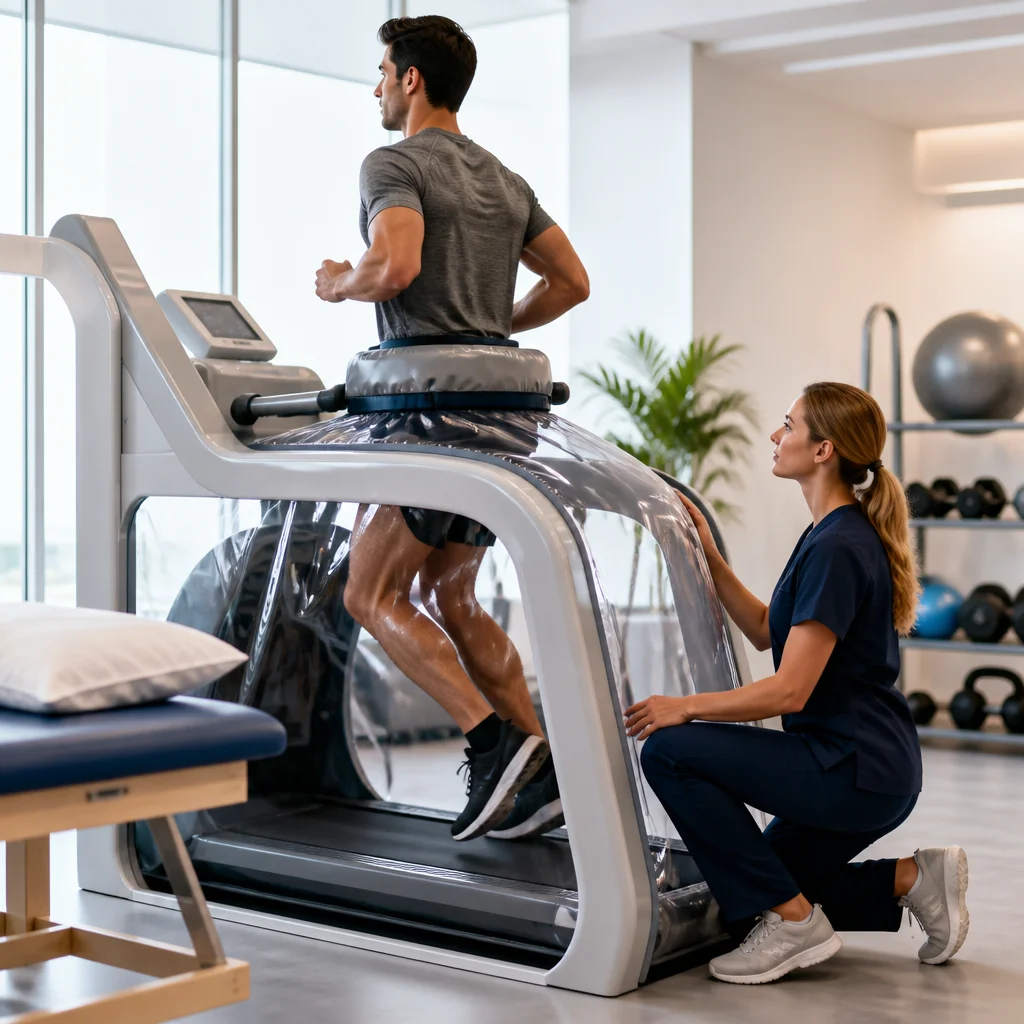
We also leverage our anti-gravity treadmill and Class IV laser therapy in cases where additional support speeds healing. The anti-gravity treadmill reduces impact loading while you build strength, and laser therapy enhances tissue recovery at the cellular level. These complement shockwave beautifully.
Real Recovery Timelines: When You'll Return to Peak Performance
Honest timelines matter when you're an athlete counting down days. Here's what we actually see:
For acute injuries (recent onset, first few months), shockwave combined with targeted rehabilitation typically achieves functional return to sport in 4-8 weeks. This means pain-free activity and sport-specific performance.
For chronic injuries (6+ months of pain with plateaued conservative treatment), timelines extend to 8-12 weeks. These injuries are more ingrained, and tissue adaptation takes longer. But most athletes are surprised at how much faster they improve once shockwave activates the healing cascade.
Individual factors matter. Your age, tissue quality, compliance with rehabilitation exercises, and sport-specific demands all influence the pace. A 28-year-old runner with good tissue health might return to half-marathon training in 6 weeks. A 45-year-old tennis player with chronic shoulder tendinitis might need 10 weeks to safely return to competitive match play.
We're transparent about these factors during your initial evaluation. We also emphasize that "return to sport" is a process, not a single moment. Most athletes follow a graduated return-to-play protocol: low-intensity sport movements in weeks 4-5, building to full competition by week 7-8.
What you need to know: Patience with the final strengthening phase prevents re-injury. Even if pain resolves in week 4, your tissue continues strengthening through week 8. We protect your investment by ensuring you're truly ready.
Why NYPT's Shockwave Therapy Program Delivers Superior Results
We've invested in advanced shockwave technology and trained our clinical team extensively because we believe our patients deserve the highest standard of care. Our approach differs in several important ways.
First, we combine shockwave with comprehensive one-on-one physical therapy. Many practices offer shockwave in isolation—a standalone treatment that might relieve pain but doesn't address the movement dysfunction or weakness that contributed to the injury. We integrate both because that's what produces lasting results.
Second, we customize every protocol. We don't run the same shockwave intensity and frequency for every Achilles injury. We assess your specific tissue quality, pain pattern, and sport demands, then adjust the protocol accordingly. This individualization accelerates healing and reduces re-injury risk.
Third, our clinical team understands sports-specific demands intimately. We don't just restore pain-free walking; we restore your ability to compete. A CrossFit athlete needs different strength demands than a distance runner. We build that specificity into every phase of recovery.
Fourth, we leverage complementary technologies strategically. When indicated, we combine shockwave with Class IV laser therapy for enhanced tissue regeneration, or with anti-gravity treadmill training to maintain cardiovascular fitness while protecting healing tissue. This integrated ecosystem speeds total recovery time.
Finally, we track progress objectively. We use ultrasound imaging, movement assessments, and functional testing to measure healing and guide progression. You see tangible evidence of improvement, which builds confidence and motivation.
Getting Started: Your First Appointment and Treatment Plan
The process begins with a thorough evaluation. Schedule your appointment at https://www.nypt.nyc, and come prepared with details about your injury: when it started, what makes it better or worse, and what your return-to-sport goal is.
During your initial visit, we'll perform a comprehensive assessment including manual examination, movement screening, and likely some imaging review. We'll ask about your training history, current activity level, and any previous injuries. This context matters because recovery planning accounts for your whole picture, not just this one injury.
If shockwave therapy is appropriate, we'll explain the expected timeline, number of sessions, cost, and what success looks like for your specific situation. We'll also discuss what you need to do between sessions to optimize healing.
Your first shockwave session typically happens within a week of your initial evaluation. We schedule follow-up rehabilitation sessions around it to keep momentum building. Most treatment plans require 3-4 shockwave sessions over 6-8 weeks, combined with 1-2 rehabilitation sessions per week.
We're here to get you back to what you love doing, stronger and more resilient than before. That's our commitment to every athlete who walks through our doors.
For further reading: Sports-specific shockwave therapy.
Frequently Asked Questions (FAQ)
How quickly can I expect to return to my sport after shockwave therapy?
Our patients typically experience noticeable improvement within 2-4 weeks, with most returning to competitive activity within 6-12 weeks depending on the injury severity and type. We work with you to establish a personalized timeline during your initial assessment, and we combine shockwave therapy with our strength and conditioning programs to ensure you're truly ready for peak performance. The exact recovery period varies based on your specific injury, but we've found that our integrated approach consistently accelerates healing compared to conservative treatment alone.
What makes shockwave therapy different from other treatment options we offer?
Shockwave therapy uses acoustic waves to stimulate your body's natural healing response at the cellular level, which is fundamentally different from manual therapy or traditional rehabilitation alone. We use this technology specifically for chronic tendon injuries, plantar fasciitis, and certain stress fractures where conservative methods have plateaued or aren't delivering results fast enough for active athletes. Many of our patients choose shockwave because it's non-invasive, requires no downtime, and works synergistically with our other therapies like manual techniques and laser treatment.
Which sports injuries do we treat most successfully with shockwave therapy?
We've achieved excellent results treating Achilles tendinopathy, patellar tendinitis, rotator cuff injuries, and plantar fasciitis in our active patient population. We also use shockwave for chronic elbow tendinitis and hip flexor issues common in runners and field sport athletes. During your consultation, we'll evaluate whether shockwave is the right tool for your specific injury or if we should combine it with our other advanced modalities for optimal recovery.
Comments