

NYC Orthopedic and Sports Rehabilitation: Personalized Recovery to Get You Back in Action
Table of Contents
Why Urban Athletes in NYC Struggle With Sports Injuries and Chronic Pain
New York City asks a lot of the body. Many of our patients run the Hudson River path before work, cycle through traffic on the way to a client meeting, climb stairs in walk-up apartments, and then train hard on weekends. That constant load leaves little margin for recovery, and small problems often build into larger ones before anyone notices.
Urban athletes tend to face a few recurring challenges:
Compressed schedules. Recovery gets pushed aside when a training block, a deadline, or a competition calendar takes priority.
Repetitive stress. Running on pavement, rowing machines, and cycling create overuse patterns in the knees, hips, and lower back.
Mixed surfaces and footwear. Switching between hard concrete, gym floors, and trails changes how forces travel through the joints.
Delayed care. Many people wait several months before seeing a clinician, by which point compensation patterns have formed.
If you have been working through a nagging ache, the most useful step is to track it. Note when it appears, what activity triggers it, and how it changes over a week. That record gives a clinician far more to work with than a general description of "it hurts sometimes."
Common Orthopedic and Sports Injuries We Treat
We regularly work with patients who have orthopedic and sports-related concerns across the shoulder, elbow, hip, knee, ankle, foot, and spine. Common examples include:
Rotator cuff irritation and shoulder impingement in swimmers, climbers, and overhead athletes
Patellofemoral pain and runner's knee in distance runners and cyclists
Hamstring strains and tendon irritation in sprinters and field sport players
Hip and groin pain in dancers, soccer players, and people who sit for long hours
Ankle sprains and Achilles tendon issues in basketball players and recreational runners
Lower back and neck pain linked to desk work, lifting, and repetitive training
A clinical evaluation is what separates one diagnosis from another, since similar symptoms can come from different tissues. We recommend booking an assessment if pain lasts longer than two weeks, interferes with sleep, causes swelling, or changes how you move in daily life.
How Personalized One-on-One Physical Therapy Accelerates Recovery
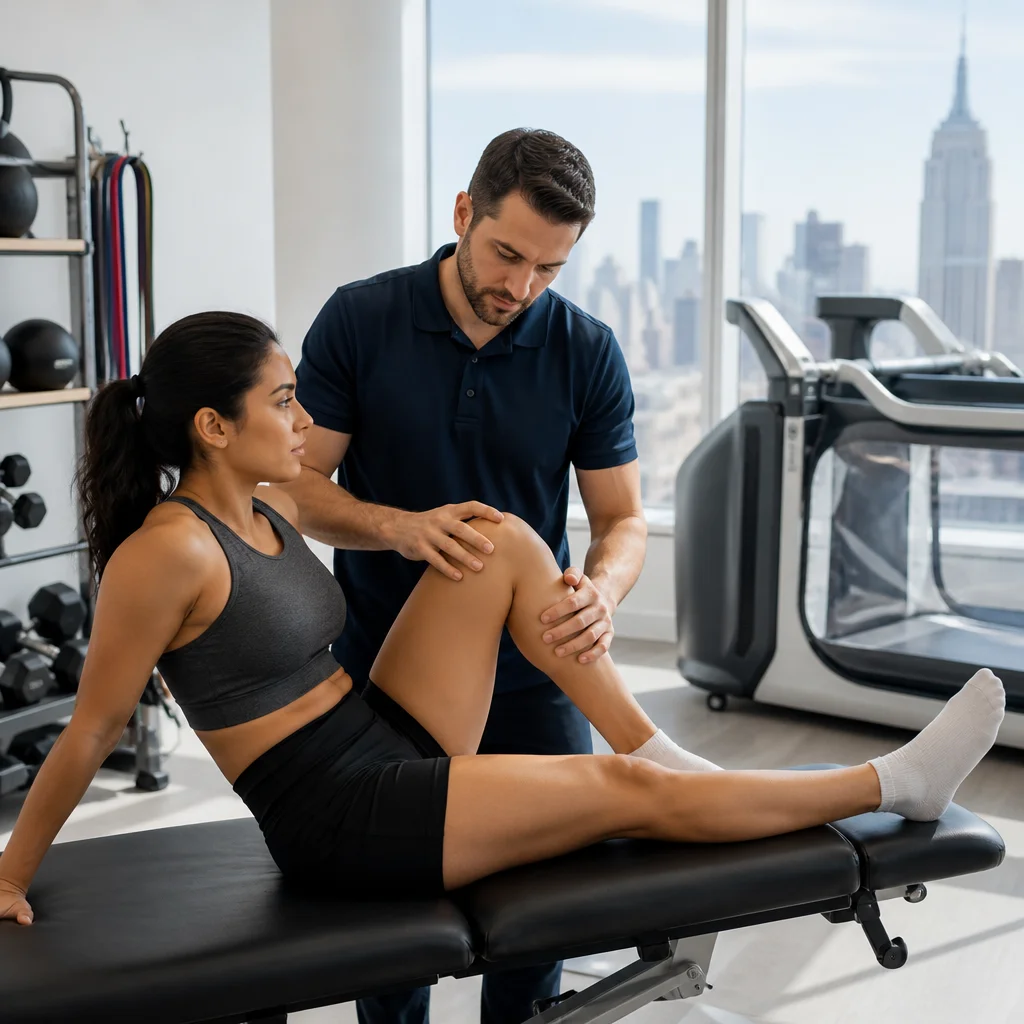
Group classes and shared treatment rooms have their place, but recovery from a sports injury usually goes faster when every session is built around you. At NYPT Health & Rehab, every physical therapy visit is one-on-one with your clinician. That means your treatment time is not divided among several patients, and adjustments happen in real time based on how you respond.
One-on-one care helps in practical ways:
Precise assessment. Your clinician can measure strength, range of motion, and movement quality in detail. 2. Dose control. Exercise load is adjusted session by session so you are challenged without being overloaded. 3. Clear feedback. Form cues and corrections happen immediately, which builds better movement habits. 4. Goal alignment. Your plan reflects your sport, your job, and your schedule, not a generic protocol.
Next step: bring your training log, race calendar, or work schedule to your first appointment. These details help us design sessions you can realistically complete between visits.
Advanced Technology in Our Rehabilitation Program
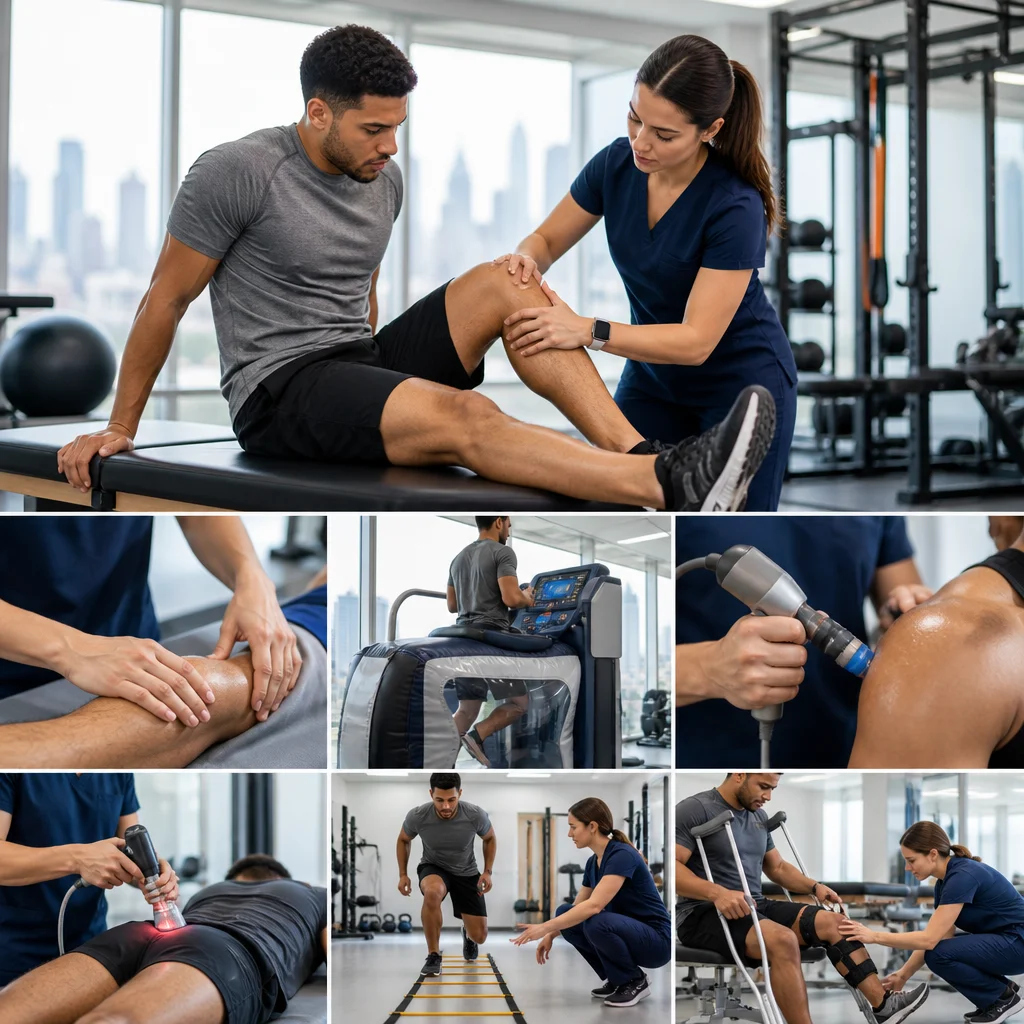
Hands-on care and progressive exercise remain the foundation of rehabilitation. Our clinic also uses targeted technologies to support tissue healing, pain modulation, and loading capacity when they fit your condition.
Shockwave therapy. Acoustic waves are delivered to tendon and soft tissue areas to support healing in chronic tendon conditions. Many patients ask about shockwave therapy in NYC, and we explain whether it suits your diagnosis during evaluation.
Class IV laser therapy. High-powered laser energy can help manage pain and inflammation in certain musculoskeletal conditions.
Ultrasound. Used selectively to support soft tissue treatment alongside manual techniques.
Anti-gravity treadmill training. Air-pressure support lets you run or walk with reduced body weight, which is valuable when you need to rebuild running tolerance before full impact returns.
Technology works best as part of a plan, not as a standalone fix. We pair these tools with progressive loading so that gains in tissue capacity carry over to the activities you care about.
Post-Surgical Orthopedic Rehabilitation Tailored to Your Goals
After surgery, recovery has to respect the surgical repair while still restoring function as quickly as safely possible. Whether you have had a knee arthroscopy, shoulder repair, ACL reconstruction, or hip procedure, your rehabilitation should follow the surgeon's protocol and your individual goals.
Our post-surgical approach typically includes:
Early control of swelling, pain, and range of motion
Progressive strength work matched to healing stages
Balance, proprioception, and neuromuscular training
Graded return to walking, stairs, work tasks, and sport
We coordinate with your surgical team when possible so that restrictions and milestones are clear. Patients often tell us the most helpful thing is a written timeline. Ask your surgeon for expected dates for weight-bearing, driving, lifting, and return to sport, then bring that timeline to your first session.
Integrated Wellness: Manual Therapy, Yoga, and Massage
Recovery is physical, but it is also about how the nervous system, tissues, and daily habits interact. Our integrated services support movement quality and comfort alongside active rehabilitation.
Advanced manual therapy addresses joint mobility, soft tissue restrictions, and movement patterns that contribute to pain.
Therapeutic yoga builds mobility, breath control, and body awareness in a structured, progressive format.
Massage therapy can help reduce muscle tension and support recovery between training sessions.
For example, a runner with stiff hips may benefit from manual mobilization in the clinic, guided hip mobility work at home, and a short breathing routine before bed. Combining these elements often makes progress more consistent. If you want to learn more about how these approaches work together, read our guide on integrated rehab for athletes.
Return-to-Action Strength and Conditioning for Peak Performance
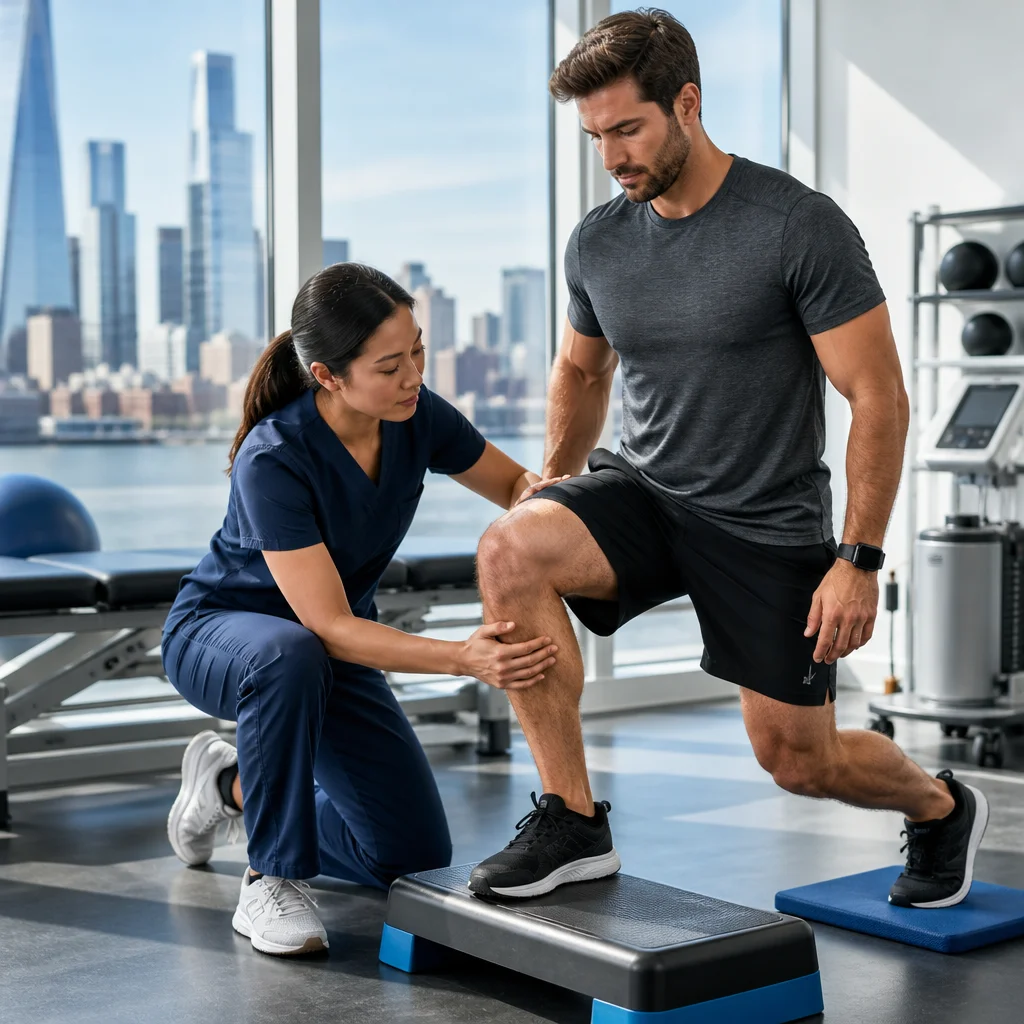
Pain relief is an important milestone, but it is not the finish line. Many athletes feel ready to return to full training before their tissues have rebuilt enough strength and endurance. Return-to-action conditioning bridges that gap.
Our return-to-action programming focuses on:
Strength testing that compares injured and uninjured sides where appropriate
Sport-specific movement drills, such as cutting, jumping, pulling, or sprinting
Gradual increases in training volume and intensity
Personal training sessions that build durable capacity for your sport or lifestyle
A practical rule many clinicians use is to confirm strength symmetry, movement confidence, and sport-specific tolerance before full return. We help you track these markers so the decision to go back to full training is based on evidence, not guesswork.
What to Expect at Your First Visit With Our Team
Your first appointment is a thorough evaluation and a planning session. Here is what typically happens:
Intake conversation. We review your injury history, symptoms, medical background, and goals. 2. Movement and strength assessment. Your clinician observes how you move, tests strength and range of motion, and checks related areas of the body. 3. Discussion of findings. We explain what we found in plain language and what it likely means for your recovery. 4. Personalized plan. You leave with a clear treatment direction, recommended frequency of visits, and home exercises when appropriate.
To make the most of your visit, wear comfortable clothing that lets your clinician see the area of concern, bring any imaging reports or surgical notes, and write down your top two goals. Whether you want to finish a marathon, return to pickup basketball, or simply climb stairs without pain, we will build the plan around that target.
If you are ready to take the next step, visit NYPT Health & Rehab to schedule a one-on-one evaluation. You can also explore our guide to one-on-one sports injury rehab in NYC to learn how personalized care can help you return to peak performance.
Frequently Asked Questions (FAQ)
How long does a typical sports injury recovery take at NYPT Health & Rehab?
Recovery timelines depend on the injury, its severity, and how long it has been present. We begin with a thorough evaluation and set measurable milestones with you so you always know where you stand. Many of our patients notice meaningful improvement within the first few weeks, while full return to competition often takes several months.
Do you accept insurance, and what should I bring to my first appointment?
We work with a range of insurance plans, and our front desk team can confirm your coverage before your visit. Please bring your insurance card, a photo ID, any referral or physician notes, and imaging results such as MRI or X-ray reports if you have them. Having these records ready helps us build your treatment plan from the start.
Is shockwave or Class IV laser therapy appropriate for me?
Both modalities are used selectively, and we determine whether they fit your condition during your evaluation. We consider factors such as your diagnosis, how long you have had symptoms, and your overall treatment goals. Our clinicians will explain the expected benefits and any limitations before we include them in your plan.
Comments