

Shockwave and Manual Therapy Package: Faster Recovery for Active New Yorkers
Table of Contents
Why Sports Injuries and Chronic Pain Stall Active New Yorkers
Life in New York moves fast, and most of the people we see are used to pushing hard. Whether you run the Hudson, train for a half marathon in Central Park, play in a competitive league, or spend twelve hours on your feet, your body is constantly absorbing load. When an injury or a nagging ache interrupts that rhythm, it can feel like the city has moved on without you.
Many active patients come to us after trying to work through the problem. They ice it, rest for a week, and then return to full training before the tissue is ready. The pain fades just enough to feel normal, only to return under load. This cycle is common, and it is one of the main reasons sports injuries and chronic pain become stubborn.
Several patterns tend to keep recovery stalled:
Returning to activity once pain eases, rather than once strength and movement have recovered
Compensating with the uninjured side, which shifts stress to other joints
Relying only on rest or occasional massage without a structured plan
Limited time for appointments, which leads to missed sessions and inconsistent progress
Next step: Notice whether your pain changes with load, such as running, lifting, or long commutes. Tracking these patterns for one to two weeks gives your clinician useful information and helps us build a more targeted plan.
How Our Shockwave and Manual Therapy Package Works
We built our shockwave and manual therapy package for patients who need more than a single modality. Rather than choosing one technique and hoping it works, we combine two approaches that address different parts of the recovery process: tissue response and tissue movement.
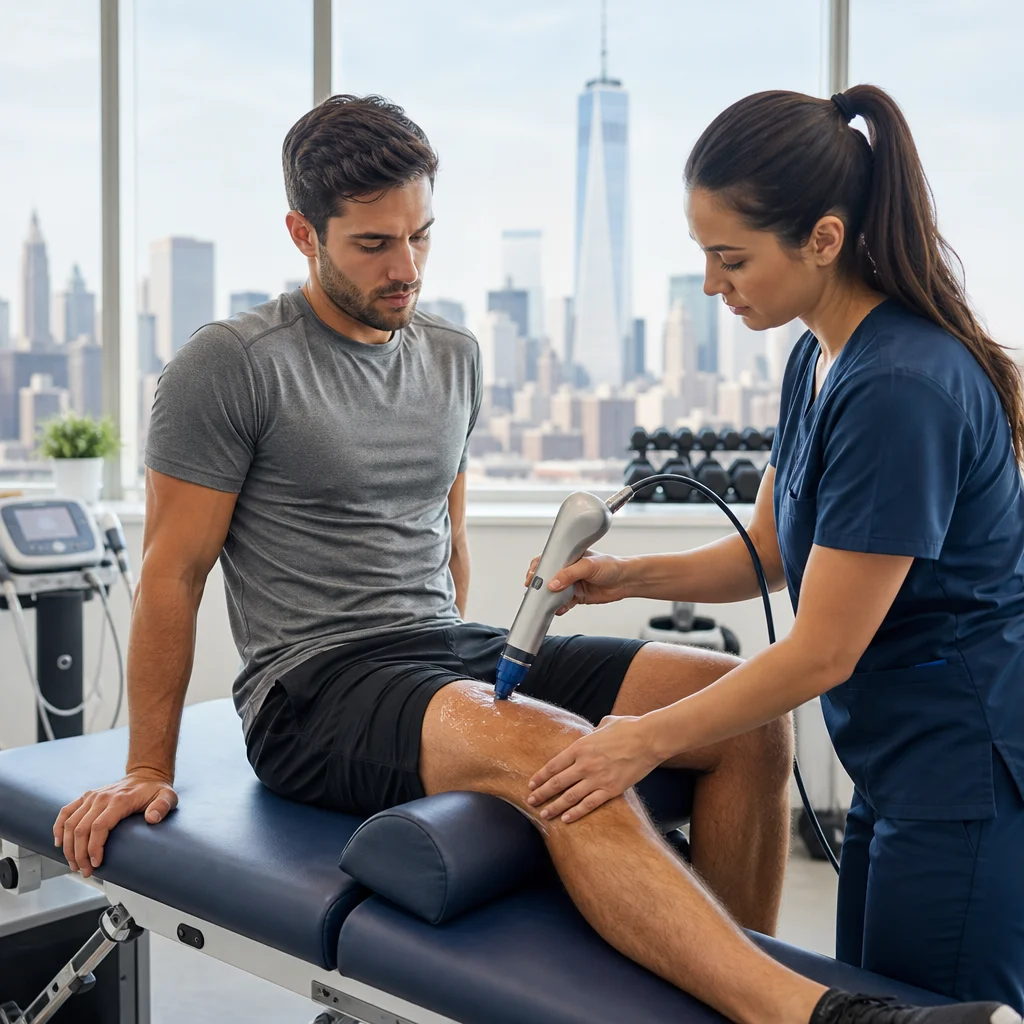
Shockwave therapy delivers controlled acoustic pulses to a targeted area. These pulses are designed to stimulate tissue that has not responded to earlier treatment. Manual therapy uses hands-on techniques to improve joint motion, soft tissue mobility, and the way your body moves through daily and athletic tasks.
A typical package follows a clear sequence:
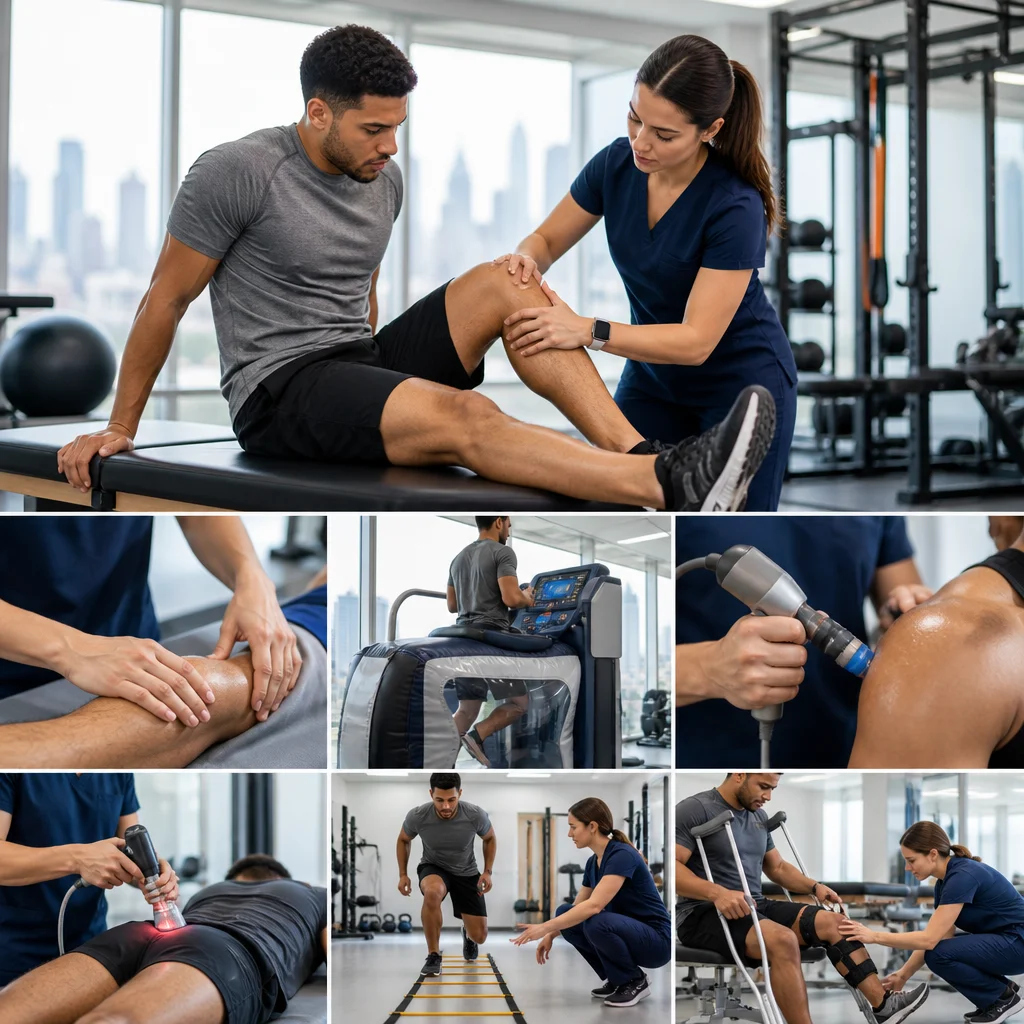
Assessment: We review your history, test movement and strength, and identify the main limiting factors. 2. Targeted shockwave sessions: We apply treatment to the tissues most likely to benefit. 3. Manual therapy: Hands-on work restores joint and soft tissue mobility so you can load the area more comfortably. 4. Progressive exercise: We build strength and control that carries over to your sport or job.
Because the two methods complement each other, your clinician can adjust the balance over time. Early in care, the emphasis may be on reducing pain and improving tissue response. Later, the focus shifts toward movement quality and performance.
Next step: Bring any imaging reports, prior treatment notes, and a list of activities you want to return to. This helps us decide whether this package fits your goals.
What Shockwave Therapy Does for Tissue Healing
Shockwave therapy is often described as a way to "wake up" tissue that has stopped progressing in its healing. It is most commonly used for chronic tendon problems, certain bone and soft tissue conditions, and persistent pain that has not responded to rest, stretching, or strengthening alone.
The treatment uses acoustic energy to create a controlled mechanical stimulus. Research suggests this stimulus may encourage local circulation and cellular activity in the treated area. The exact response varies from person to person, and outcomes depend on the diagnosis, how long symptoms have been present, and how consistently the rest of the plan is followed.
For active patients, shockwave therapy is usually most helpful as part of a broader plan. It can make it easier to tolerate exercise, but it does not replace progressive loading. Tendons and muscles still need gradually increasing demands to rebuild strength and resilience.
What to know before starting:
Sessions are typically brief, and some patients feel tenderness during or after treatment.
Multiple sessions are usually needed, spaced over several weeks.
Improvement is often gradual rather than immediate.
Next step: Ask your clinician whether shockwave therapy is appropriate for your specific condition and what progress markers to watch for across the first four weeks.
How Advanced Manual Therapy Restores Mobility
Manual therapy is the hands-on side of our package. It includes joint mobilization, soft tissue techniques, and movement-based adjustments designed to restore normal motion. When a joint or muscle group loses mobility, the body often compensates, and that compensation can overload other structures over time.
Our clinicians use several approaches depending on the case. Joint mobilization gently moves a joint through its available range to improve motion and reduce stiffness. Soft tissue techniques address muscle tightness and tissue sensitivity. Movement-based work helps you reconnect with positions and patterns you have been avoiding.
Consider a runner with reduced ankle motion. The restriction may push extra stress into the knee and hip during each stride. Restoring ankle mobility with manual therapy, then reinforcing it with targeted exercise, can change how the entire leg handles load.
Manual therapy works best when paired with active work. The hands-on portion opens the door, and your own strength and control keep the gains in place.
Next step: Note which movements feel restricted, such as squatting deep, reaching overhead, or turning to one side. These observations help us target mobility work where it matters most.
Why One-on-One Care Makes Our Approach Different
Many clinics schedule patients in shared group settings or rotate them through brief visits. We take a different approach. Our physical therapy is one-on-one, which means your clinician is focused on your body, your goals, and your schedule for the full length of each session.
This model matters for several reasons. Sports injuries and chronic pain rarely follow a textbook pattern, so care needs to adapt. Your clinician can adjust loading, technique, and exercise selection in real time based on how you respond. You also receive more precise feedback on form, which is especially important when you are rebuilding confidence after an injury.
One-on-one care also supports accountability. When your plan is designed specifically for you, it is easier to understand why each exercise matters and how it connects to your return to activity.
Practical benefits you can expect:
Sessions tailored to your movement patterns and training load
Real-time adjustments based on how you feel during and after treatment
Clear communication about what to do between visits
Next step: Come prepared with your weekly training schedule. Sharing it helps us plan sessions around your real life, not an idealized version of it.
Who Benefits Most From Our Combined Recovery Package
This package suits a range of active New Yorkers, but it tends to be most useful for people who have tried simpler approaches without lasting progress. Common examples include:
Recreational runners with recurring shin, knee, or hip pain that flares with mileage increases
Competitive athletes dealing with tendon irritation, muscle strains, or joint stiffness during the season
Desk-based professionals with neck, shoulder, or low back pain that limits training
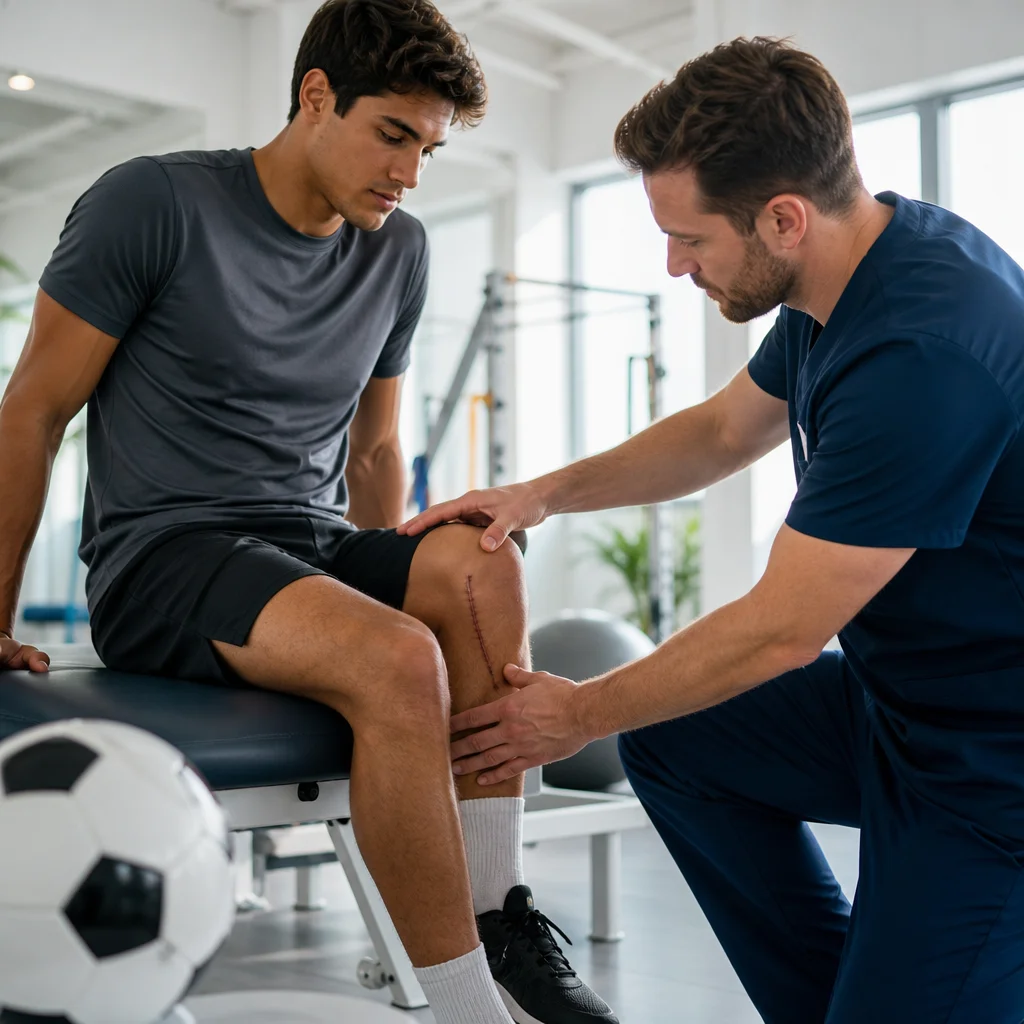
Patients in the recovery phase after an injury who feel stuck between rest and full activity
The package may be less suitable for conditions that require urgent medical evaluation, such as suspected fractures, severe neurological symptoms, or signs of infection. Our clinicians screen for these concerns before beginning treatment and will refer you to appropriate care when needed.
Next step: If you are unsure whether this package fits your situation, schedule a consultation so a clinician can review your history and recommend the right path.
What to Expect Across Your Treatment Plan
Recovery is rarely linear, so it helps to know what a typical plan looks like. Most patients move through three general phases, though the timing varies with each case.
Phase one: calming symptoms and restoring motion. Early sessions focus on reducing pain, improving tissue response, and regaining basic range of motion. You may be asked to modify certain activities, but we aim to keep you moving safely.
Phase two: rebuilding strength and tolerance. As symptoms settle, exercise becomes more demanding. Loading is increased gradually, and we monitor how the area responds over the following days.
Phase three: returning to performance. In the final phase, we match your training to your sport or job demands, including speed, change of direction, lifting, and endurance.
Throughout the plan, you can expect regular progress checks. We measure strength, range of motion, and function, and we adjust the plan when something is not working. Some days will feel better than others, and that is normal.
Next step: Keep a simple log of pain, activity, and sleep. Reviewing it with your clinician each week makes it easier to see progress that may not feel obvious day to day.
Integrating Recovery With Return to Performance Training
Recovery should not end when pain disappears. Returning to sport or a demanding routine requires capacity, which means your body can handle the load you plan to place on it. This is where our return to action strength and conditioning work becomes important.
We design performance training around the demands you actually face. A basketball player needs different preparation than a marathon runner or a commuter who carries heavy bags up subway stairs. The goal is to build strength, power, and endurance in a way that supports your next season, not just your next session.
A sample progression might look like this:
Start with controlled strength work for the injured area and surrounding muscles
Add sport-specific drills such as hopping, sprinting, or lateral movement once tolerance improves
Gradually increase volume and intensity while monitoring response
Transition to full training with a clear plan for maintaining gains
Next step: Share your performance goals and competition calendar. This lets us plan a return timeline that is ambitious but realistic.
Getting Started With NYPT Health and Rehab
If you are dealing with a sports injury or chronic pain that has not resolved with your current approach, we can help you build a clear plan. Our clinic is located in New York City, and we work with athletes and active professionals who want personalized care and a structured path back to their routines.
To get started:
Book a consultation through our website at https://www.nypt.nyc to discuss your symptoms and goals. 2. Bring relevant records, including prior imaging, treatment notes, and a summary of what you have already tried. 3. Review your assessment with your clinician, who will explain whether the shockwave and manual therapy package is appropriate. 4. Commit to a plan with defined check-ins so you can track progress from the start.
For more background before you visit, you may find our guide to shockwave therapy benefits helpful, or learn more about one-on-one sports injury rehab and how it supports a return to peak performance.
We are glad to help you get back to the activities that matter to you. Reach out when you are ready, and we will build the next step together.
Frequently Asked Questions (FAQ)
What is included in the Shockwave and Manual Therapy Package?
Our package combines shockwave therapy with advanced manual therapy in one-on-one sessions, so each treatment is tailored to your specific injury or chronic pain pattern. We begin with a thorough assessment, then sequence the two modalities based on your tissue condition and recovery goals. We review your progress regularly and adjust the plan as your mobility and strength improve.
How soon can I expect to notice a difference?
Response times vary depending on the type and duration of your injury, but many patients tell us they notice changes in pain levels or range of motion within the first several weeks. We track measurable markers such as movement quality, load tolerance, and pain scores at every visit so you can see your progress clearly. If we find that your recovery is progressing more slowly than expected, we will explain why and discuss adjustments with you.
Do I need a referral to start treatment at NYPT Health and Rehab?
We welcome patients who have a physician referral, but in many cases you can schedule an evaluation directly with us. During your first visit, we will review your history, imaging, and any prior treatment to determine whether our package is appropriate for your condition. If we believe another provider is better suited to your needs, we will tell you and help coordinate your next steps.
Comments