

Why NYC Runners Choose NYPT Over Hospital-Based Rehab Programs
Table of Contents
The Runner's Dilemma: Why Generic Hospital Rehab Falls Short
If you're a serious runner in New York City and you've recently dealt with an injury—whether it's a stress fracture, IT band syndrome, runner's knee, or a post-marathon setback—you face a critical choice about where to heal. Many injured athletes default to hospital-based physical therapy programs because they're convenient or covered by insurance. But convenience isn't recovery. At NYPT Health & Rehab, we've built our clinic around what runners actually need to return to peak performance: specialized expertise, individualized attention, and cutting-edge recovery technology.
The difference between generic rehab and runner-focused rehabilitation is significant. Let's explore why so many NYC runners choose a different path to healing.
Hospital outpatient programs operate on volume. A typical session involves shared equipment, rotating clinicians, and standardized protocols that work for the general population but miss the nuances of running biomechanics and athletic performance. You might spend 45 minutes with a physical therapist who divides their attention across three other patients, using cookie-cutter exercises designed for post-operative patients rather than athletes aiming to return to competitive training.
Here's the reality: running injuries are rarely about a single muscle or joint. They emerge from movement patterns, training load, muscle imbalances, and the specific demands your body faces pounding New York's streets and tracks. A hospital-based program can identify weakness and restore basic function, but it often stops short of the athletic-level performance work that gets you back to your actual running goals.
Additionally, hospital settings prioritize safety and liability over pushing boundaries. That's appropriate for general rehabilitation, but runners healing from sports injuries need progressive challenge and sport-specific conditioning that standard protocols don't provide.
The outcome? Many runners complete hospital rehab, feel "okay," return to running too early or too cautiously, and either re-injure themselves or spend months struggling with nagging limitations.
What Sets NYPT Apart: Our Specialized Approach to Running Injuries
We approach every runner with a specific framework: assess movement, identify root causes, rebuild capacity progressively, and return you to your actual sport safely. This isn't generic orthopedic rehab—it's athlete-centered recovery.
Our team specializes in the biomechanical and training factors that lead to running injuries. We understand that your injury didn't happen in isolation. It developed through a combination of training volume, movement quality, strength deficits, and often, the particular demands of your NYC running lifestyle—whether that's hill work in Central Park, pavement pounding, or track speed work.
We integrate several elements that hospital programs typically don't:
Detailed running gait analysis to identify movement contributors
Sport-specific progressions that mirror your actual training demands
One-on-one attention throughout every session
Advanced recovery modalities that accelerate tissue healing
Coordinated strength and conditioning work designed explicitly for running performance
This integrated approach means we're not just treating your injury; we're optimizing your entire kinetic chain for the specific demands you'll face returning to running.
One-on-One Care Designed for Your Athletic Goals
The foundation of our practice is personalized, one-on-one physical therapy. No shared sessions. No waiting your turn. No dividing therapist attention.
Every runner we work with brings different goals, training history, and biomechanical patterns. A competitive marathoner requires different return-to-running progressions than a casual weekend jogger. A track sprinter's rehabilitation timeline and power demands differ fundamentally from a distance runner's. We tailor everything to your specific objectives.
During your initial evaluation, we assess your current movement quality, identify your injury mechanism, review your training history, and understand your competitive or performance goals. From there, we design a personalized protocol that sequences your recovery in alignment with what you're actually trying to accomplish.
This level of customization matters tremendously. Standard protocols assume everyone responds identically; they don't. Your body, your movement patterns, your training demands, and your goals are unique. Your rehabilitation should be too.
Actionable next step: When you call to schedule, have your recent training logs and injury timeline ready. This helps us hit the ground running with specificity on your first visit.
Advanced Technology That Accelerates Your Recovery
Technology alone doesn't heal injuries, but combined with skilled manual therapy and progressive exercise, it significantly accelerates tissue recovery and reduces time away from training.
We utilize several advanced modalities that hospital programs don't commonly offer:
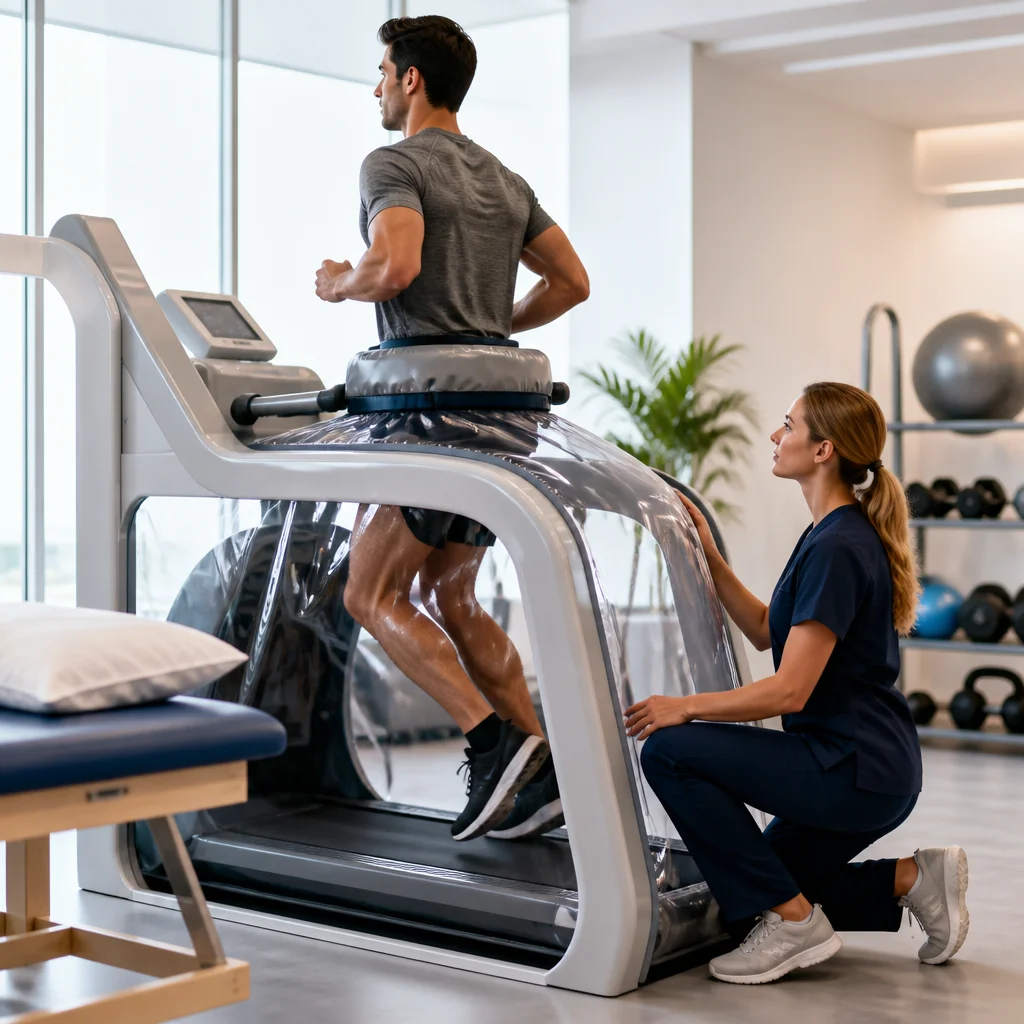
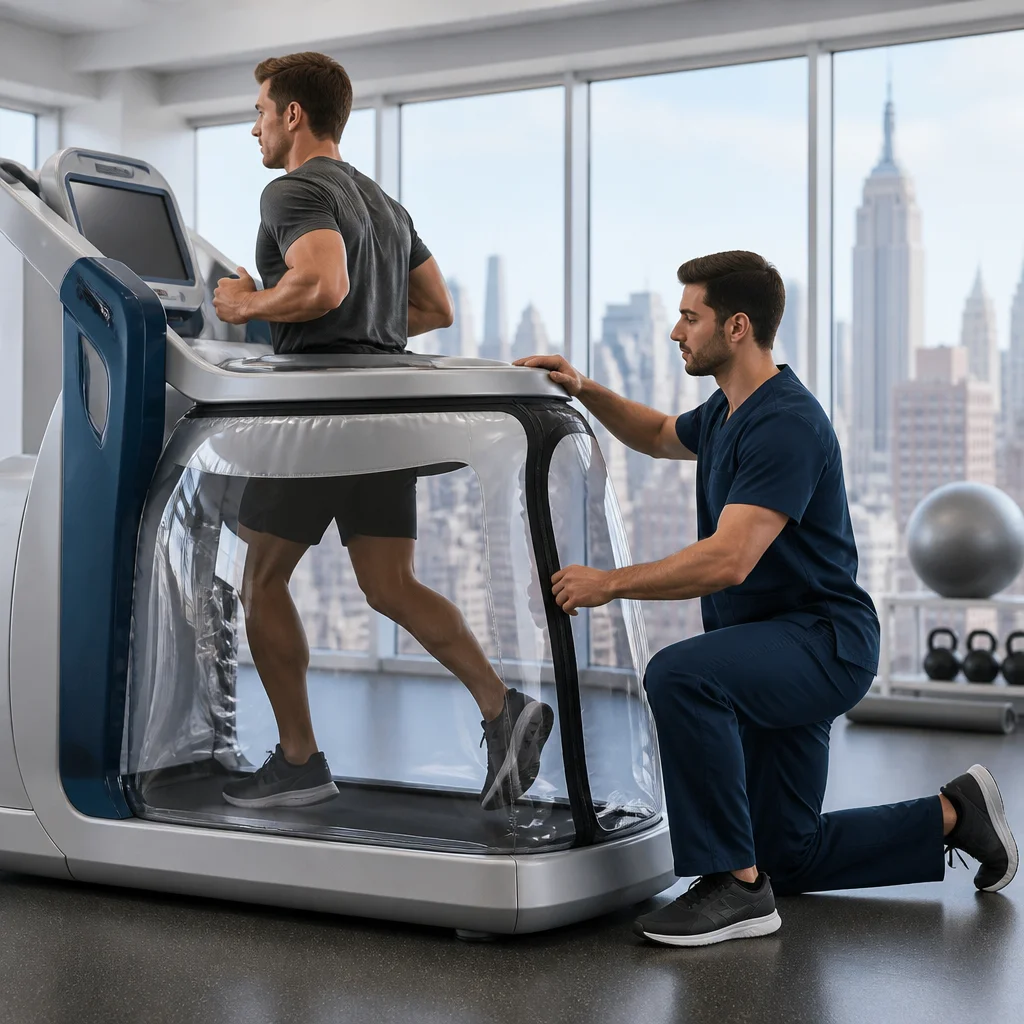
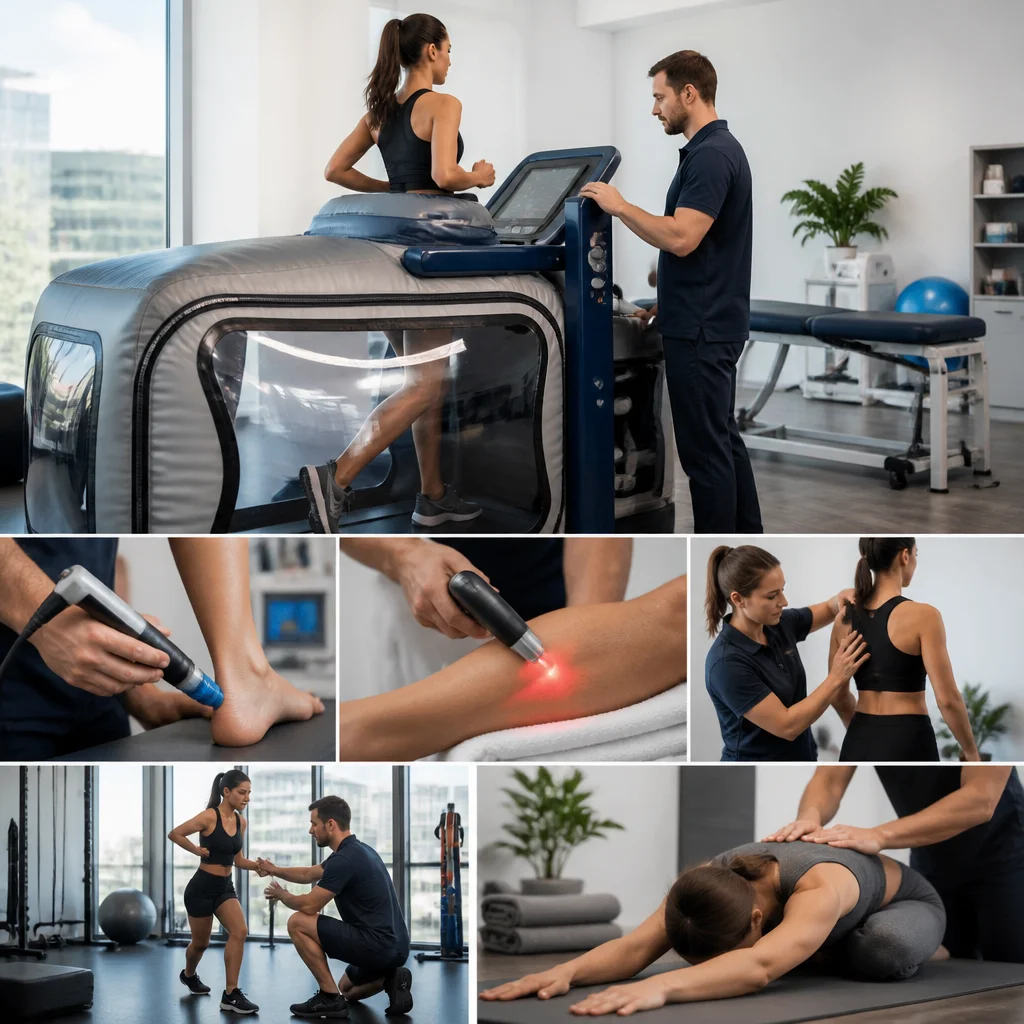
Anti-gravity treadmill training: This allows us to reduce weight-bearing load during running progressions, letting you return to running mechanics earlier in your recovery while protecting healing tissues. You can practice your actual running pattern with lower impact, building confidence and capacity before full ground-reaction forces.
Shockwave and Class IV laser therapy: Shockwave therapy for athletes promotes blood flow, stimulates tissue repair, and addresses chronic inflammation that slows recovery. Class IV laser therapy works similarly, penetrating deep tissue to reduce inflammation and accelerate cellular healing. Both are evidence-supported modalities that compress recovery timelines.
Manual therapy techniques: Our clinicians use advanced soft tissue and joint mobilization methods to restore movement quality faster than exercise alone. These hands-on techniques reduce muscle guarding, improve tissue extensibility, and restore normal arthrokinematics—the small movements joints need to function optimally.
The combination of these tools—applied within a comprehensive progression—creates a recovery environment that works faster than traditional physical therapy alone.
Post-Injury Return to Action: Our Proven Framework
We follow a structured return-to-running framework that progresses you safely and systematically from injury through full return to sport.
Phase 1: Restore Movement Capacity We address pain, restore joint mobility, and begin building foundational strength. Running is off the table. Walking and basic movement restoration are the focus.
Phase 2: Build Athletic Strength Progressive resistance work prepares your body for running demands. We focus on lower extremity power, core stability, and the specific muscle groups running stresses. Running remains limited or absent.
Phase 3: Return-to-Running Progressions Using tools like anti-gravity treadmill training and sport-specific exercises, we reintroduce running in controlled doses. We begin with walk-run intervals, progress to continuous easy running, then gradually increase pace and distance.
Phase 4: Return-to-Performance Training Once running is tolerated, we layer in the speed work, hill training, and distance demands specific to your goals. This phase builds confidence and addresses any remaining asymmetries or movement quality issues.
Each phase includes clear progression criteria. You don't move forward until you're ready. You don't return to your normal training until your body is resilient enough to handle it.
Actionable next step: Track your current training volume and intensity. This baseline helps us design appropriate early-phase constraints and realistic return-to-running timelines.
Sport-Specific Training for NYC's Active Community
Running in New York City presents unique demands. Whether you're navigating Central Park's rolling terrain, managing the pavement pounding of neighborhood streets, or training on a track, your body needs specific preparation and recovery strategies.
We design conditioning work around the actual demands you face. If you're a Central Park runner, we emphasize hill power and eccentric loading control. If you're distance-focused, we build aerobic capacity alongside muscular endurance. If you're a competitive track athlete, we prioritize power and speed-specific strength.
Our sport-specific approach extends beyond the clinic. We provide guidance on training load management, recovery practices, nutrition considerations for injury healing, and pacing strategies that support your return without setbacks.
This contextual, personalized approach accelerates your confidence in returning to real-world running demands, not just clinic exercises.
How We Integrate Manual Therapy and Strength Conditioning
Many runners think of physical therapy as exercise prescription, but the most effective rehabilitation blends hands-on manual therapy with progressive strength work and running-specific conditioning.
Manual therapy addresses the tissue restrictions, muscle guarding, and movement limitations that exercise alone won't resolve. A tight piriformis, stiff ankle, or restricted hip capsule will undermine your strength work and running mechanics. Our clinicians use soft tissue mobilization, joint manipulation, and myofascial release to clear these restrictions first.
Once mobility is restored, strength conditioning builds resilience. We focus on the kinetic chain—glutes, core, hip stabilizers, calf complex—ensuring balanced strength and power production. Crucially, we integrate this strength work with running-specific movement patterns so gains transfer directly to your running performance.
The combination is powerful: manual therapy restores capacity, strength training builds resilience, and progressive running work trains the nervous system to run safely and efficiently. Each element amplifies the others.
The NYPT Difference: Personalized vs. Assembly Line Rehabilitation
The fundamental difference between our approach and hospital-based programs comes down to personalization and athleticism.
Hospital programs focus on restoring functional independence—getting you to walk, manage stairs, perform daily activities. These are important baselines, but they're not enough for athletes. You need to return to sport safely and perform at your best.
Our entire structure is built around athletic recovery. Every clinician on our team understands running biomechanics, training progression, and performance physiology. Every session is one-on-one, allowing us to adjust on the fly based on how your body responds. We use advanced technology strategically, not routinely. We prioritize your specific goals, not generic protocols.
This personalized, athlete-centered approach requires more expertise and attention. It costs more than assembly-line rehab. But the returns—faster recovery, confident return to sport, reduced re-injury risk, and often improved performance—justify the investment.
Real Results: What NYC Runners Experience at Our Clinic
Our runners consistently report faster return-to-running timelines, improved confidence, and often performance improvements beyond their pre-injury baseline.
One marathon runner with a stress fracture thought six months of limited running was inevitable. Through a carefully sequenced progression using anti-gravity treadmill training, shockwave therapy, and progressive strength work, she returned to full training in 14 weeks and ran a personal record six months later.
A competitive track athlete with IT band syndrome completed generic hospital rehab but couldn't tolerate speed work without pain. After four weeks of our sport-specific intervention addressing his running mechanics, glute strength, and progressive track conditioning, he returned to competitive training and hasn't looked back.
These aren't anomalies. They're typical of what happens when runners get the specialized, individualized attention their injuries and goals demand.
Getting Started With Your NYPT Recovery Plan
Ready to get back to running smarter and faster? Here's how we work together:
Schedule your initial evaluation. We conduct a comprehensive movement assessment, discuss your injury history and training goals, and explain our personalized rehabilitation plan. This first visit establishes the foundation for your recovery.
Commit to one-on-one care. From that first evaluation through your return to peak performance, you'll work with our specialized team in personalized sessions designed explicitly around your goals.
Trust the process. Recovery has phases. Rushing creates setbacks. We'll keep you informed about your progress and maintain realistic timelines based on tissue healing, movement quality, and your response to progressions.
If you're in New York City and ready to stop accepting generic rehab solutions, we're here to help. Our runner-focused approach, advanced technology, and commitment to personalized care sets the foundation for your fastest, safest return to sport.
Contact us today to schedule your initial evaluation and begin your recovery with a team that understands what it takes to get NYC runners back to their best.
Frequently Asked Questions (FAQ)
How long does it typically take to return to running after a sports injury?
We understand that timeline is crucial for active New Yorkers. Recovery varies based on injury severity, your training history, and how consistently you engage with our program, but most of our runners see meaningful progress within 4-6 weeks and return to their sport within 8-12 weeks. We develop a customized return-to-action framework for each athlete, gradually progressing from manual therapy and foundational strength work through sport-specific conditioning so you rebuild both confidence and capability.
What makes your one-on-one approach different from group physical therapy sessions?
We believe running injuries require individualized attention because no two athletes have the same biomechanics, training volume, or performance goals. During your private sessions with us, we focus exclusively on your movement patterns, adjust techniques in real-time, and tailor every exercise to address your specific deficits rather than following a generic protocol. This personalized approach allows us to identify underlying causes of your injury, not just treat symptoms, which leads to faster recovery and injury prevention.
Do you work with runners who are still training, or only those completely sidelined?
We work with runners across the entire spectrum of injury and performance. Whether you're experiencing early warning signs of an overuse injury, recovering from acute trauma, or training through a nagging issue, we help you modify your routine safely while we address root causes. Our integrated approach means we don't force you to choose between recovery and staying active; instead, we optimize both through personalized programming that keeps you moving while your body heals.
Comments