

Why Specialized Sports Clinics Outperform Hospital Systems for Chronic Tendonitis
Table of Contents
The Growing Problem: Why Standard Hospital Care Falls Short for Athletes
Understanding Chronic Tendonitis and Its Impact on Active New Yorkers
What We Offer: One-on-One Specialized Care That Hospital Systems Cannot
Advanced Technologies We Use for Superior Tendonitis Recovery
How Our Sports-Specific Approach Accelerates Your Return to Peak Performance
Designing Your Personalized Treatment Protocol at Our NYC Clinic
The Cost-Benefit Analysis of Choosing Specialized Care From the Start
Your Path Forward: Next Steps to Begin Your Recovery Journey
The Growing Problem: Why Standard Hospital Care Falls Short for Athletes
Active New Yorkers face a familiar frustration: an injury sidelines you, you visit a hospital or large medical center, and you're assigned to a physical therapist you meet for the first time. Your treatment follows a standardized protocol designed for the general population, not for someone committed to returning to competitive performance.
Hospital-based systems excel at acute care and surgery, but they often lack the specialized focus that chronic tendonitis demands. You might receive 30 minutes in a group therapy room, rotating through machines with other patients, before being discharged with generic home exercises. The therapist hasn't studied the biomechanics of your sport, doesn't understand your performance goals, and has limited time to adapt your plan when progress stalls.
For athletes dealing with chronic tendonitis, this one-size-fits-all approach frequently prolongs recovery and leaves you stuck in a frustrating cycle of partial improvement followed by re-injury. The gap between hospital care and specialized sports rehabilitation has never been wider, especially in a city where your livelihood or passion depends on staying active.
Understanding Chronic Tendonitis and Its Impact on Active New Yorkers
Chronic tendonitis involves persistent inflammation or degenerative changes in a tendon, the tissue connecting muscle to bone. Unlike an acute injury, chronic cases develop over weeks or months, often from repetitive stress, improper technique, or inadequate recovery between training sessions.
Common sites for active New Yorkers include the Achilles tendon (runners), patellar tendon (basketball players, CrossFit athletes), rotator cuff tendons (tennis players, swimmers), and elbow tendons (climbers, weightlifters). The pain may feel dull and constant or sharp during specific movements, and rest alone frequently fails to resolve it.
Beyond physical symptoms, chronic tendonitis disrupts your identity and routine. You can't push through the way you used to. Training feels uncertain. Social activities with your community get scaled back. Many athletes experience anxiety about whether they'll ever perform at their previous level again.
The longer tendonitis persists without targeted intervention, the more the tendon tissue degenerates, and the longer true recovery takes. Early, specialized treatment prevents this downward spiral and addresses the root biomechanical issues driving the injury.
The Limitations of Hospital-Based Physical Therapy Systems
Large medical centers operate under structural constraints that compromise specialized sports rehabilitation. Therapists often manage 6 to 10 patients per day, limiting the attention each person receives. Your appointment might be cut short if another patient needs urgent care or the clinic runs behind schedule.
Standardized protocols, while evidence-based for general populations, don't account for the demands of your specific sport or your personal performance baseline. A runner recovering from Achilles tendonitis needs different loading progressions than a swimmer with the same diagnosis. Hospital systems typically don't differentiate this way.
Additionally, hospital-based therapy often lacks the advanced equipment and integrated services necessary for complete sports rehabilitation. You might receive physical therapy, but shockwave therapy, Class IV laser treatment, or anti-gravity treadmill training requires referrals elsewhere, fragmenting your care and delaying recovery.
Insurance reimbursement structures further complicate the picture. Hospital systems prioritize volume and efficiency to meet insurance billing requirements, inadvertently pushing patients through programs faster than their actual recovery demands. You're discharged when you "meet functional criteria," not when you're truly ready to return to your sport pain-free.
What We Offer: One-on-One Specialized Care That Hospital Systems Cannot
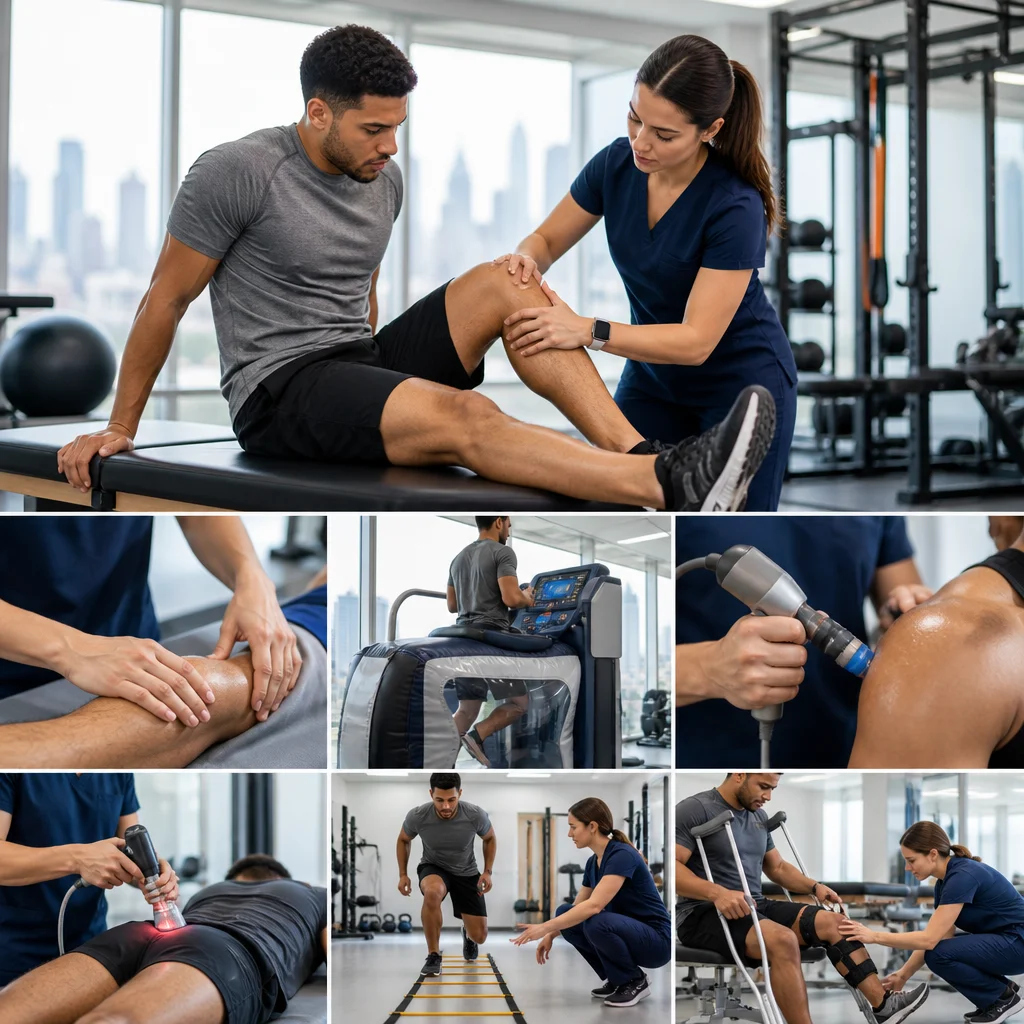
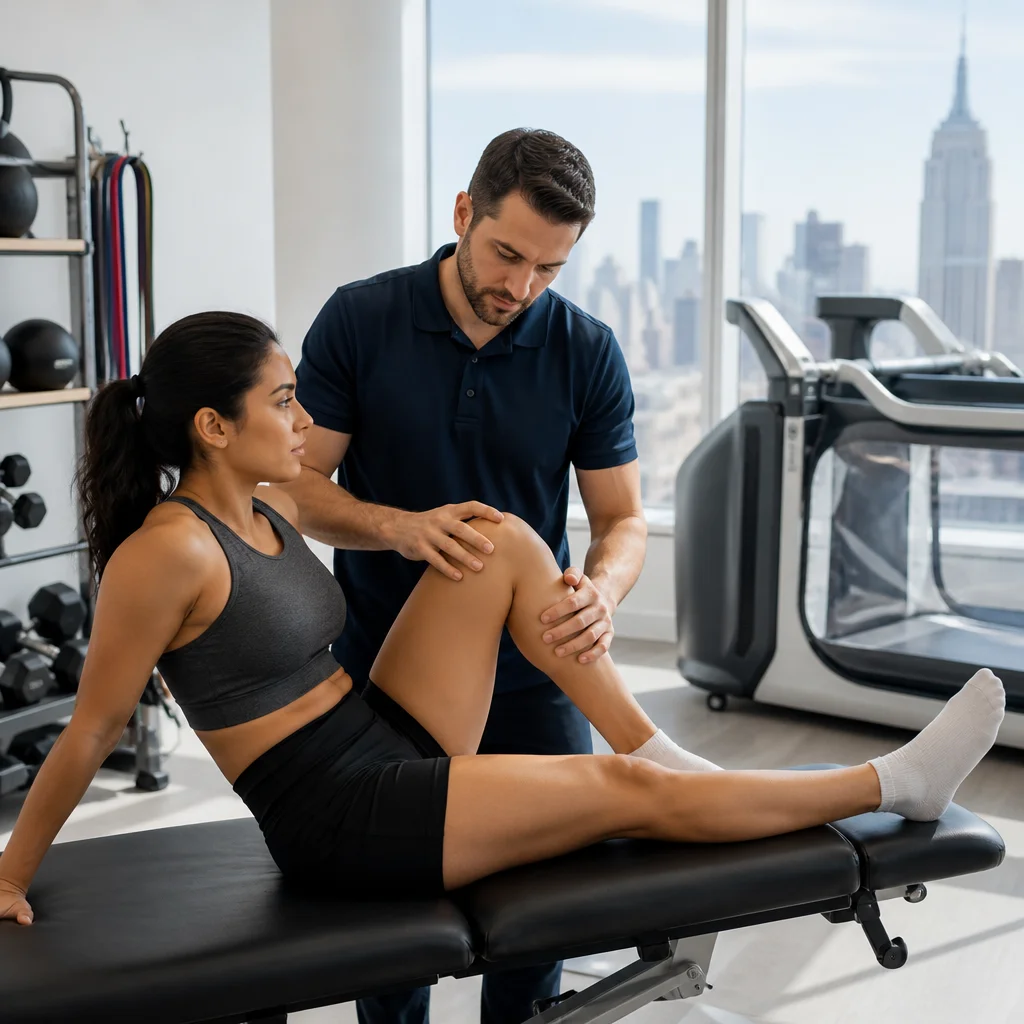
At NYPT Health & Rehab, every patient receives dedicated one-on-one attention from a specialized therapist throughout their entire session. We spend 60 minutes focused exclusively on your recovery, not splitting time across multiple patients or dividing your appointment into clinical segments.
Our team has extensive expertise in sports injury rehabilitation and understands the biomechanics of running, climbing, weightlifting, tennis, basketball, and dozens of other activities. When you walk through our door with chronic tendonitis, we don't apply a generic protocol. We assess your movement patterns, your sport-specific demands, your training history, and your performance goals.
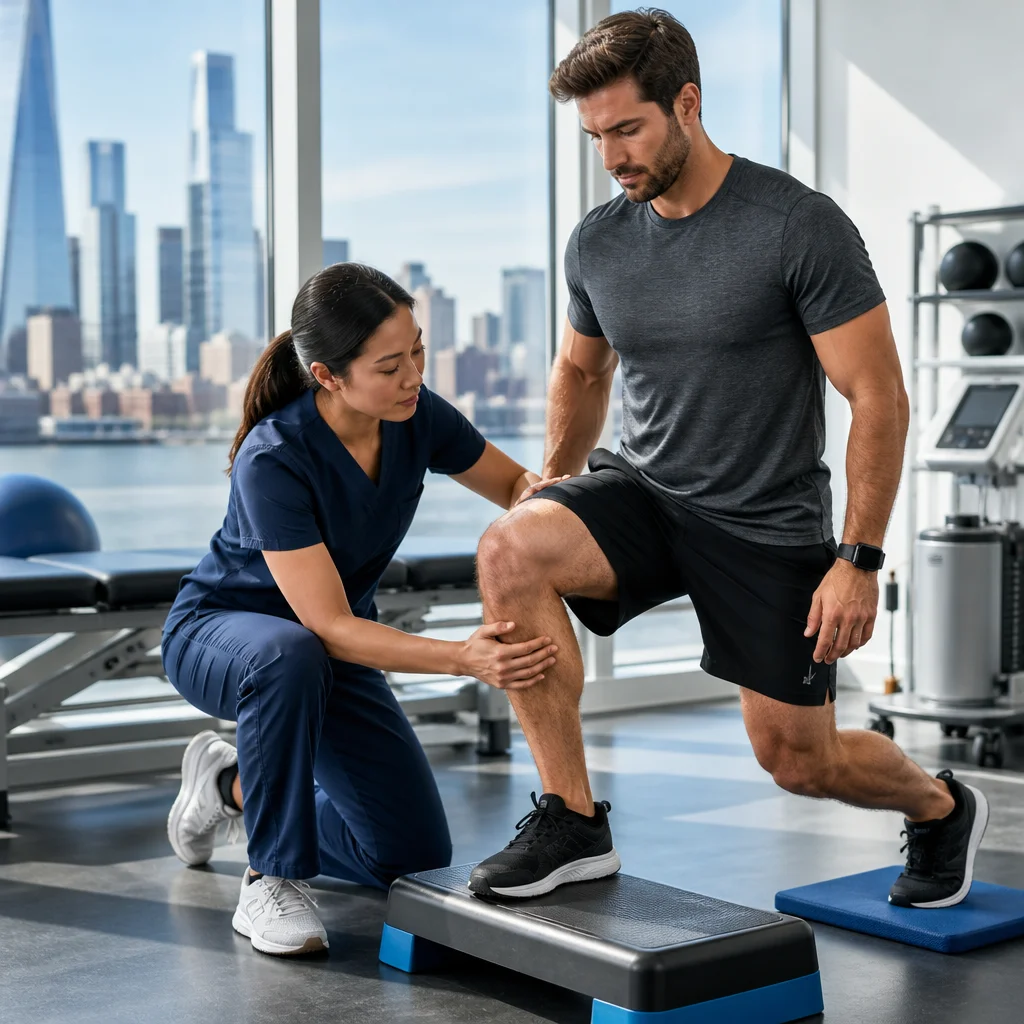
We combine traditional manual therapy techniques with targeted exercise progression tailored to your tissue's healing stage and your athletic goals. If your tendonitis stems from poor movement mechanics, we identify and correct those patterns. If you've compensated with other muscle groups, we rebalance your kinetic chain. If your return-to-sport demands specific power or endurance, we build that systematically.
Our integrated approach means you access personalized one-on-one care from a single clinic. Manual therapy, strength and conditioning, yoga, massage, and advanced modalities all happen within one coordinated treatment plan. You're not juggling multiple providers or trying to piece together fragmented advice.
Advanced Technologies We Use for Superior Tendonitis Recovery
Modern sports rehabilitation relies on technologies that facilitate faster, more complete healing. We deploy several advanced modalities that hospital systems either don't offer or require external referrals.
Our Class IV laser therapy stimulates cellular healing at the tissue level, reducing inflammation and promoting collagen remodeling within the tendon. Shockwave therapy, backed by research in chronic tendonitis treatment, triggers the body's natural repair mechanisms and can break up scar tissue that limits function.
The anti-gravity treadmill allows controlled, progressive loading without the impact stress of regular running. If you're a runner recovering from Achilles tendonitis, you can resume cardiovascular training at 20 percent body weight, gradually increasing load as your tendon adapts. This prevents the frustrating deconditioning that sidelines many athletes during extended rest.
Advanced manual therapy techniques, including soft tissue mobilization and proprioceptive neuromuscular facilitation, restore tissue extensibility and movement quality that passive rest cannot achieve. Ultrasound and other diagnostic-quality imaging helps us track tissue changes and adjust your protocol based on actual healing progress, not just symptom reduction.
These tools don't replace sound therapeutic principles, but they accelerate recovery and give us objective markers of progress that guide your treatment plan.
How Our Sports-Specific Approach Accelerates Your Return to Peak Performance
Returning to your sport safely requires more than pain relief. Your tendon must tolerate the specific loads your activity demands. A tennis player's shoulder needs different conditioning than a swimmer's. A climber's grip endurance is not the same as a weightlifter's lockout strength.
We structure your recovery in phases that mirror your return-to-sport timeline. Early phases focus on tissue healing, gentle loading, and restoring basic movement quality. Middle phases introduce sport-specific movement patterns and moderate intensities. Late phases integrate high-speed, high-load activities that match your competitive demands.
Throughout this progression, we continuously assess your pain response, movement quality, and readiness. Many athletes are eager to push harder and return faster, but we guide you toward sustainable recovery that prevents re-injury. Our goal is not a quick return, but a lasting one.
We also educate you on load management, technique refinement, and training periodization so that once you return to competition, you maintain your health long-term. You leave our clinic not just recovered, but smarter about injury prevention.
Real Recovery Stories: Athletes Who Chose Specialized Care
Consider Marcus, a competitive climber who developed chronic tendonitis in both shoulders after increasing his training volume too quickly. After six weeks of hospital-based physical therapy, his pain improved slightly, but he couldn't grip or lock out. He was told to accept limitations.
At our clinic, we discovered significant muscle imbalances in his scapular stabilizers and rotator cuff, along with poor climbing-specific movement patterns. Over 16 weeks of targeted therapy, anti-gravity training for controlled loading, and sport-specific strengthening, Marcus returned to project climbing harder than before. His shoulder stability now exceeds what he needed previously.
Or take Sarah, a running enthusiast with patellar tendonitis that sidelined her for over a year. She completed a hospital rehabilitation program, returned to jogging, and re-injured her knee within weeks. When she came to us, her physical therapy had addressed basic knee extension strength but missed her hip abductor weakness and running gait asymmetry.
We spent three months correcting her movement mechanics, loading her tissues progressively on our anti-gravity treadmill, and building single-leg stability. She's now running 30 miles weekly without symptoms.
These outcomes reflect what focused, specialized care and consistent one-on-one attention make possible.
Designing Your Personalized Treatment Protocol at Our NYC Clinic
Your first session at NYPT involves a comprehensive assessment. We examine your movement quality, test tissue and joint mobility, perform sports-specific movement screens, and discuss your training history and performance goals.
Based on these findings, we collaborate with you to design a protocol that balances immediate pain reduction with progressive tissue loading and functional restoration. We set measurable milestones: returning to light running, advancing to interval training, progressing to full sport intensity.
Your treatment plan integrates several elements. Manual therapy sessions address tissue restrictions and movement impairments. Strength and conditioning exercises progressively load your healing tendon and correct biomechanical faults. Sport-specific training helps your nervous system adapt to the movements and intensities you'll face in competition.
We adjust your plan every 1 to 2 weeks based on your response. If pain increases, we dial back intensity and investigate why. If progress stalls, we identify limiting factors and address them. This dynamic approach prevents the plateaus common in standardized protocols.
You receive detailed home exercise programming and guidance on training loads outside our clinic. We want you progressing between sessions, not just during them.
The Cost-Benefit Analysis of Choosing Specialized Care From the Start
Choosing a specialized sports clinic may feel more expensive initially than a hospital-based program, but the financial picture shifts when you factor in actual recovery time, re-injury rates, and long-term function.
A typical athlete managed by hospital-based systems spends three to six months in therapy, returns prematurely due to time or insurance pressures, re-injures, and re-enters therapy, totaling six to nine months of lost training and competition. Cost includes not just therapy sessions but lost wages, missed competitions, and psychological stress.
Our specialized approach typically resolves chronic tendonitis in two to four months with dramatically lower re-injury rates. You return to sport faster and stay healthy longer. For competitive athletes or those whose income depends on physical capability, the return on investment is substantial.
Beyond financial metrics, consider the confidence difference. Working with specialists who understand your sport and your goals builds trust and psychological resilience during recovery.
Your Path Forward: Next Steps to Begin Your Recovery Journey
If you're managing chronic tendonitis and traditional approaches haven't delivered, we encourage you to start with a consultation. We'll review your injury history, imaging, and previous treatment, then give you an honest assessment of what specialized care can achieve for you.
Many athletes find it helpful to explore managing chronic tendonitis in greater detail before booking an appointment, so you understand what to expect.
Contact us to schedule your initial assessment. We'll spend time understanding your specific situation and designing a realistic recovery timeline. If we're the right fit for your needs, we'll get started immediately. If another approach serves you better, we'll point you in that direction.
Your recovery from chronic tendonitis is possible, and it's possible faster than you might expect with specialized, focused care. Reach out today.
Frequently Asked Questions (FAQ)
How does our specialized approach to chronic tendonitis differ from what I'd receive at a hospital?
We provide one-on-one continuity of care with the same clinician throughout your treatment, allowing us to deeply understand your specific condition and adjust your protocol in real-time. Our clinic combines advanced technologies like shockwave therapy and Class IV laser with manual therapy techniques and sports-specific conditioning, whereas hospital systems typically rely on standardized protocols with rotating therapists who spend limited time with each patient.
What technologies do we use to accelerate tendonitis recovery?
We utilize anti-gravity treadmill training to reduce impact while you rebuild strength, shockwave therapy to stimulate tissue healing, and Class IV laser therapy to decrease inflammation and pain. These tools work together with our hands-on manual therapy and personalized exercise programming to address the root cause of your tendonitis rather than just managing symptoms.
How quickly can I expect to return to my sport or regular activities?
Recovery timelines vary based on tendonitis severity and your training demands, but our integrated approach typically produces noticeable improvements within 2-3 weeks and significant functional gains within 6-8 weeks. We design your progression specifically around your goals, whether that's running a marathon, returning to competitive play, or simply reclaiming pain-free movement in your daily life.
Comments