

Advanced Shockwave and Laser Therapy for Achilles Tendinopathy Recovery in NYC
Table of Contents
Why Achilles Tendinopathy Sidelines Active New Yorkers
The Achilles tendon bears tremendous load every time you run, jump, or climb stairs. For active New Yorkers, this means constant stress on the tissue that connects your calf muscles to your heel bone. When that tendon becomes overloaded, inflamed, or degenerates, you're facing Achilles tendinopathy—a condition that can turn a simple morning jog into sharp, nagging pain.
We see runners, CrossFit athletes, dancers, and gym enthusiasts in our NYC clinic who thought their Achilles pain would resolve on its own. Many waited weeks or months, only to find the problem worsening. The challenge with Achilles tendinopathy is that traditional rest and ice often aren't enough to reverse the underlying tissue damage, especially when degeneration has set in.
The tendon's poor blood supply makes natural healing slower compared to other injuries. Without targeted intervention, micro-tears accumulate and scar tissue forms unevenly, leaving the tendon weakened and vulnerable. This is why so many patients experience recurring pain even after taking time off from their sport.
Actionable insight: If you've had Achilles pain lasting more than two weeks, scheduling a thorough evaluation now prevents the injury from progressing to chronic stages that take much longer to resolve.
The Limitations of Conservative Treatment Alone
Rest, stretching, and anti-inflammatory medication have their place in early-stage injury management. However, when we assess patients with moderate to advanced Achilles tendinopathy, standard conservative approaches often reach a plateau. Simply reducing activity doesn't address the degenerated or inflamed tissue driving your pain.
Many patients tell us they followed conventional advice for months, only to experience temporary relief followed by returning pain once they increased activity. This frustration stems from a fundamental gap: conservative methods typically manage symptoms rather than regenerate damaged tissue. Eccentric strengthening exercises and gradual loading help, but they work best when combined with therapies that actively stimulate healing at the cellular level.
Additionally, some tendon damage is structural and calcified, forming small deposits or areas of scar tissue that resist standard physical therapy alone. These changes require more advanced intervention to break down and remodel the tissue effectively. Waiting for passive healing allows degeneration to spread and increases risk of complete tendon rupture, a serious complication that demands surgery.
What to do next: Rather than accepting chronic Achilles pain as permanent, consider advanced therapeutic options within the first three to six weeks of persistent symptoms.
How Shockwave Therapy Regenerates Damaged Tendon Tissue
Shockwave therapy works through a mechanism entirely different from traditional treatment approaches. We deliver high-energy acoustic pulses directly to the damaged tendon tissue, creating controlled micro-trauma that triggers your body's natural healing cascade. This stimulates new blood vessel formation and activates growth factors that promote tendon regeneration.
The beauty of shockwave therapy is that it targets the root problem: tissue degeneration. The acoustic waves break down calcified deposits and scar tissue while signaling your body to mobilize healing resources to the injured area. Most patients receive two to four sessions spaced one to two weeks apart, depending on the severity of their condition.
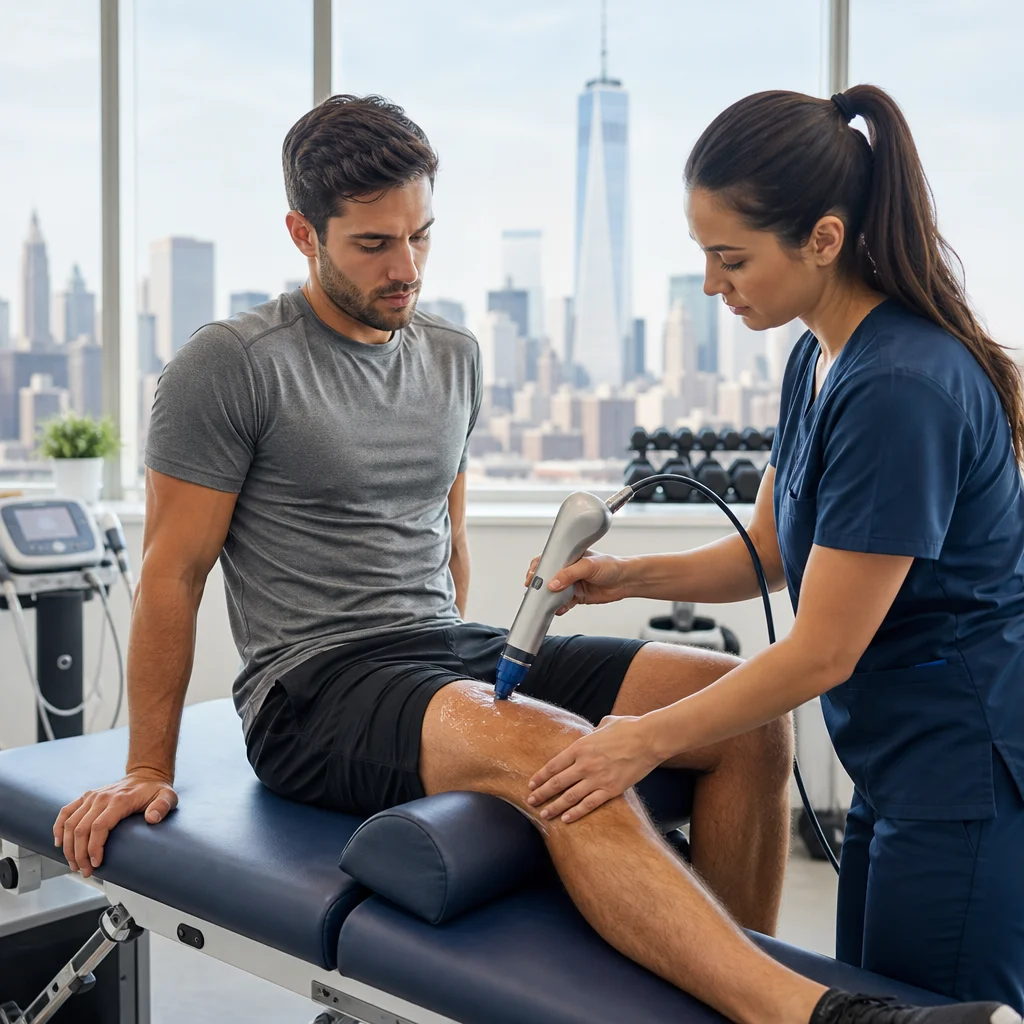
During each session, we apply a conductive gel and position the shockwave applicator over your Achilles tendon. You'll feel pulsing sensations and mild discomfort, but the procedure is non-invasive and requires no anesthesia. Sessions typically last 20 to 30 minutes. Some mild swelling or soreness may follow, but this resolves quickly and indicates the tissue is responding.
Clinical research demonstrates that shockwave therapy significantly improves pain and function in patients with chronic Achilles tendinopathy, particularly those who didn't respond adequately to conventional therapy. We've seen patients return to running and sport-specific training within weeks rather than months.
Actionable takeaway: Discuss shockwave therapy candidacy during your initial consultation, especially if conservative treatment hasn't resolved your pain after four to six weeks.
Class IV Laser Therapy: Accelerating Healing at the Cellular Level
Class IV Laser Therapy in NYC operates on photobiomodulation principles, delivering concentrated light energy deep into tendon tissue to stimulate cellular repair. Unlike lower-power lasers, Class IV penetrates several centimeters, reaching the heart of the Achilles tendon to reduce inflammation and accelerate mitochondrial function within damaged cells.
The laser energy stimulates collagen synthesis and increases ATP production, essentially "charging" your cells to heal more efficiently. This means reduced pain and swelling within sessions, plus cumulative improvements in tissue quality over a treatment course. Many patients report noticeable pain relief after just two to three sessions.
We typically combine laser therapy with other treatments in your recovery plan. A typical course involves one to three sessions per week for three to six weeks. Each session lasts 10 to 15 minutes and feels warm rather than uncomfortable. The procedure is completely non-invasive, with no downtime, making it ideal for athletes who need to maintain training schedules.
The synergy between laser therapy and other modalities is powerful: laser reduces inflammation and accelerates cellular healing, while shockwave therapy stimulates tissue regeneration at a structural level. Together, they address both the immediate pain and the underlying degeneration.
What to do next: Ask your therapist whether Class IV laser therapy is appropriate for your specific Achilles condition during your treatment planning conversation.
Our Integrated Approach to Achilles Recovery
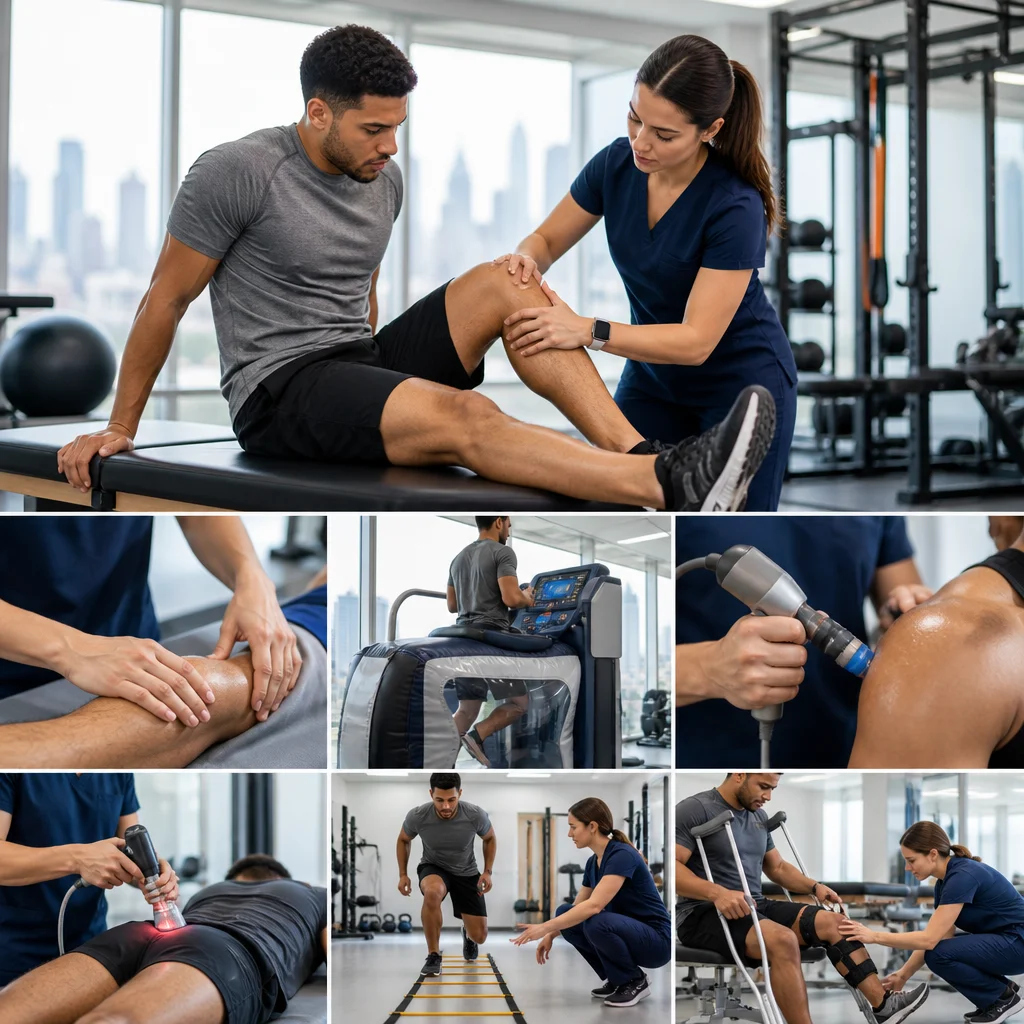
We don't rely on a single treatment modality because Achilles tendinopathy is complex. Our approach weaves together advanced technologies, manual therapy, and personalized strengthening to address your injury from multiple angles. This integrated strategy accelerates healing while preventing re-injury once you return to activity.
Your recovery plan typically includes:
Shockwave and Shockwave and Laser Therapy sessions to regenerate tissue and reduce inflammation
Manual therapy techniques to address calf tightness, scar tissue, and movement restrictions
Progressive strengthening exercises targeting the calf, foot, and ankle stabilizers
Movement patterning to correct biomechanical issues that contributed to the initial injury
Gradual return-to-activity protocols that build confidence and durability
We structure each session around your current phase of recovery. Early phases focus on pain management and tissue healing. Middle phases emphasize strengthening and restoring range of motion. Later phases build sport-specific power and return-to-performance capacity. This progression ensures your tendon develops genuine resilience, not just temporary relief.
Actionable insight: Request a comprehensive movement assessment during your first visit so your therapist can identify biomechanical contributors to your Achilles pain—this prevents recurring problems after recovery.
Combining Advanced Technology with Personalized Physical Therapy
Technology amplifies outcomes when combined with skilled, hands-on care. Shockwave and laser therapy create the biological conditions for healing, but personalized physical therapy teaches your body to move better and build durable strength. One without the other leaves you vulnerable.
Our one-on-one sessions mean your therapist stays focused entirely on your recovery. We assess your current movement quality, identify restrictions, and progressively challenge your tendon under controlled loads. This personalized attention ensures exercises match your actual capability, preventing setbacks from overzealous progression.
Manual therapy during sessions addresses compensatory patterns. Many runners with Achilles tendinopathy develop stiffness in the foot, ankle, or lower leg as they unconsciously protect the injured tendon. We release these restrictions through soft tissue mobilization and targeted stretching, restoring natural movement patterns that distribute load evenly across your kinetic chain.
Strength training progresses systematically, starting with gentle isometric holds, advancing to eccentric loading, and ultimately building explosive power. We use feedback from your pain response and movement quality to titrate intensity. This measured progression prevents the common mistake of doing too much too soon, which resets recovery.
What to do next: Commit to consistent one-on-one sessions throughout your recovery rather than sporadic treatments; consistency accelerates results far more than intensity.
What to Expect During Your Treatment Plan
Most patients commit to an eight to twelve-week treatment course, though recovery timelines vary based on tendinopathy severity and how long the condition existed before treatment began. Early intervention typically results in faster recovery than treating chronic cases.
Your first session involves a detailed evaluation, including movement testing, palpation of the tendon, and discussion of your activity goals. We use this information to design your personalized plan. You'll likely start shockwave and laser therapy within the first one to two weeks, paired with manual therapy and basic strengthening.
As weeks progress, we gradually intensify exercises and increase activity demands. By week four to six, many patients notice meaningful pain reduction and improved function. Week eight to twelve focuses on building power, sport-specific movement patterns, and returning to full training or competition. Throughout, we reassess regularly and adjust based on your response.
Between formal sessions, we recommend specific exercises to perform at home or at your gym. Consistency with this independent work accelerates progress significantly. Most patients find that three to four clinic visits per week combined with daily home exercises produces the best results.
Actionable takeaway: Schedule your initial evaluation at least six to eight weeks before any planned athletic return; this timeline allows sufficient recovery without last-minute pressure that could compromise the quality of your rehabilitation.
Real Results: Return to Performance and Pain-Free Activity
We measure success not just by pain reduction, but by restored capability. Patients return to us with stories of painless running, resumed CrossFit training, and competitive athletic participation. One runner who arrived with months of nagging Achilles pain was back to marathon training within ten weeks. A dancer returned to performance within six weeks. These outcomes reflect the combined power of advanced technology and personalized care.
The key difference we observe in patients who achieve lasting results is their commitment to the full recovery process. Those who complete their treatment plan and gradually return to activity remain pain-free long-term. Those who rush back or skip final strengthening phases often experience recurrence within months.
Pain reduction typically begins within two to three weeks, as swelling decreases and cellular healing accelerates. Functional improvements—climbing stairs without discomfort, running for extended distances, explosive movements like jumping—typically follow over weeks four through twelve. Beyond twelve weeks, further gains come from ongoing strengthening and sport-specific training.
We've found that patients who reach their one-year recovery milestone with proper rehabilitation rarely experience Achilles problems again, provided they maintain reasonable activity levels and listen to their body's signals.
What to do next: Start tracking your pain levels, activity tolerance, and functional milestones from day one of treatment so you can objectively measure progress and stay motivated.
Why NYPT Health and Rehab is Your Recovery Partner
We're specialists in sports injury recovery for active New Yorkers. Our clinic combines cutting-edge technology with deeply experienced therapists who understand the demands of competitive and recreational athletics. We're not here to manage your pain indefinitely; we're here to solve your problem so you can get back to the life you love.
Our one-on-one model means you work with the same therapist throughout recovery, building continuity and trust. We listen carefully to your activity goals and adjust your plan accordingly, whether you're aiming to return to recreational running or competitive sport. Our integrated services—from advanced manual therapy to anti-gravity treadmill training to yoga and massage—provide comprehensive support under one roof.
We're located in NYC, strategically positioned to serve the active community. Many of our patients are busy professionals and athletes who value efficient, results-focused care. We emphasize evidence-based treatment, transparent communication about timelines and realistic expectations, and genuine partnership in your recovery.
Actionable insight: When scheduling your consultation, bring a list of your specific activity goals so we can tailor your rehabilitation from day one.
Taking the Next Step Toward Full Athletic Return
Your Achilles tendinopathy doesn't need to become a chronic problem. Advanced shockwave and laser therapy, combined with personalized physical therapy, offers a path forward that addresses both tissue degeneration and movement quality. The key is starting sooner rather than later and committing to a structured recovery plan.
Reach out to NYPT Health and Rehab to schedule your initial evaluation. We'll assess your condition, discuss your goals, and outline a realistic recovery timeline. Whether you're sidelined by a recent injury or dealing with months of persistent pain, we have the expertise and advanced tools to get you back to your peak performance.
Your recovery starts with one conversation. Contact us today to begin your journey toward pain-free, powerful athletic movement.
Frequently Asked Questions (FAQ)
How long does it typically take to see results from shockwave and laser therapy for Achilles tendinopathy?
We typically see our patients begin noticing improvements within 3-4 weeks of starting treatment, though the full benefits usually develop over 8-12 weeks as the tissue continues to regenerate and strengthen. The timeline varies based on how long you've had the injury and how well you follow our integrated rehabilitation program. We combine these advanced therapies with personalized physical therapy exercises to maximize healing and help you return to your sport or activity as quickly as safely possible.
Is shockwave therapy painful, and will I need time off work or training?
Shockwave therapy creates a sensation of tapping or vibration during treatment, which we can adjust to your comfort level, but it is not typically described as painful. Most of our patients resume normal daily activities immediately after sessions, though we recommend modifying high-impact training during the first few weeks of your recovery plan. We work closely with you to create a schedule that fits your lifestyle while giving your Achilles tendon the rest it needs to heal properly.
Can I avoid surgery with shockwave and laser therapy for my Achilles tendon?
We've helped many active New Yorkers avoid surgery by addressing tendon damage before it progresses to that stage, but results depend on the severity of your condition and how early we start treatment. During your initial assessment, we'll evaluate your specific injury and discuss whether our non-invasive approach is right for you or if surgical consultation is necessary. Our goal is always to exhaust conservative options first, keeping you active and pain-free without going under the knife.
Comments